Can You Do This Yourself
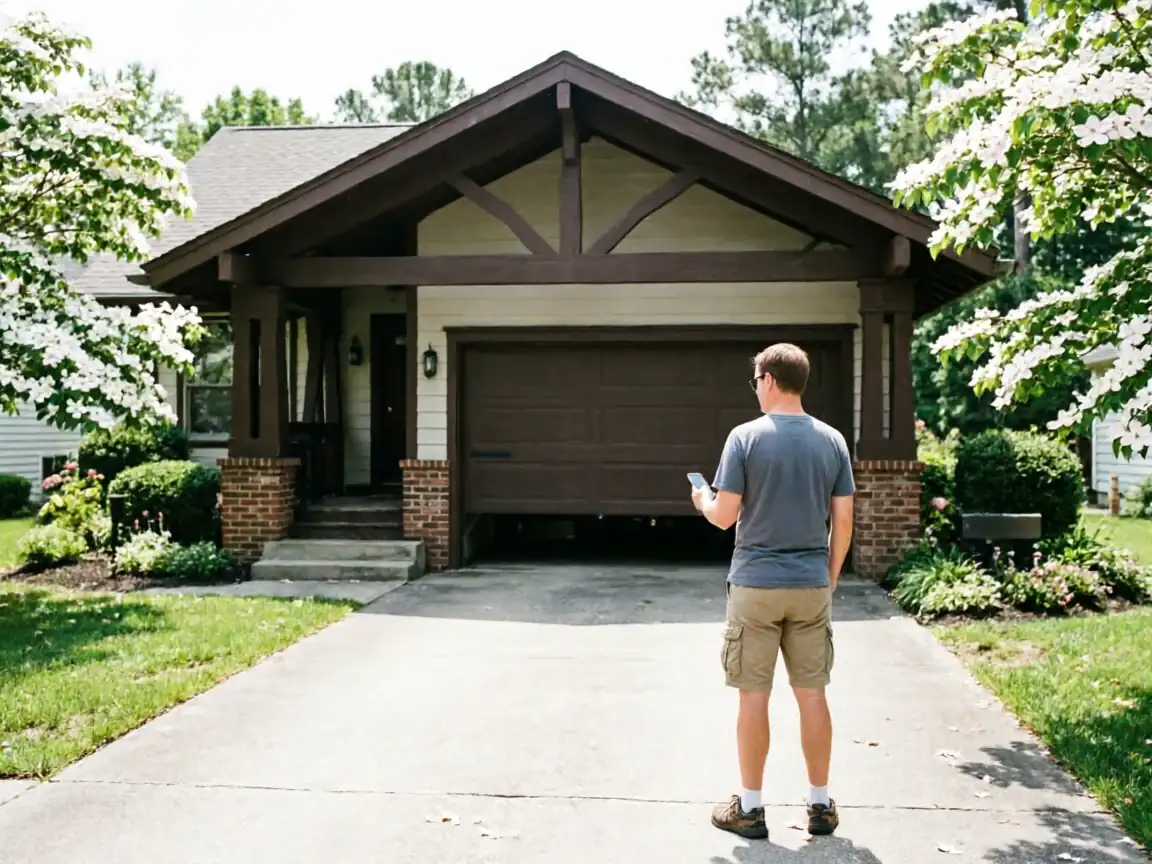
Swepsonville's median home was built around 2004, which is a different job than the 1985-median housing that makes up most of Burlington Garage Door Pros' wider service area. Newer construction here usually means pre-drilled steel jambs, standard-width openers, and wiring already run for a single overhead unit - the bones are simpler to work with than an 80s retrofit.
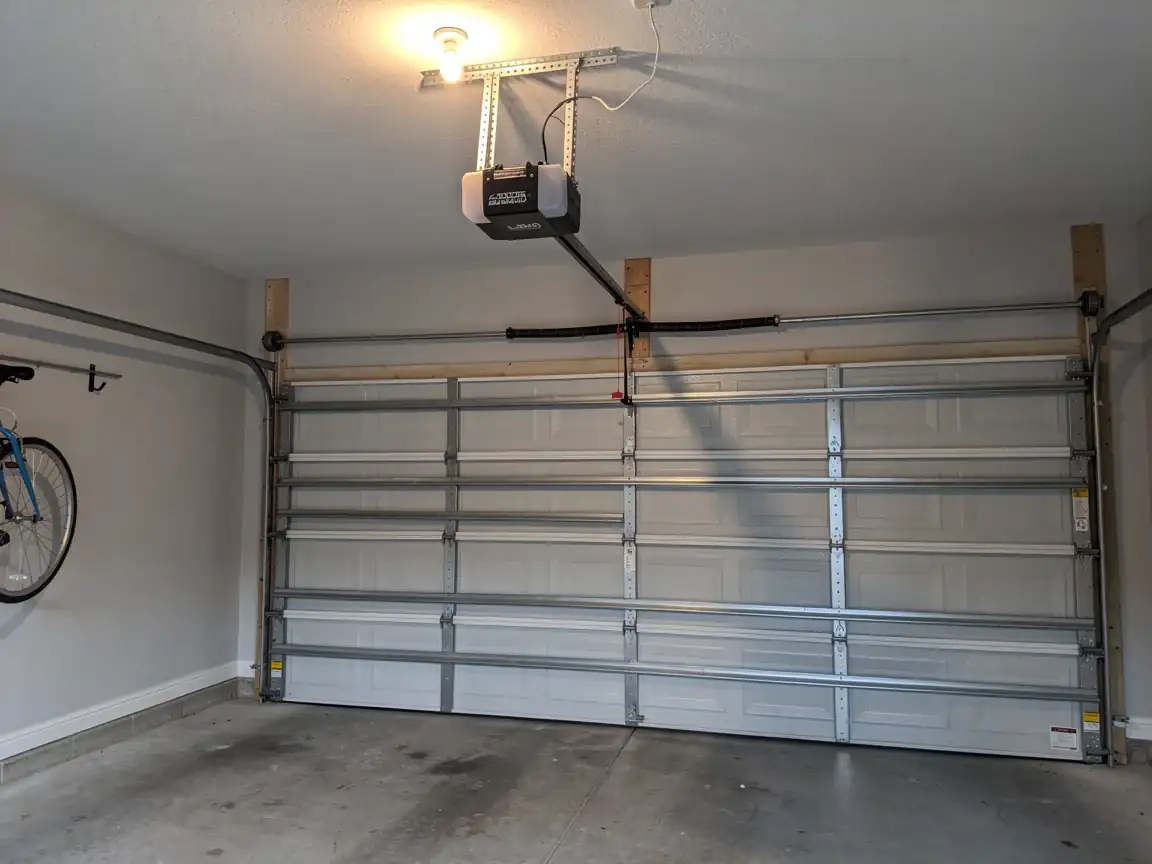
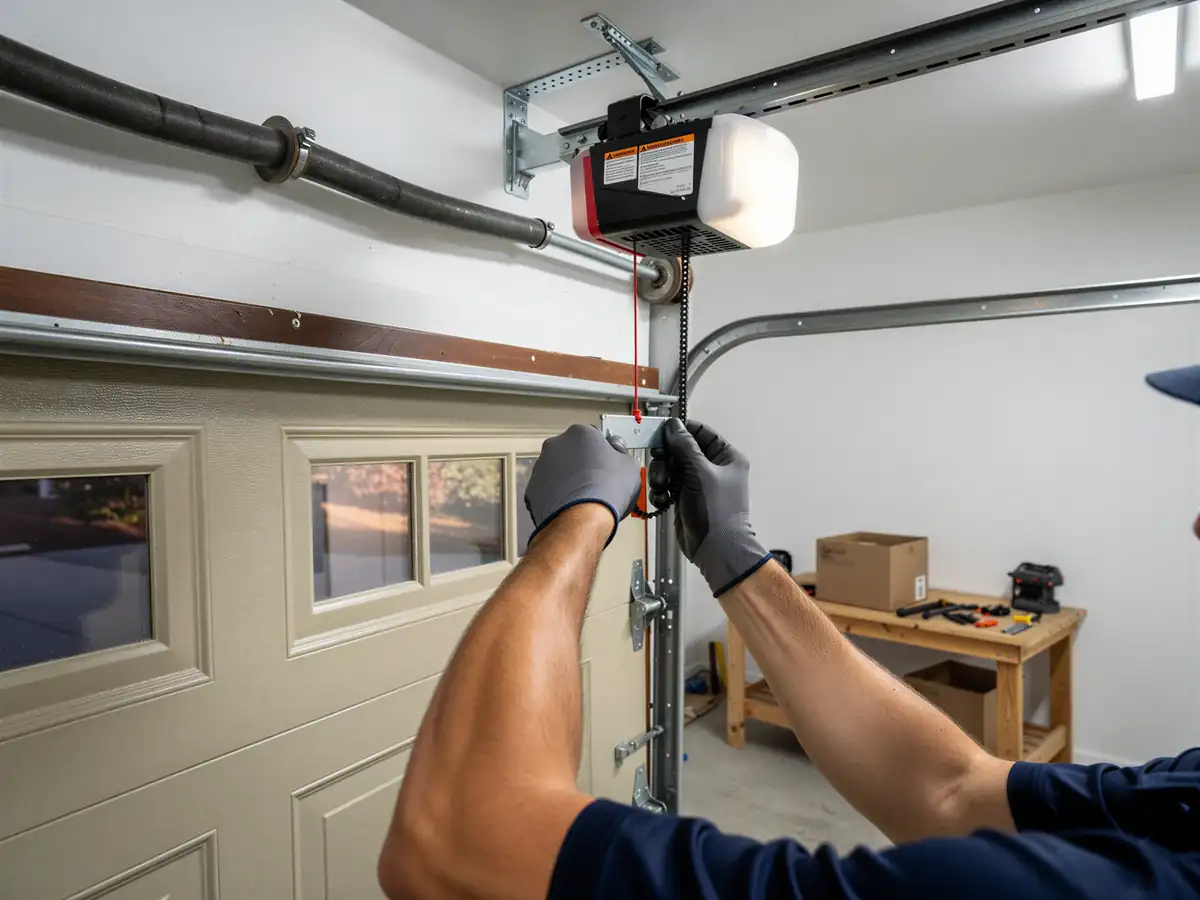
That doesn't make a DIY install risk-free. You're still lifting a 20-30 lb motor head overhead, squaring a rail to a track that may have settled slightly over twenty years, and wiring a safety-reversal sensor pair that has to align within a fraction of an inch or the unit won't pass its own self-test. Get the travel limits wrong and the door either slams the floor or stalls short of the opener's own case will tell you.
If your garage is heated or you're swapping in a battery-backup model because of the area's cold winters, the control board wiring gets more involved. That's where most self-installs go sideways - not the lifting, the limit-switch setup.
What Can Go Wrong
Because the typical house here is newer, the failures skew different from what we see on 1980s stock closer to Burlington. Original builder-grade openers from the early-to-mid 2000s are now 20 years old, which is past the working life of most belt and chain drives even with light use. The motor still runs but the gear inside strips quietly, so the door runs but doesn't pull all the way or reverses without a clear cause.
The other common issue is a mismatch between an older opener's safety sensors and a newer door panel - sensors get bumped during a panel swap or a car backing in too close, and the unit refuses to close at all, which some owners mistake for a dead motor.
Cold-weather sag in the rail bracket is real but minor here given the moderate cold band this area sits in - it's worth checking the bracket is still square to the ceiling joist before blaming the opener for a door that runs rough in January.
Time on the Job
A straight swap - same mounting points, same rail length, no track or spring work needed
Runs in the range most installs take once the truck is on site, since the trip out from Burlington is about seven miles and doesn't eat much of the day. Where it runs longer is when the existing bracket or header doesn't match the new unit's mounting hardware, which shows up more on the handful of older farmhouses mixed in among Swepsonville's newer-built homes than on the typical post-2000 house.
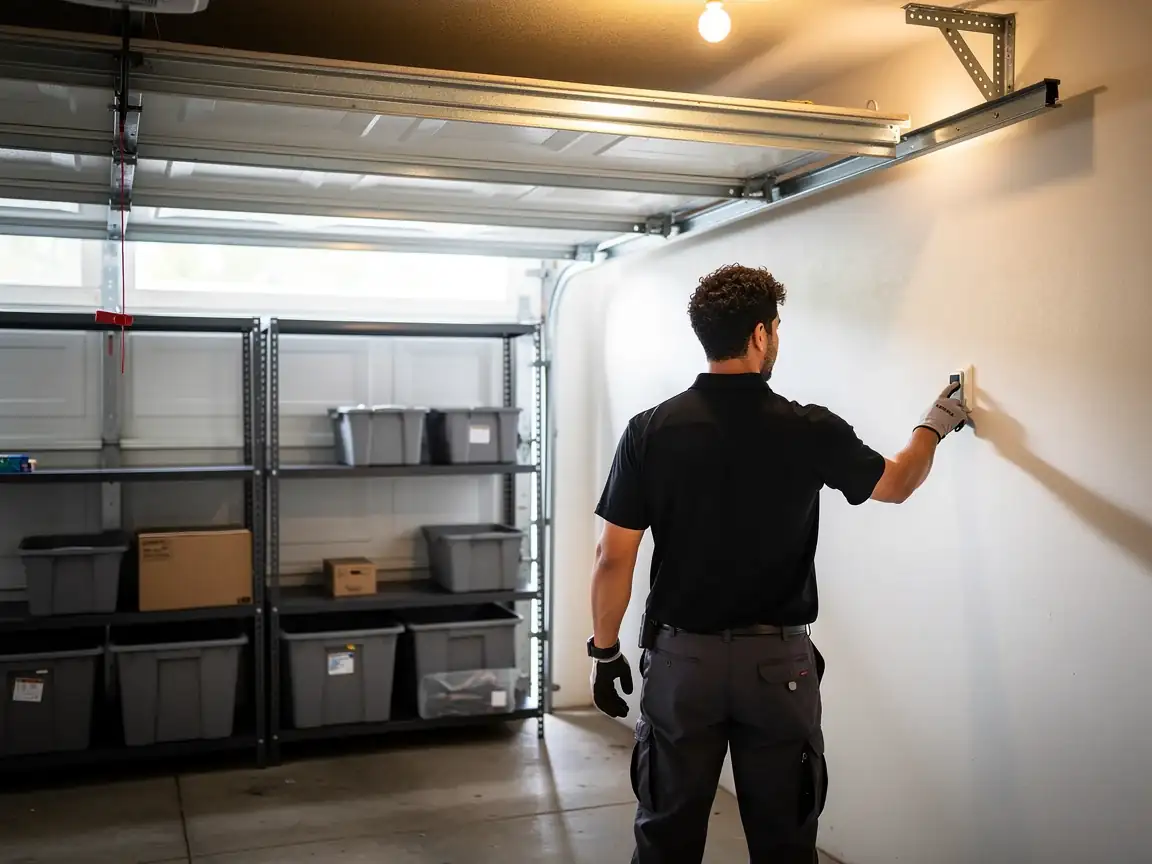
Adding a battery backup unit or a smart wall control takes extra time for wiring, not lifting
Budget for that if you're upgrading rather than doing a straight replacement. We won't promise a same-day slot sight unseen; if the opener model you want isn't one we carry on the truck that day, it has to be ordered in, and that adds time we can't shrink.
What It Costs
We don't publish a flat number here because the spread between a basic chain-drive swap and a belt-drive unit with battery backup and smart controls is wide, and the right pick depends on what's already mounted and what you want it to do. What we can tell you: Swepsonville's median household income runs well above the area average - $94,028 here against $67,366 across the broader service footprint - which is part of why we see more requests for the quieter belt-drive and battery-backup models out this way than for the base chain-drive unit that's the usual pick closer to Burlington.
The other cost variable is the house itself. A straight opener-for-opener swap on a post-2000 build is the cheapest version of this job because the bracket, wiring, and header are already in place and sized right. Add a mismatched bracket, a header reinforcement, or new wiring for a backup battery and the number moves.
What the Repair Takes
Most calls here aren't a full opener replacement - they're a gear, a logic board, or a sensor pair on a unit that's otherwise fine. Given the 2004 median build year, a good share of the openers we're called out to are original to the house and at or near the end of a normal service life, so the honest call is sometimes to replace rather than patch a twenty-year-old motor housing that'll need the next part in a year anyway.
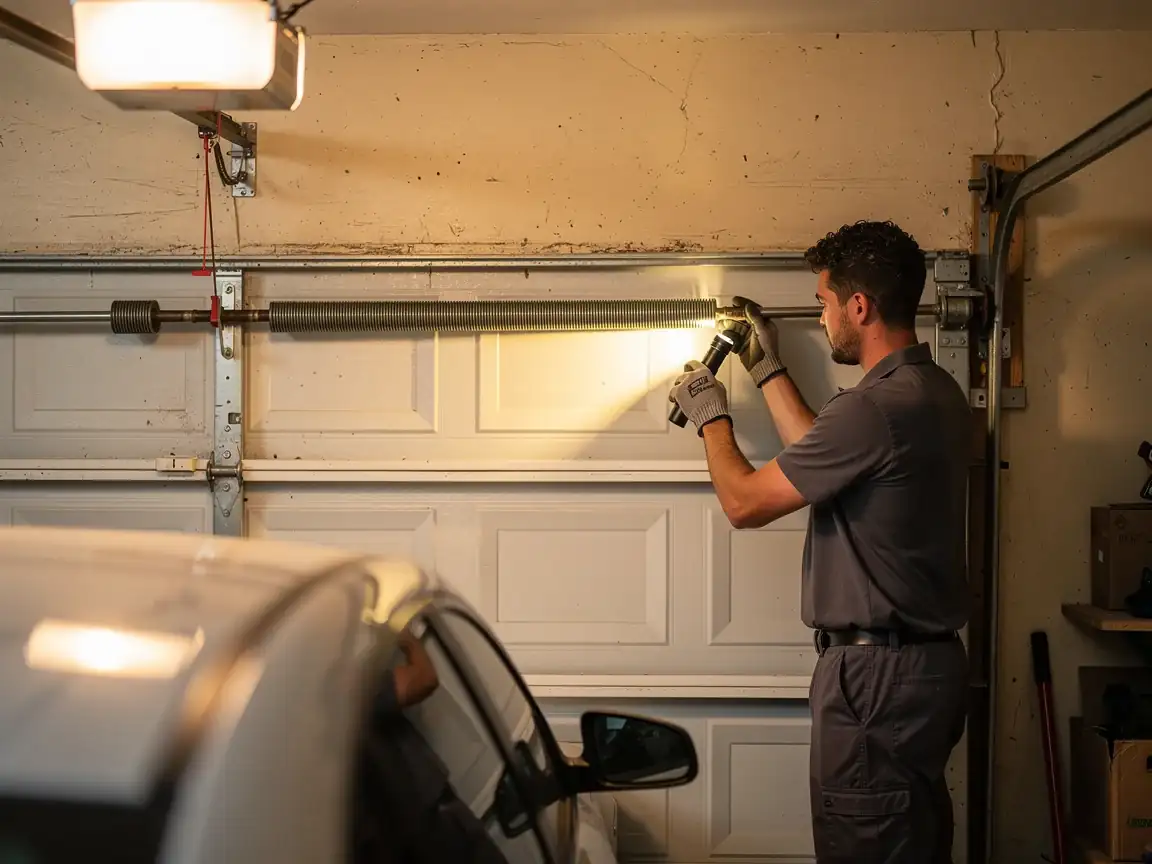
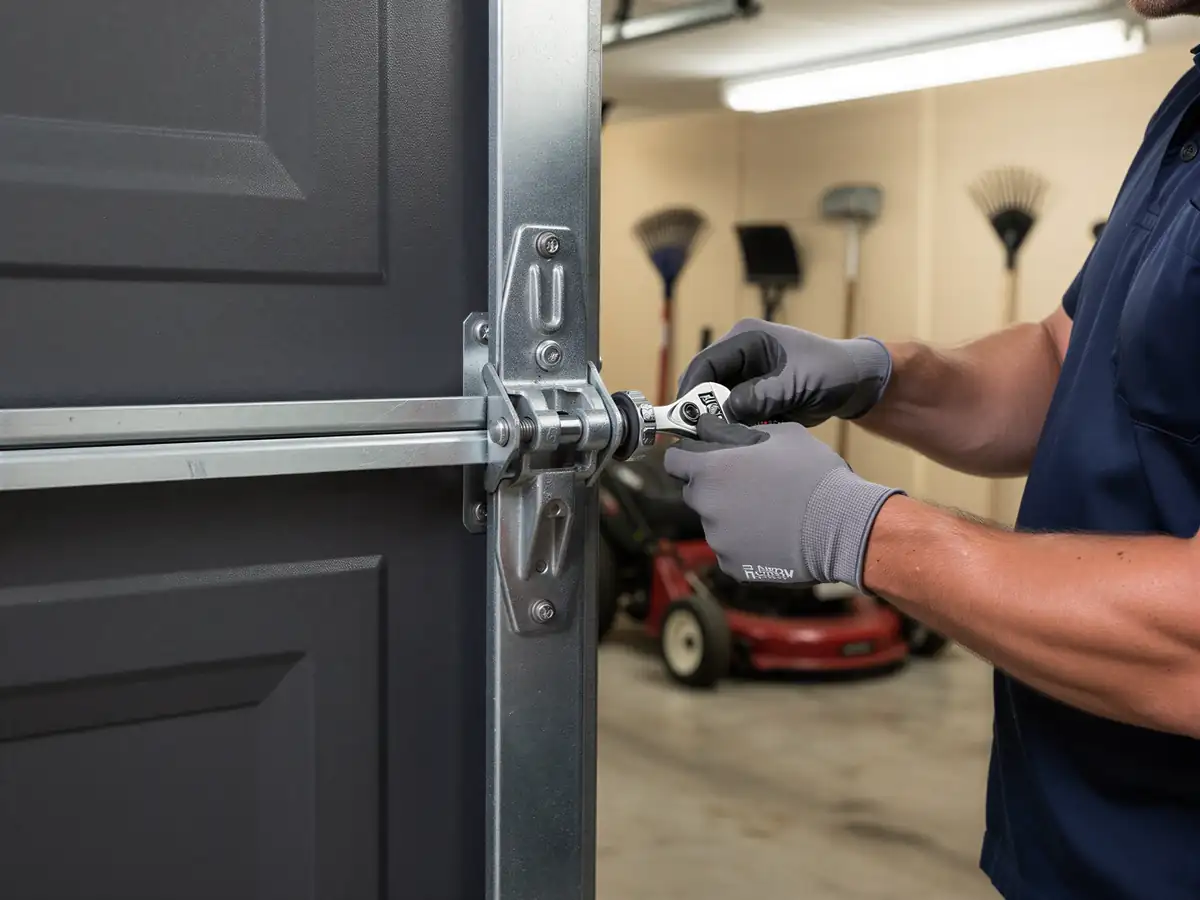
We check the obvious things first: travel limits, sensor alignment, the condition of the drive gear inside the housing, and whether the wall control itself is the actual fault rather than the head unit. If a part isn't something we carry on the truck - a specific logic board for an older model, say - it has to be ordered, and that's a lead time we don't control and won't guess at. We'll tell you straight if replacement is the cheaper and faster path before we start ordering parts for a repair that won't outlast the summer.