Can You Do This Yourself
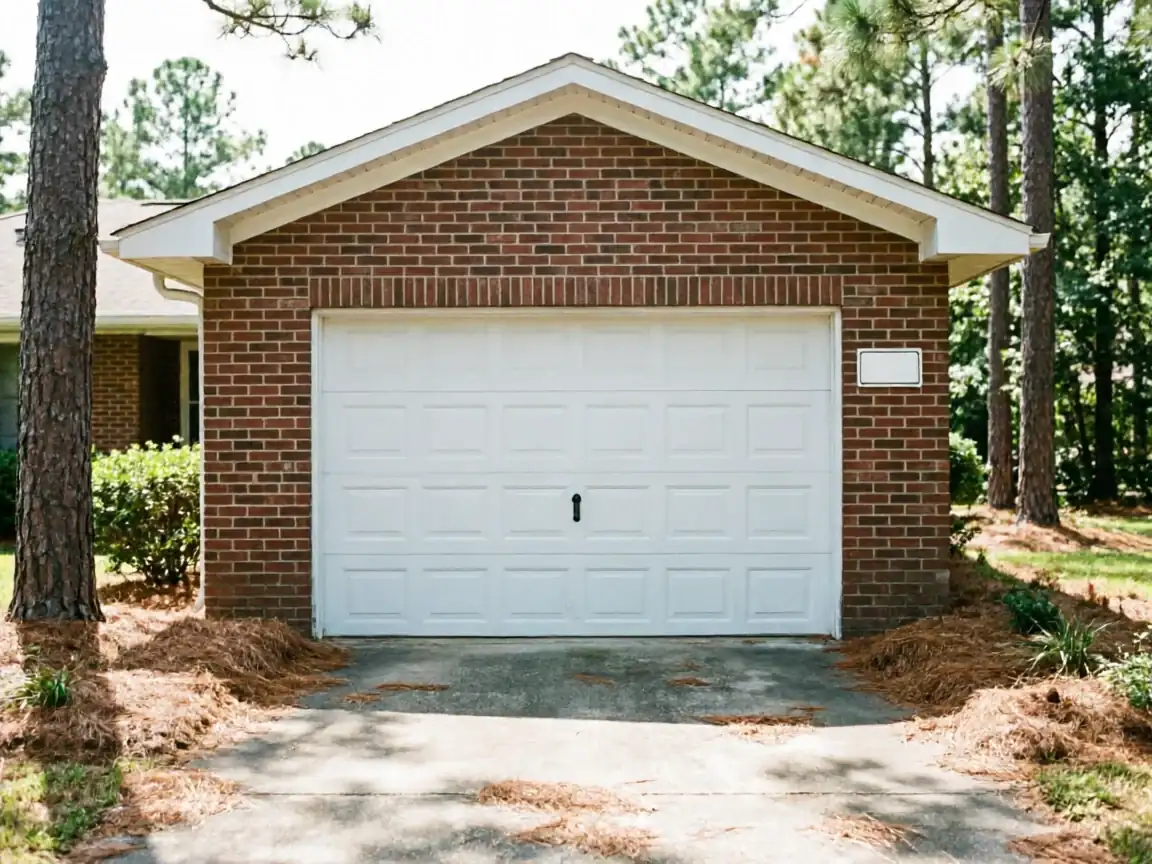
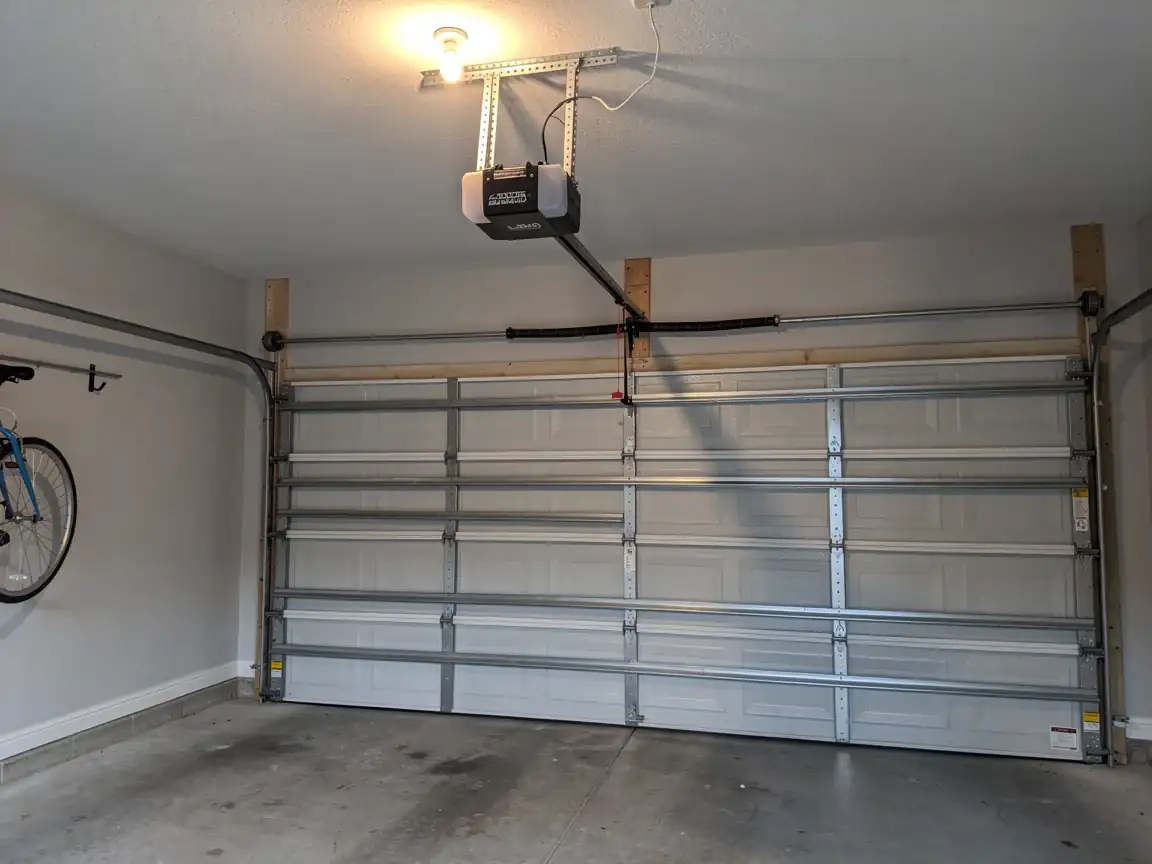
Most of Elon went up around 1998, well after the wave of 1980s construction that covers a lot of the wider Burlington service area. That matters here because a door off its track on a house this age is almost never the warped wood panel or rusted-through track you'd find on older stock - it's a steel door on factory rollers that's lost alignment, usually from one bent track section or a roller that's worn its groove.
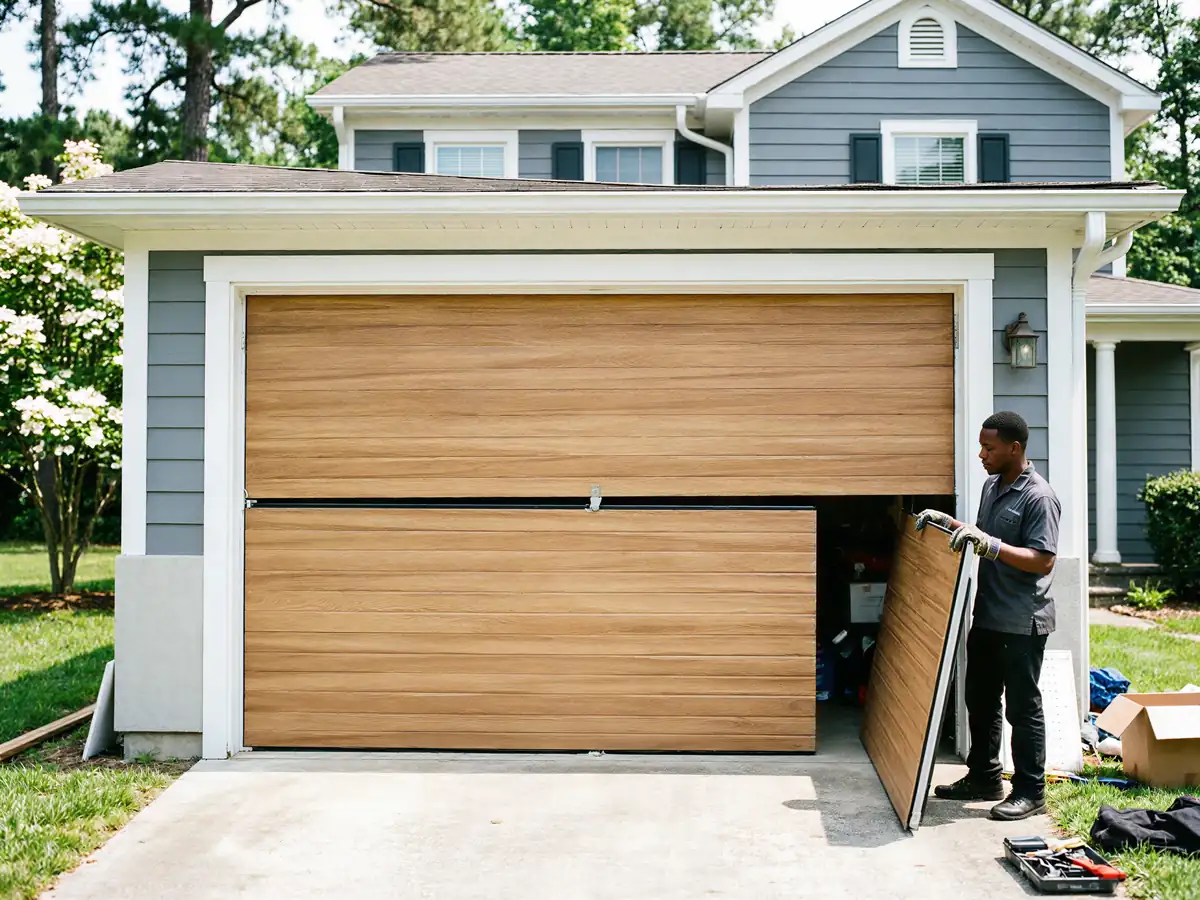
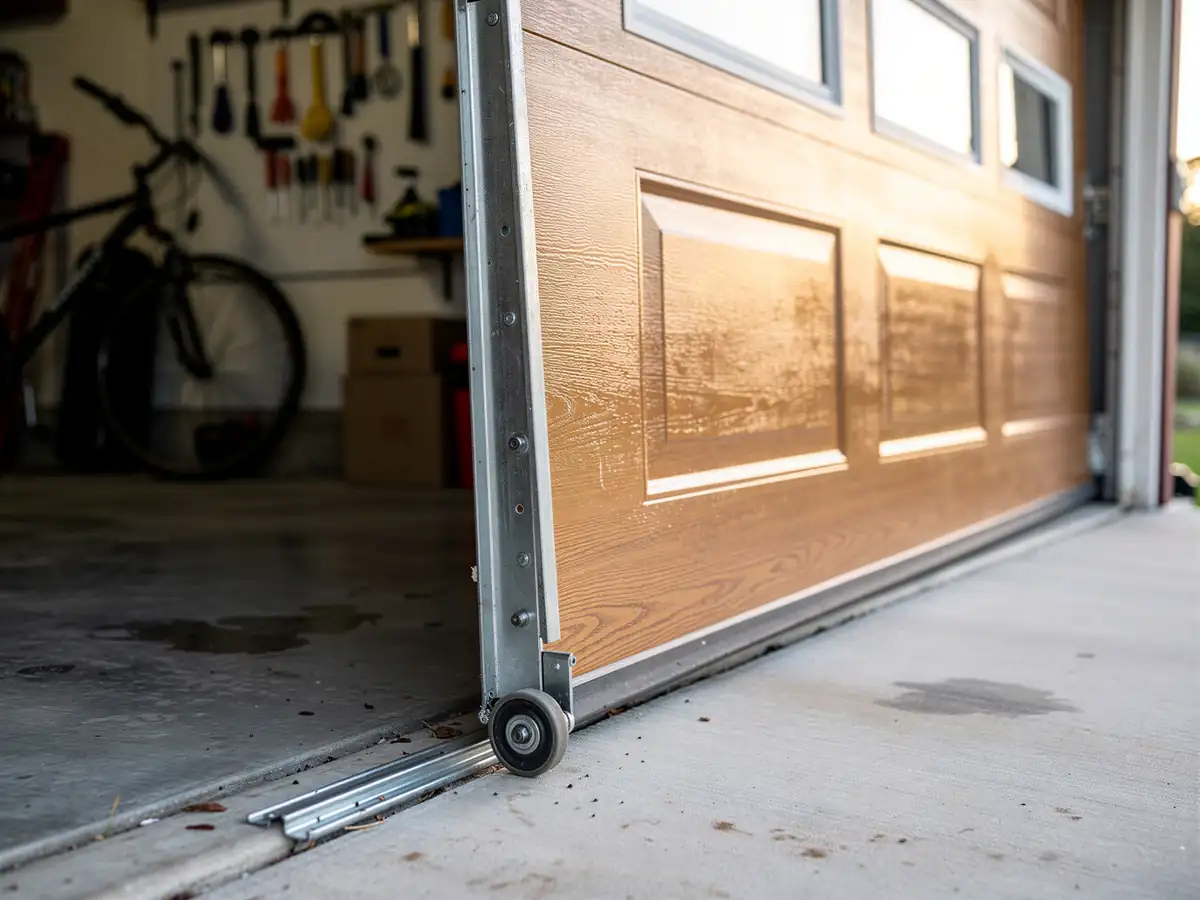
You can safely check two things yourself. First, look for a visible gap between the roller and the track near the bottom bracket - if the door is only off by a quarter inch at one spot, sometimes a careful tap with a rubber mallet on the track bracket (not the door) will seat it back. Second, check whether the door came off because something hit it, versus coming off gradually with no impact. Impact damage usually means a bent track that needs to come off and get replaced, not re-aligned.
What you should not do is force the door up on its opener once it's visibly tilted in the opening. On a 1998-era steel door, the panel itself is usually fine; what fails is the thin-gauge track, and running the opener against a tilted door bends it further and can pop a cable off the drum.
Parts We Carry
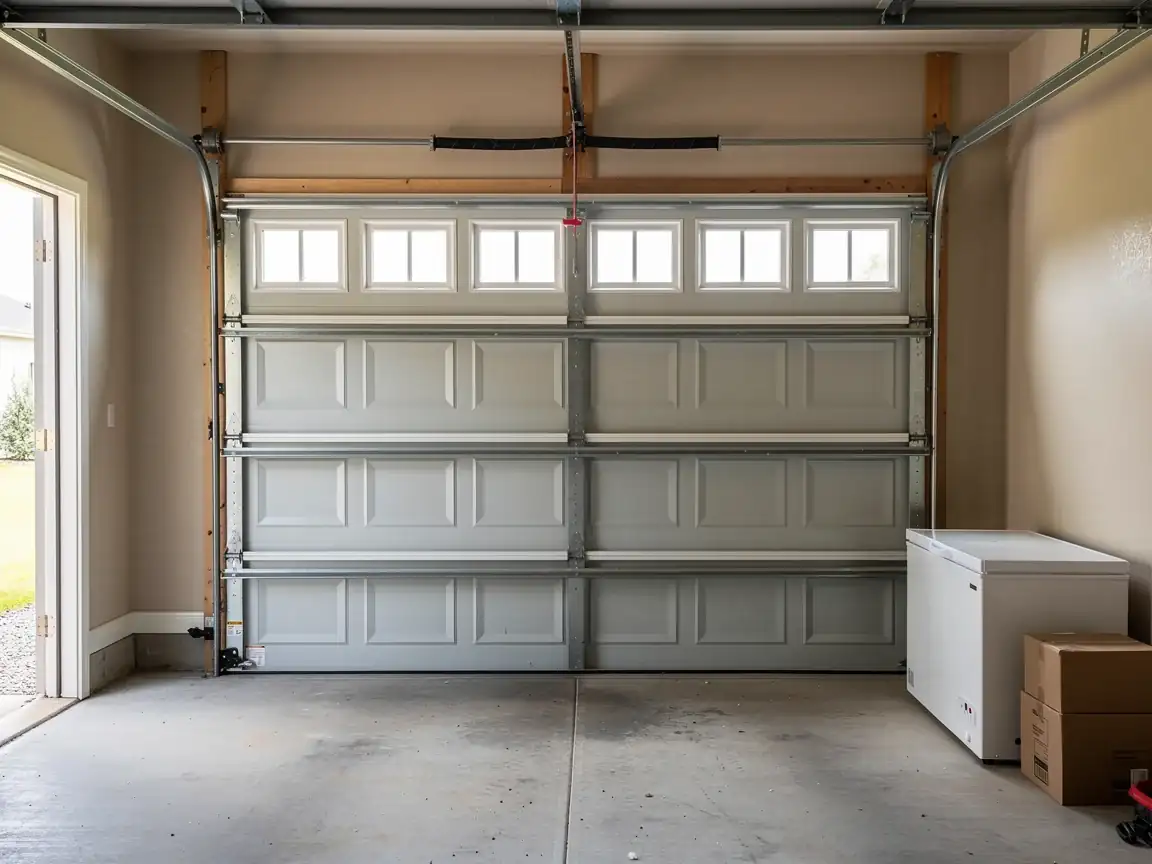
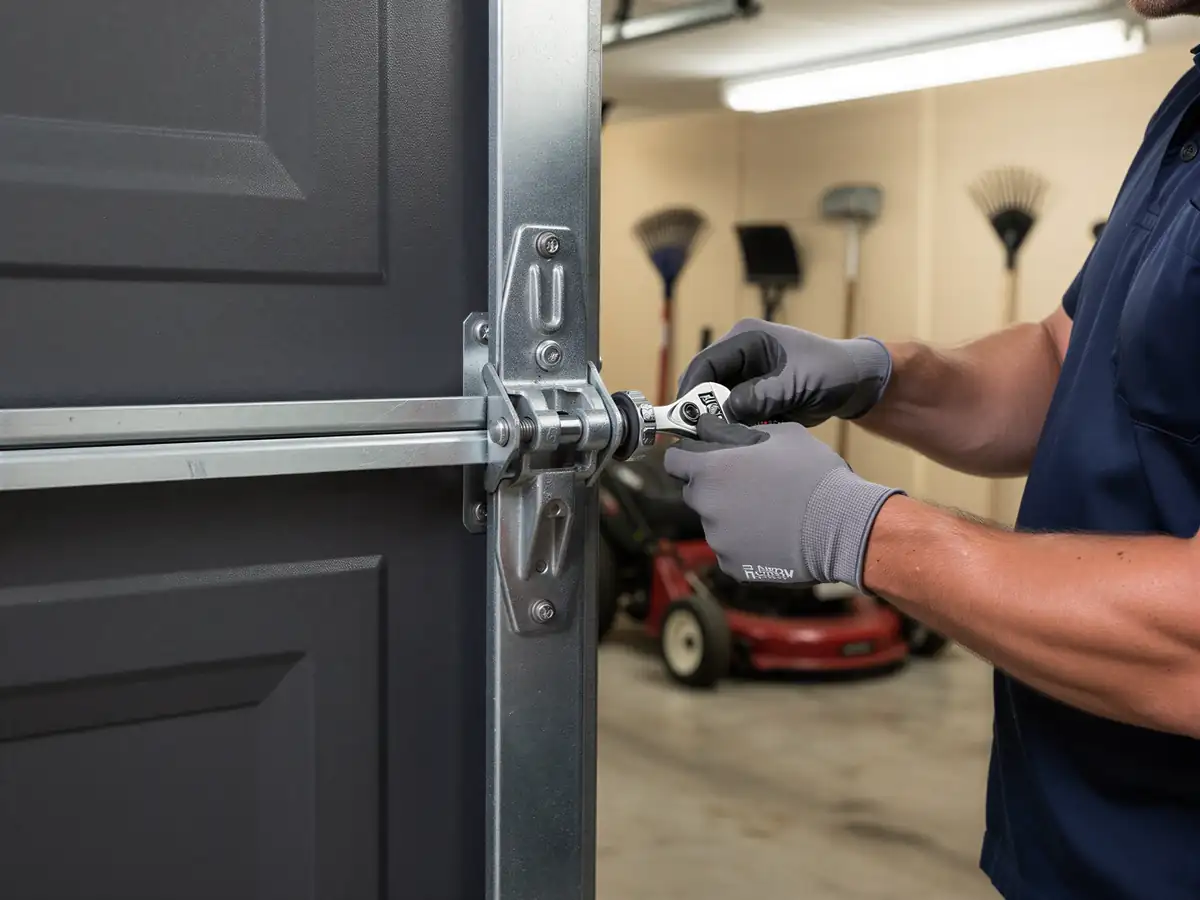
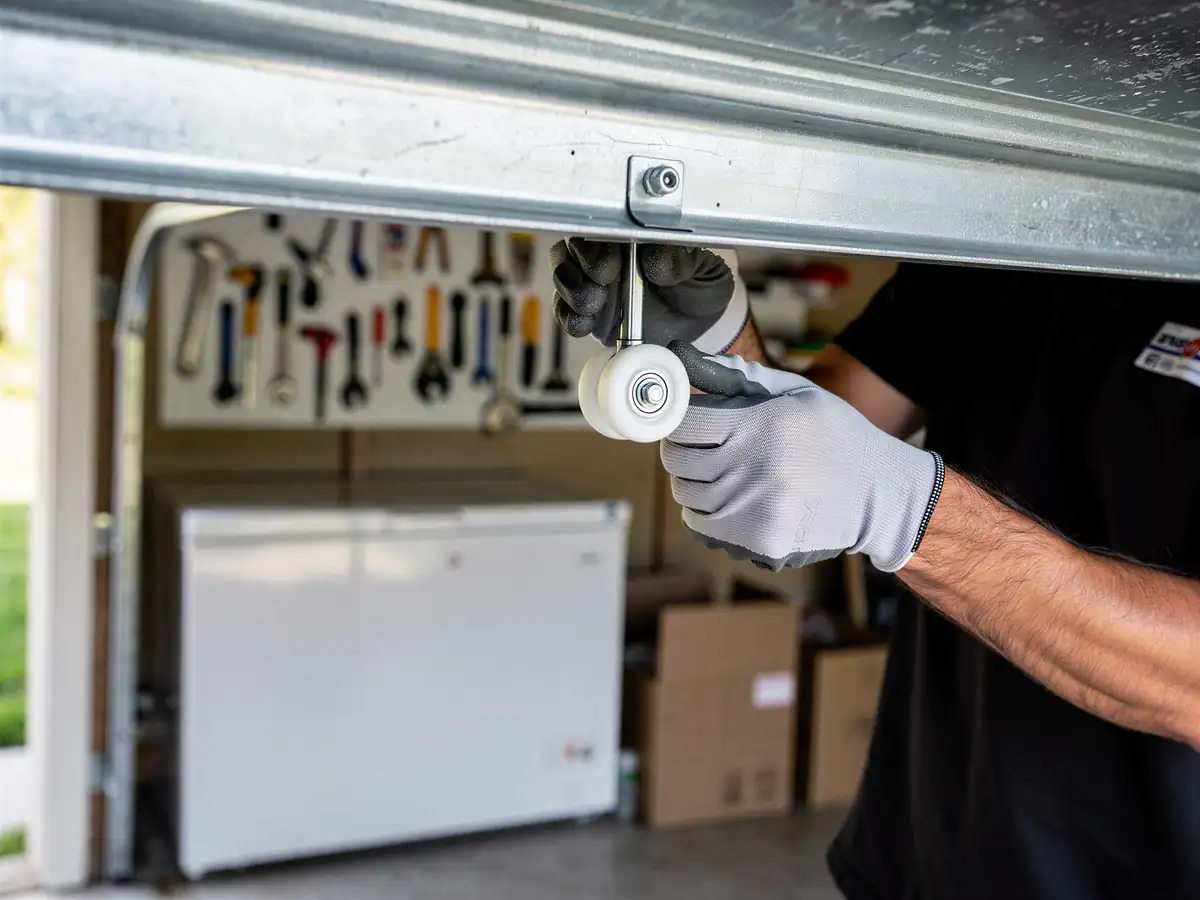
On houses built around Elon's 1998 median, the doors we're pulling off track are steel panel doors with nylon rollers on galvanized track - not the older ball-bearing steel rollers on heavier wood doors you'd see on 1970s-era construction. We carry nylon and steel rollers sized for that generation of track, replacement track sections in the standard residential gauges, and the end bearing plates and bottom brackets that take the brunt of an off-track event.
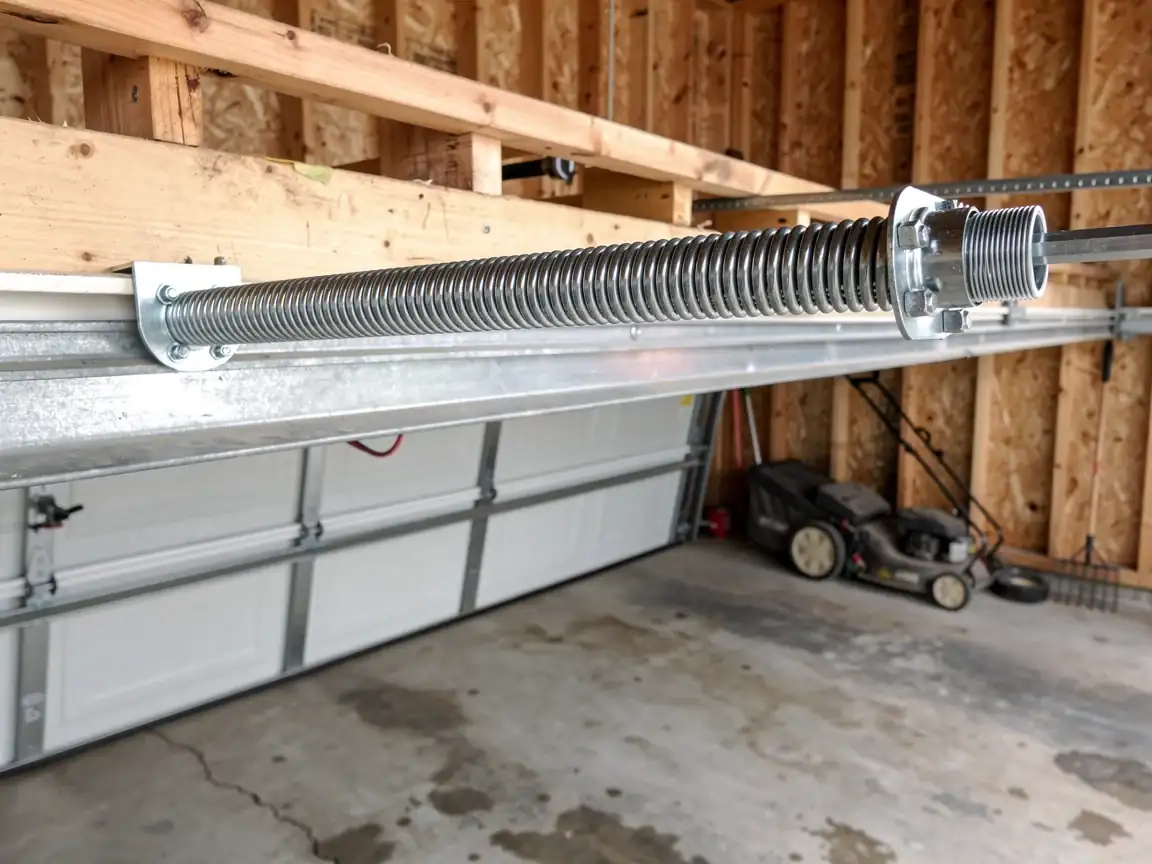
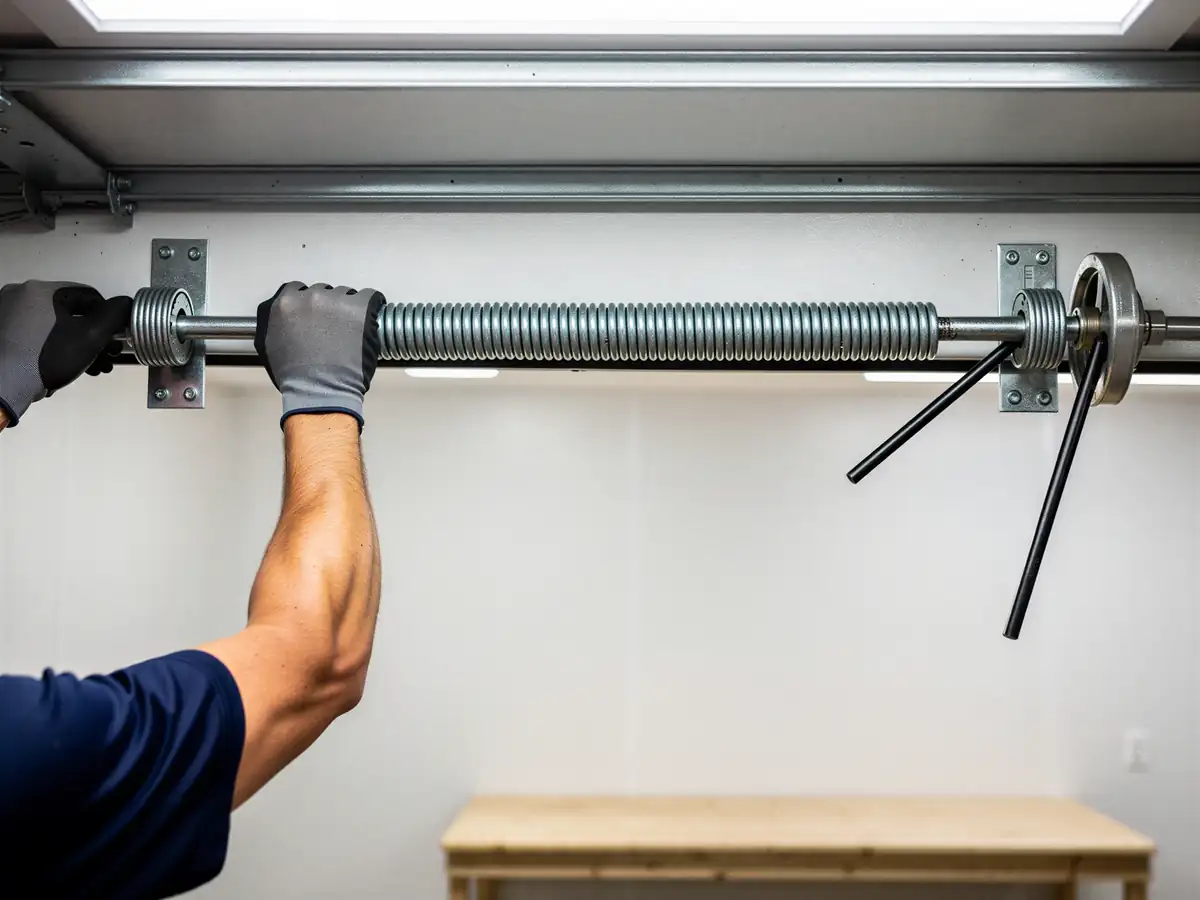
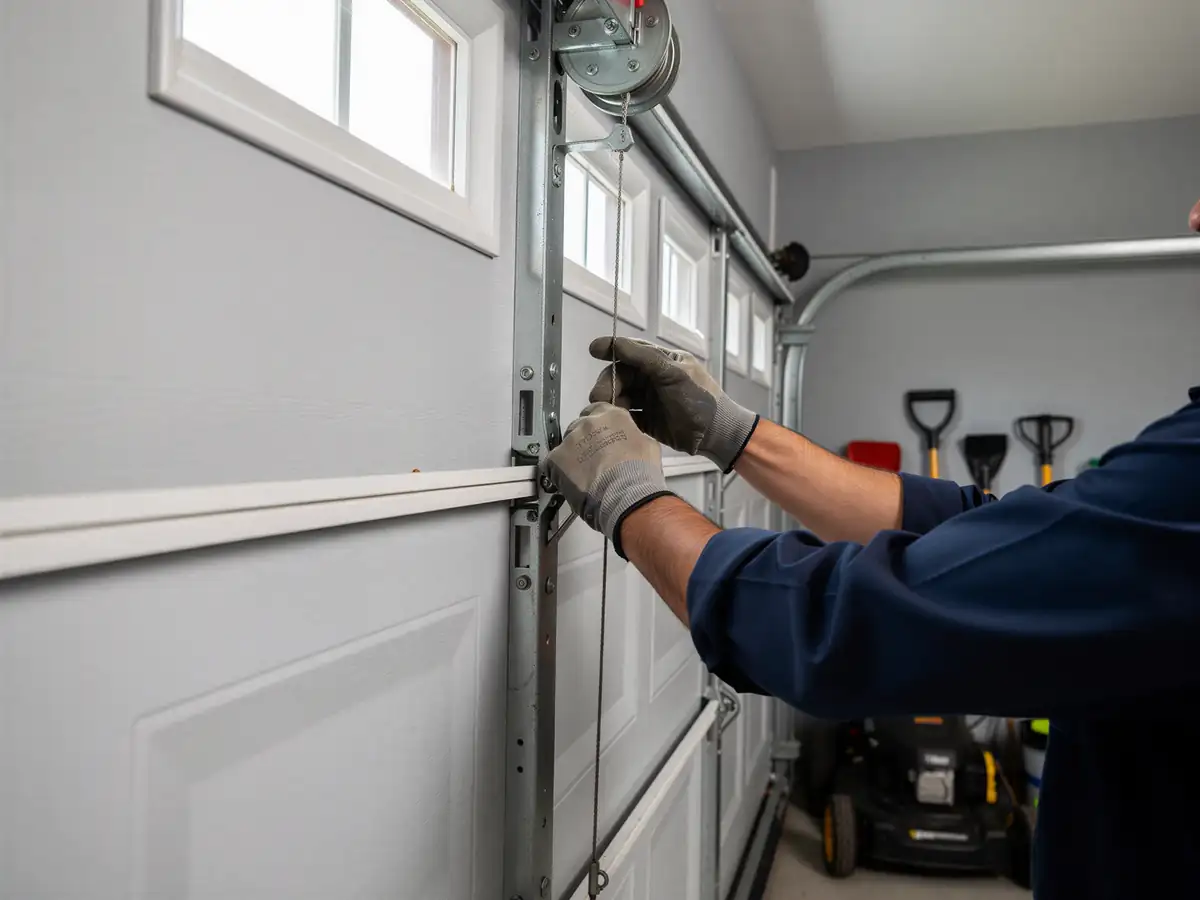
We also stock torsion spring cable and the flag brackets that mount to this era's jamb hardware, since most doors of this age run factory torsion springs rather than the side-mounted extension springs common on older houses.
One honest limit: if the track itself was a non-standard width - some production builders in this era used slightly narrower track to save cost - matching it exactly can take an extra day to source. We'll tell you on site if that's the case rather than guess.
What You Are Seeing
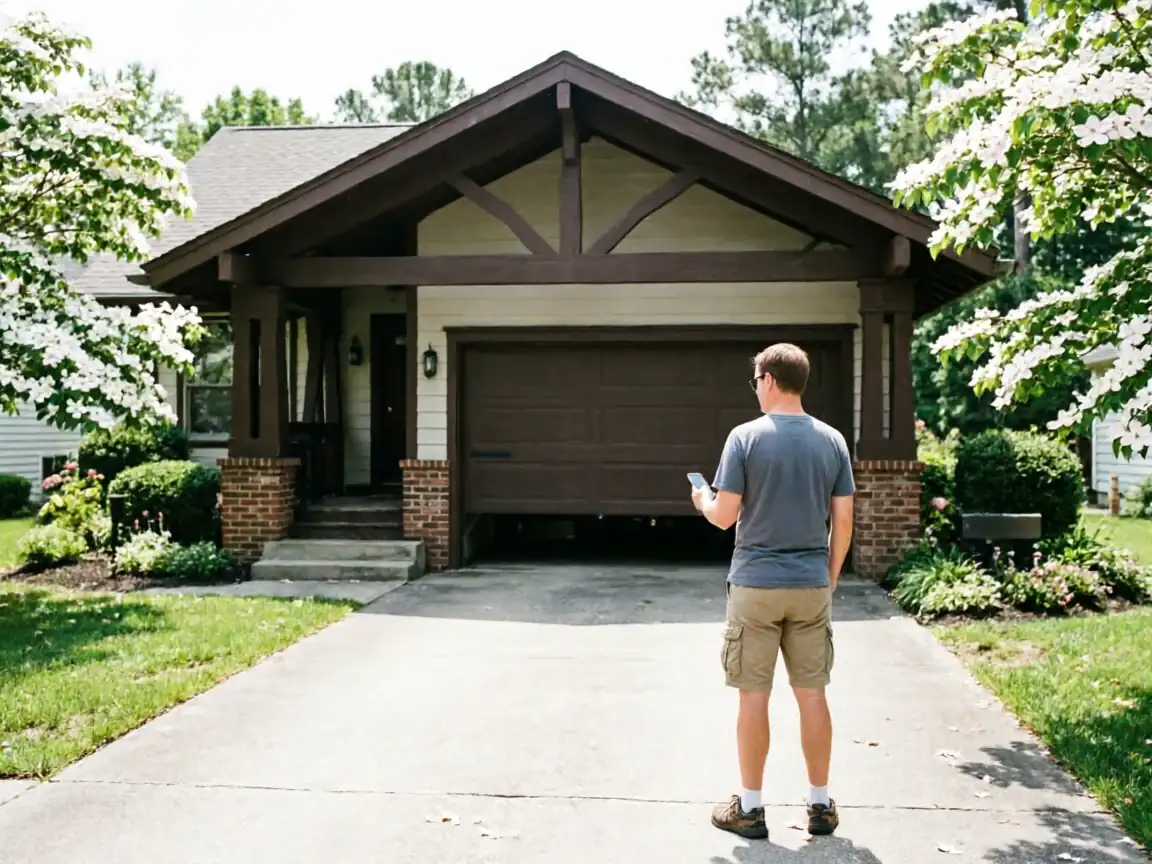
If the door in Elon came off track, you're likely looking at one of a few things given the housing age here
A roller that's worn through its nylon coating will let the door rock side to side before it fully derails - that's wear, not a single event. A track bracket pulled loose from the jamb, which on newer framing usually means a screw backed out or stripped, will let one side of the door drop while the other stays seated, giving you that visible diagonal lean.
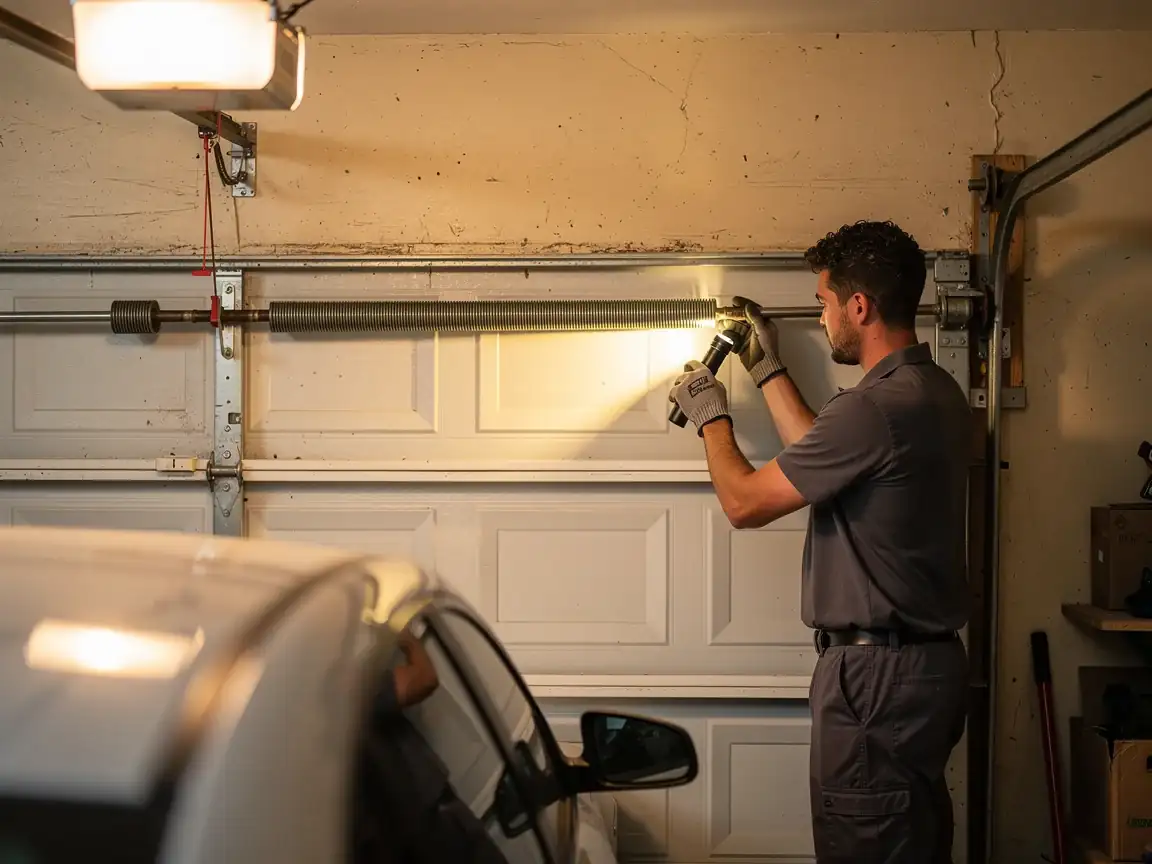
Less commonly, a cable that's frayed or slipped its drum on a torsion system
Standard on most doors built since the late 1990s in this area - will cause the door to drop unevenly and pull the roller out of the track on one side as it goes. That one you'll usually hear before you see it: a metallic pop or a loud bang as the cable lets go.
What you won't usually find on a house this age is a rotted bottom panel pulling the track out of square
Which is a more common cause on older housing stock. The fixes differ enough that it's worth knowing which one you've actually got before you touch anything.
What Can Go Wrong
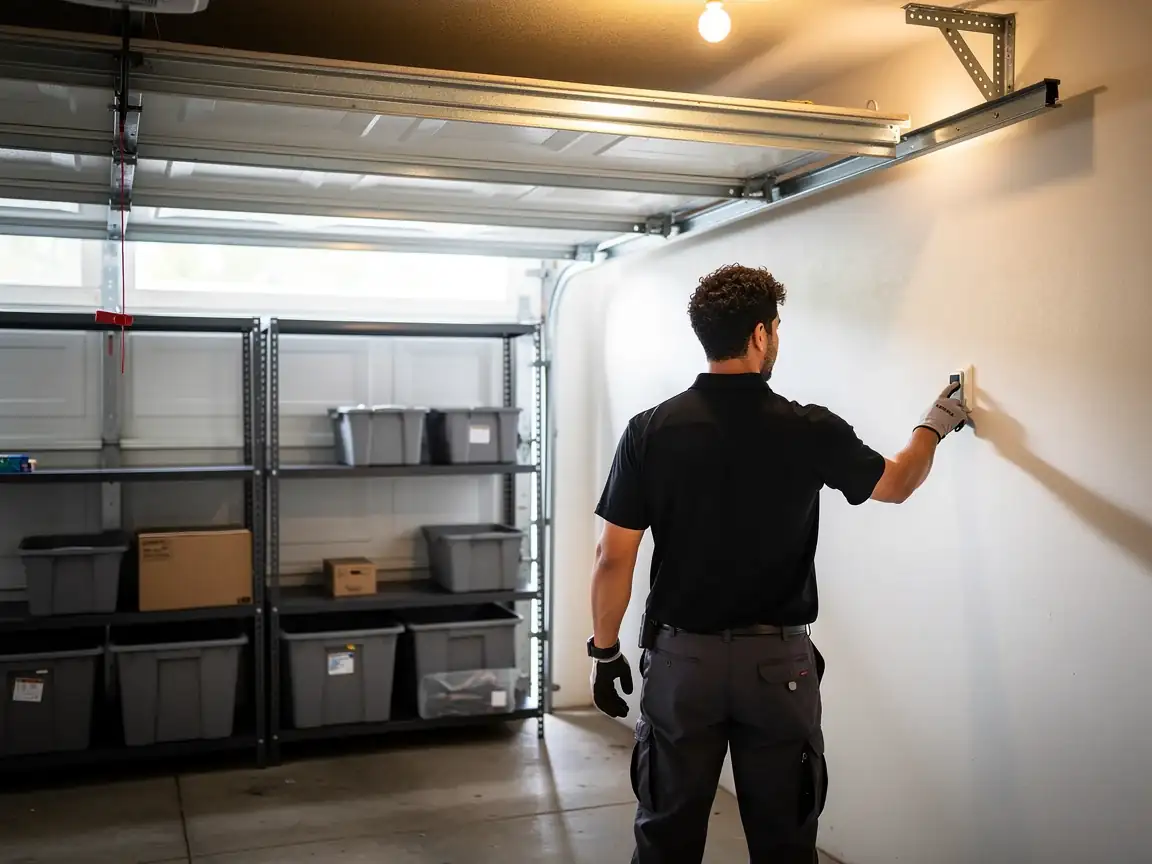
The biggest risk with an off-track door on a 1998-era build is treating it like a cosmetic problem and running the opener anyway. The opener doesn't know the door is off its rail; it just keeps pulling. On torsion-spring doors, which is most of what's in Elon, that can pull the cable further off the drum or snap it outright, and a snapped cable under spring tension is dangerous to be near.
A second risk is a bent track that looks straight enough to leave alone. Track on newer construction is often a lighter gauge than what you'd find on older commercial-grade installs, and a bend that's a quarter inch out of true will keep throwing the roller every time the door cycles, even after you've reseated it once.
Colder stretches add a smaller but real factor - stiffer lubricant and tighter roller clearance make an already-marginal roller more likely to jump, which is worth knowing if the problem started showing up only once temperatures dropped.
What the Repair Takes
For a straightforward reseat - roller back in track, bracket re-secured, no bent hardware - we're usually in and out within an hour once we're on site at the Elon address, 3 miles out from our Burlington base. If a track section is bent, that section gets replaced rather than straightened; bent galvanized track doesn't hold alignment once it's been forced back, even if it looks fine by eye.
If the cause turns out to be a slipped or frayed cable on a torsion system, that's a different job - we release spring tension properly before touching anything near the drum, which adds time but isn't optional for safety.
We'll tell you upfront if what you've got is a 10-minute roller swap or a half-day job with a track and cable replacement. On a door this age, it's rarely the whole door - the panels built since the late 1990s tend to outlast the rollers and track hardware around them by a wide margin.