Can You Do This Yourself
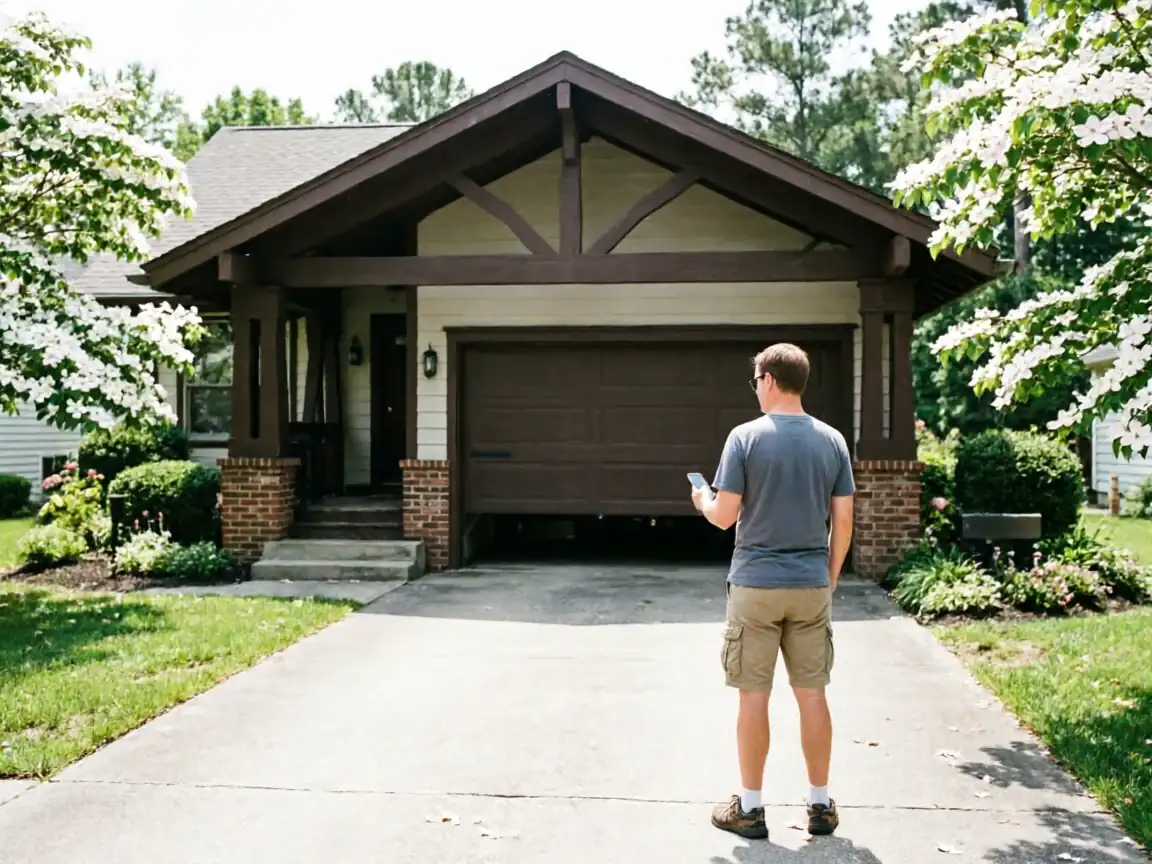
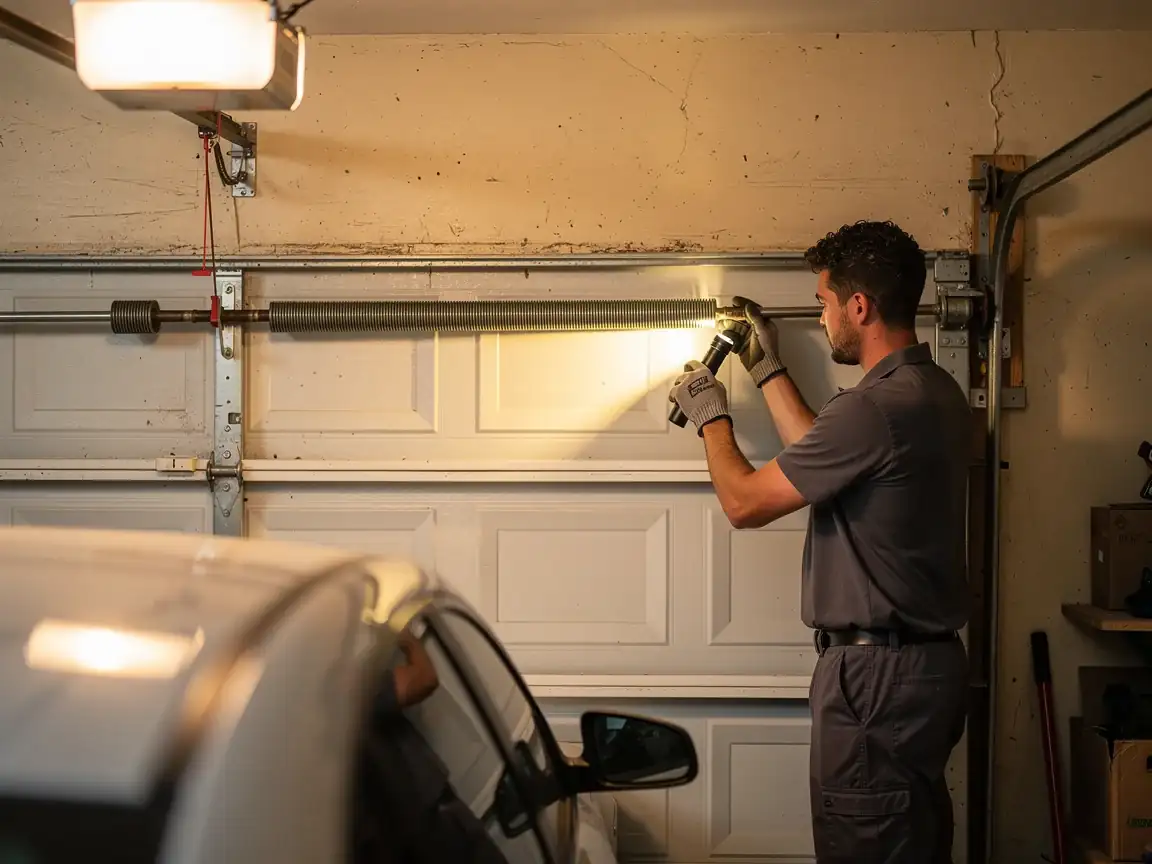
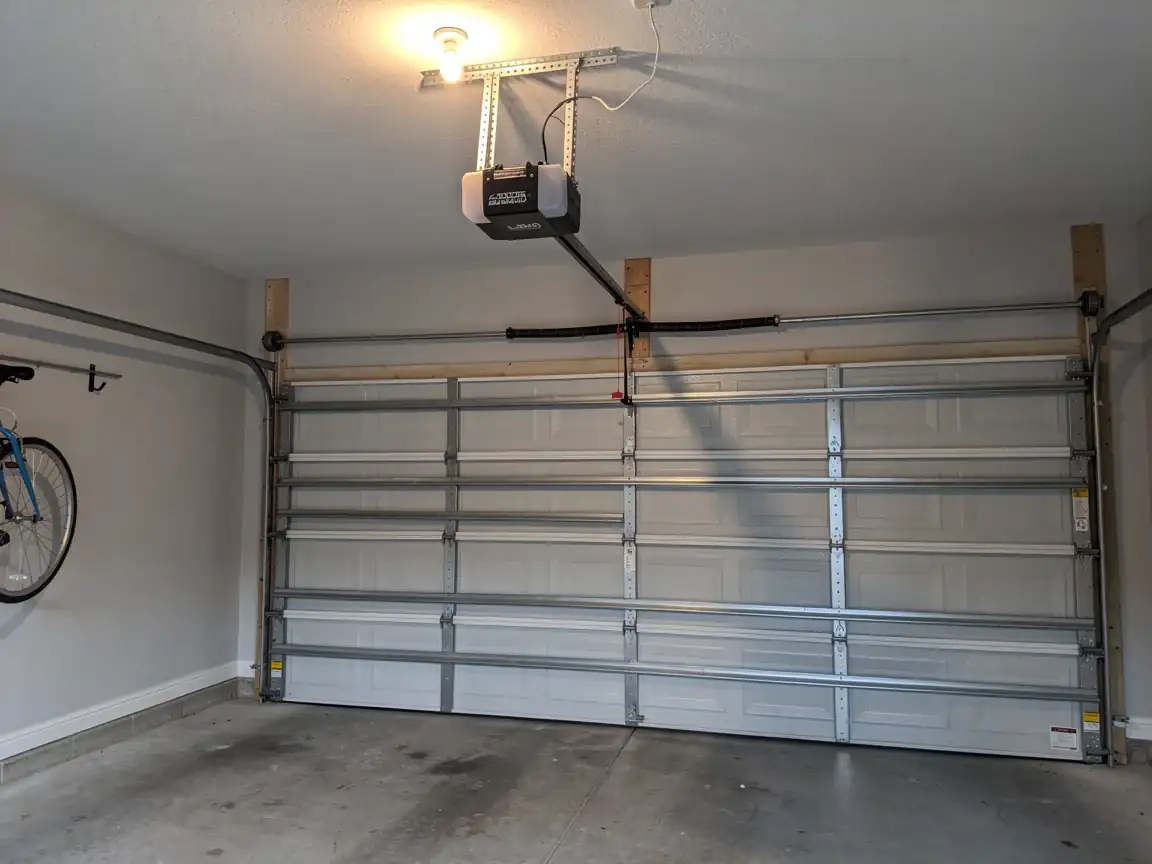
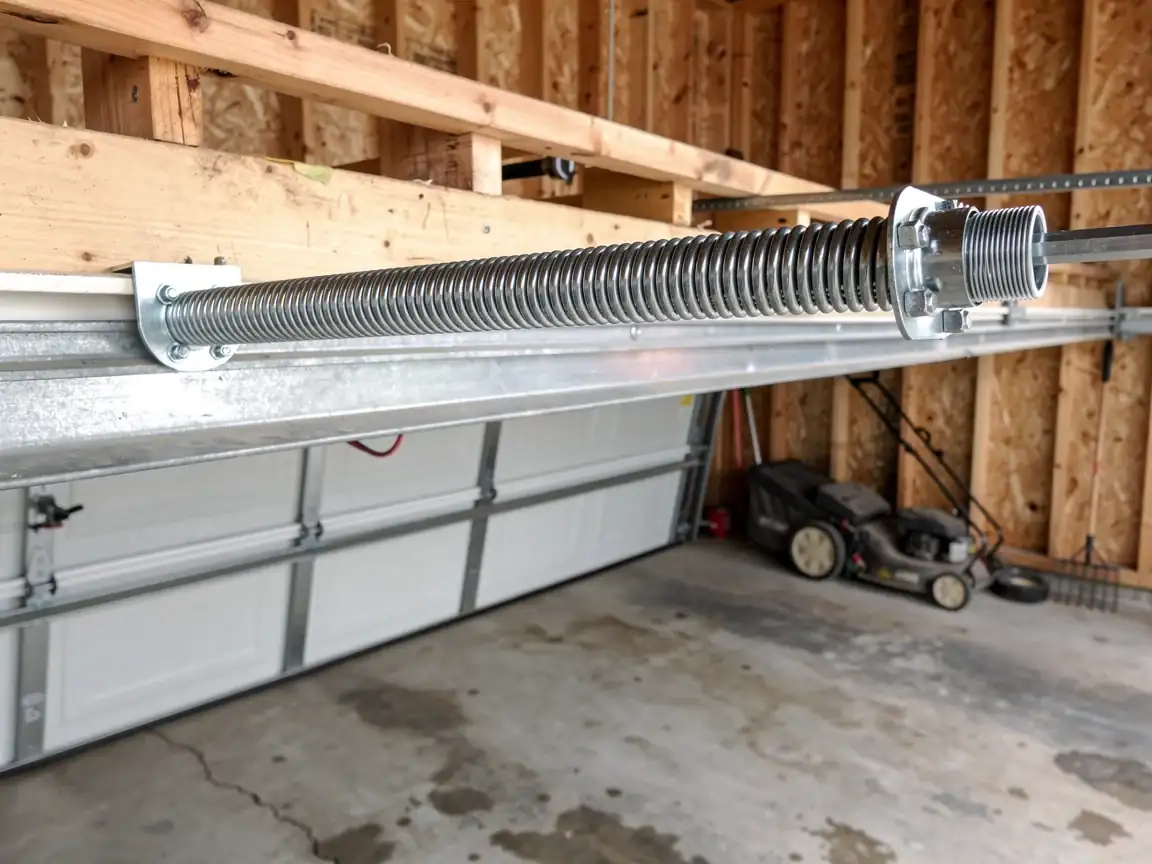
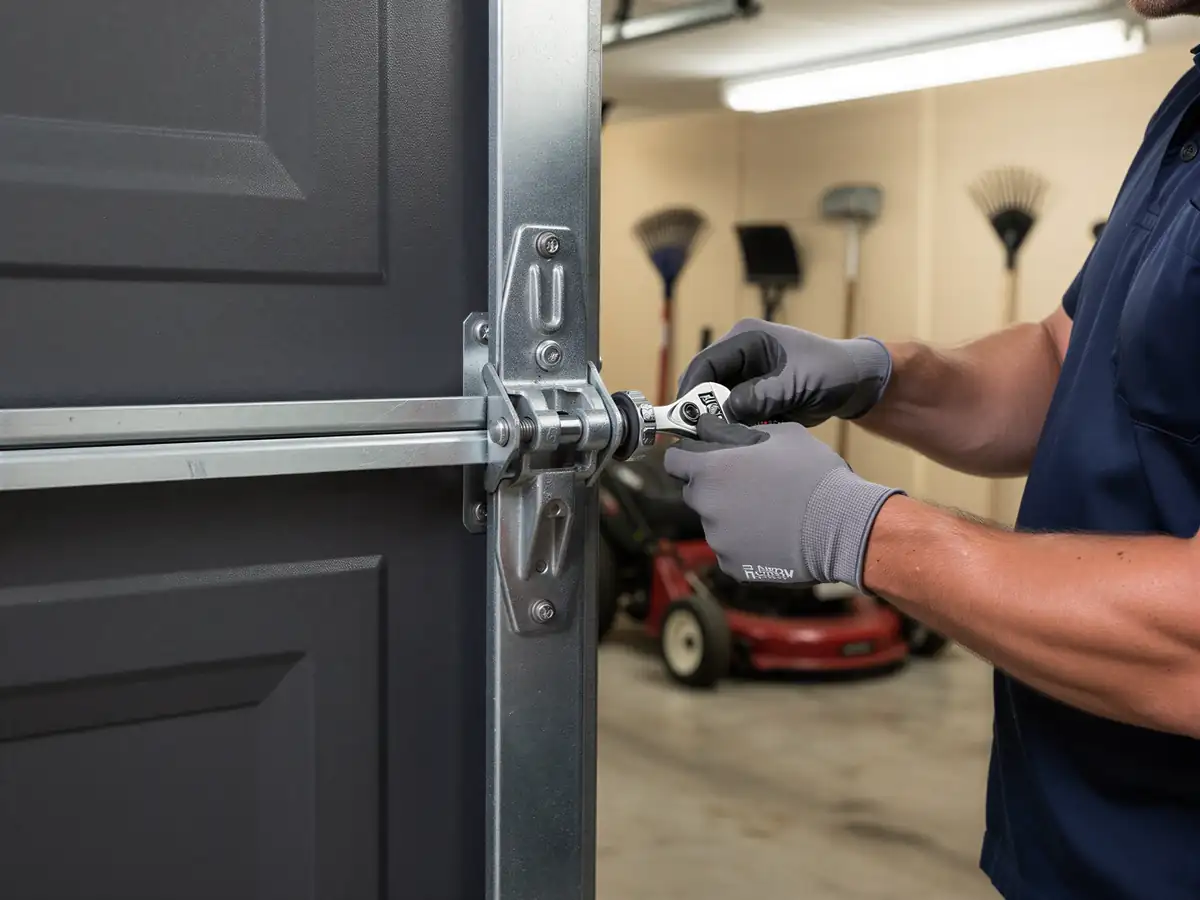
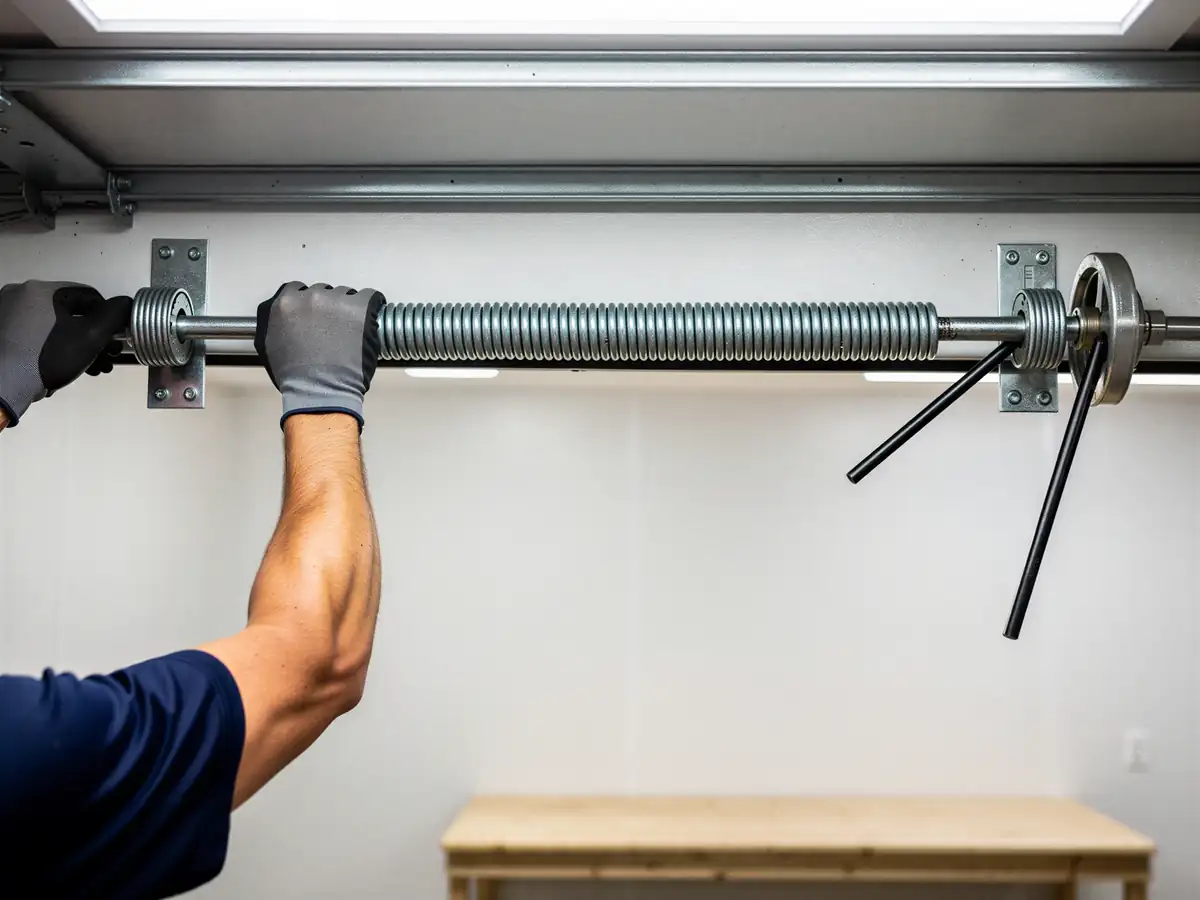
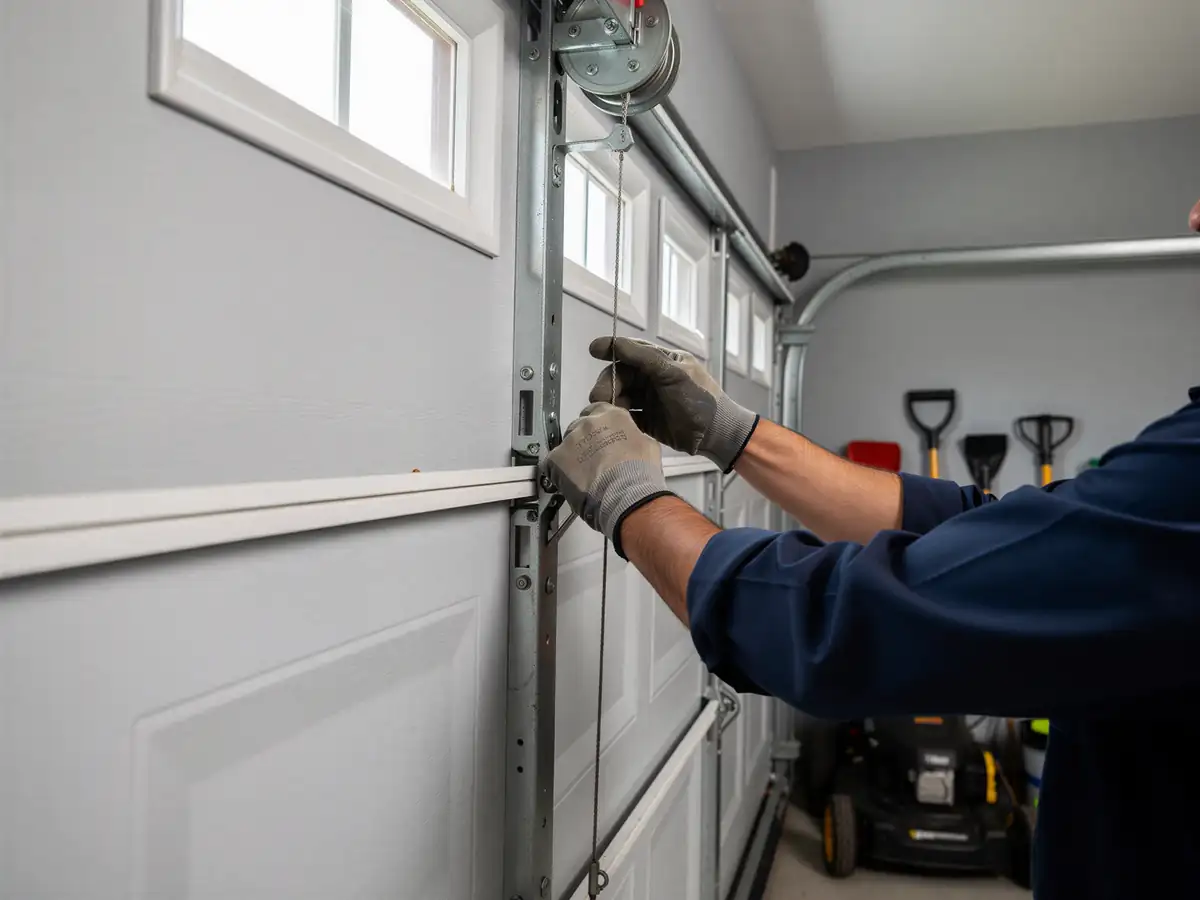
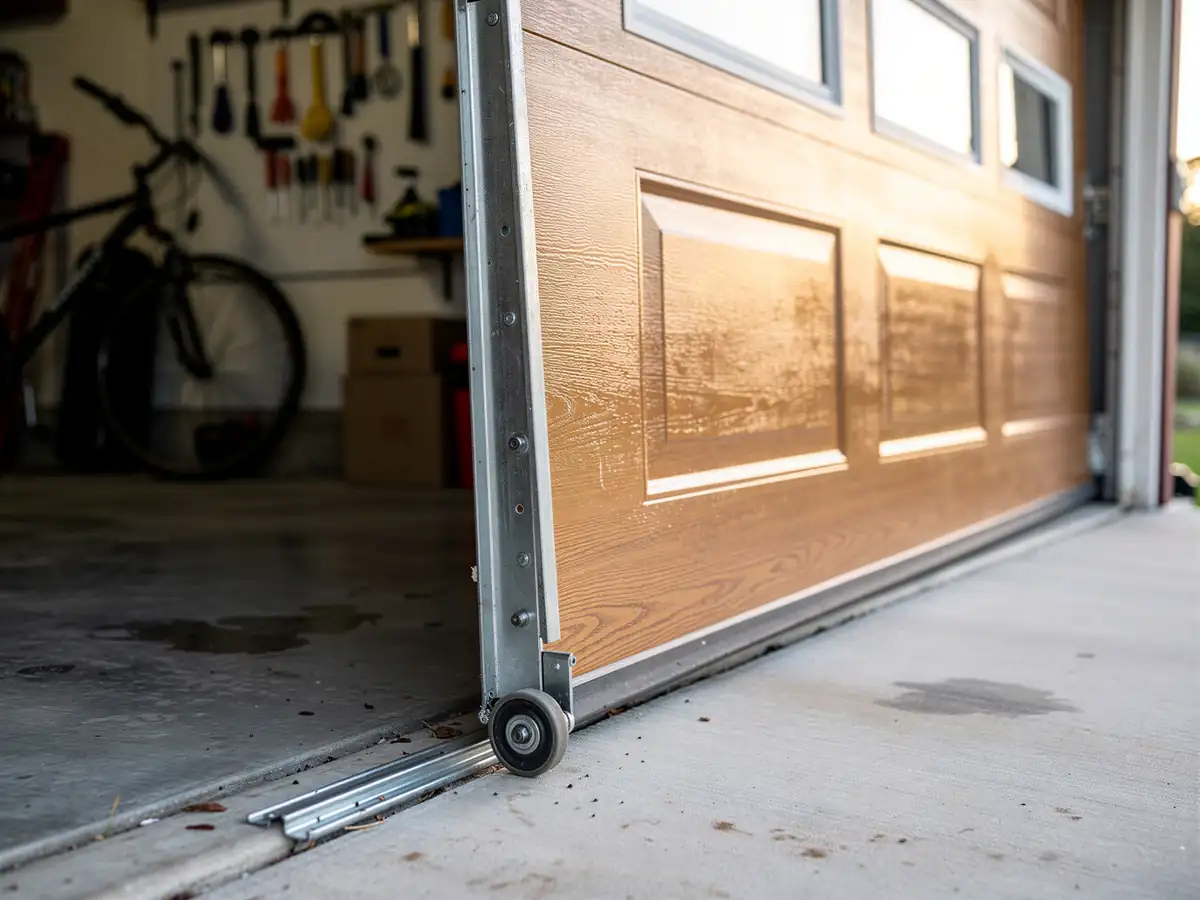
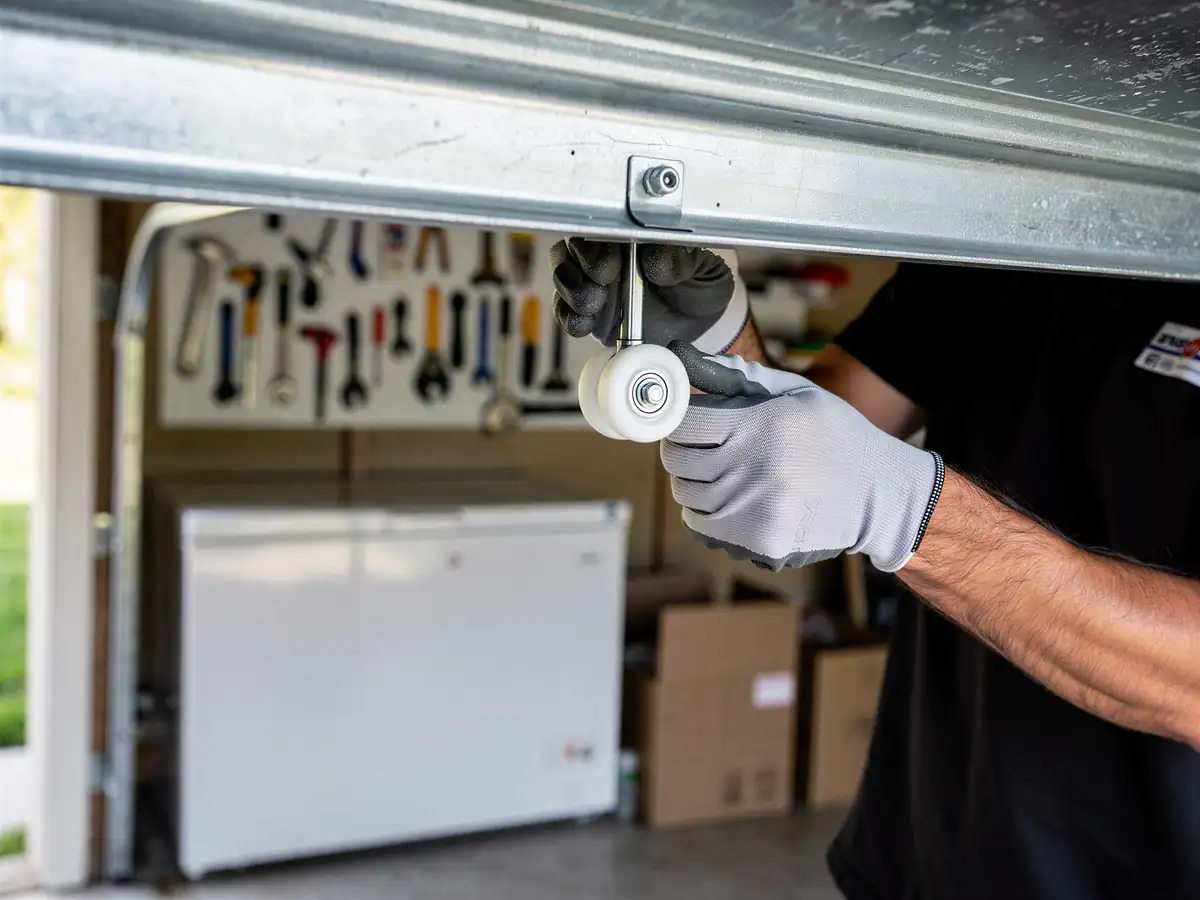
Elon's houses mostly went up around 1998, which means most garages still have the original builder-installed torsion spring setup and a first-generation opener with a photo-eye safety sensor bolted on near the floor. If your door won't close and the opener light is blinking, that's usually the sensors - knock them out of alignment or let a cobweb sit across the beam and the unit refuses to shut. You can often fix that yourself: wipe the lenses, check they're pointed at each other, make sure nothing's blocking the beam. Tightening loose hinge bolts or lubricating hinges and rollers is also fair game for a homeowner with a stepladder. What you should not touch is the torsion spring itself. A spring wound for a 16-foot double door builder-grade install carries real force, and the tools to wind or unwind it safely aren't something most garages own. Same goes for a broken cable or a bent track - those jobs need the door clamped and the right bar, not a pair of pliers and good intentions. If the fix involves anything above the top of the door, call it in.
Parts We Carry
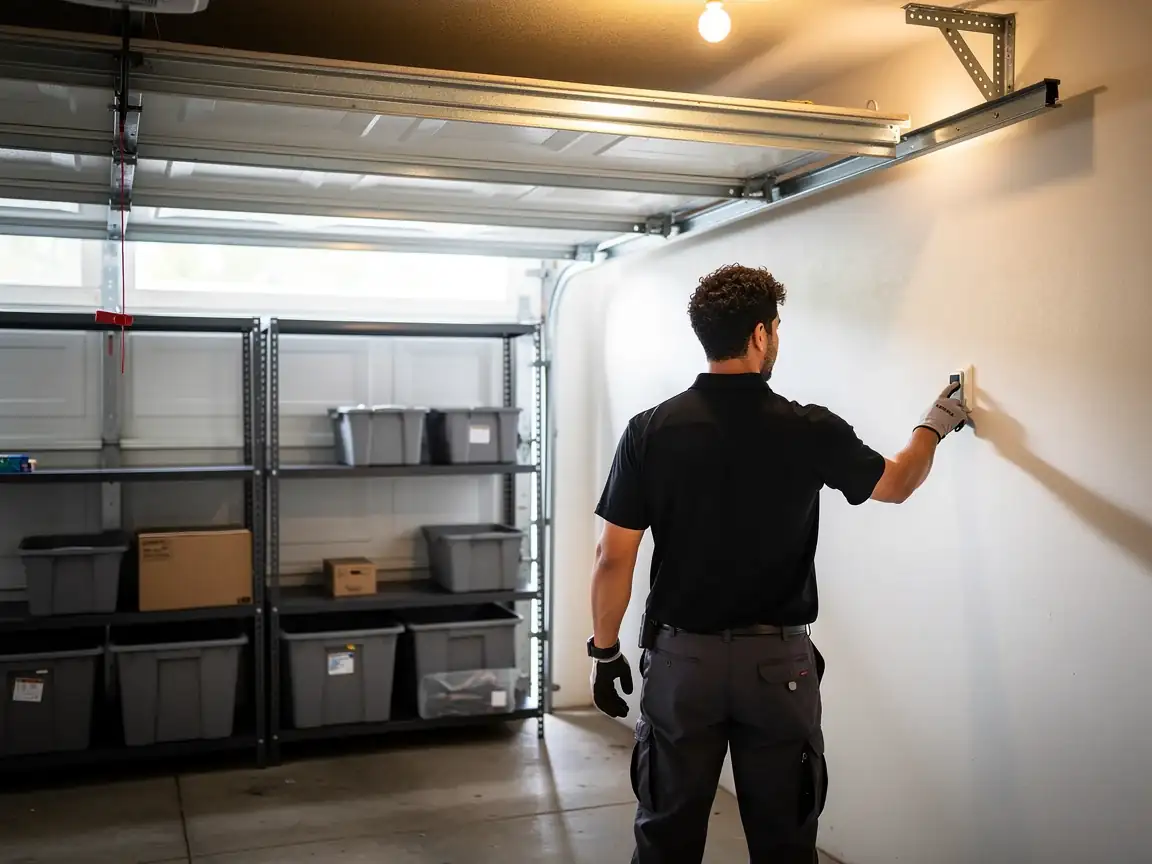
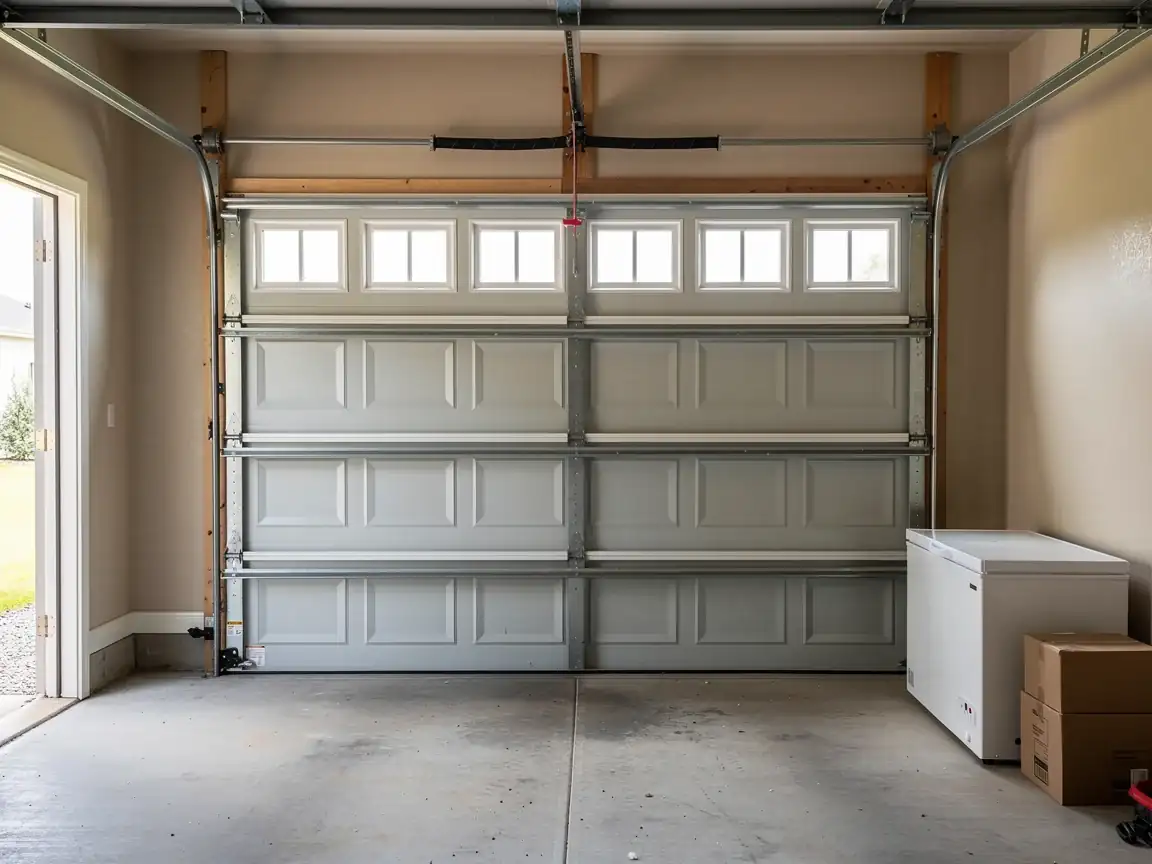
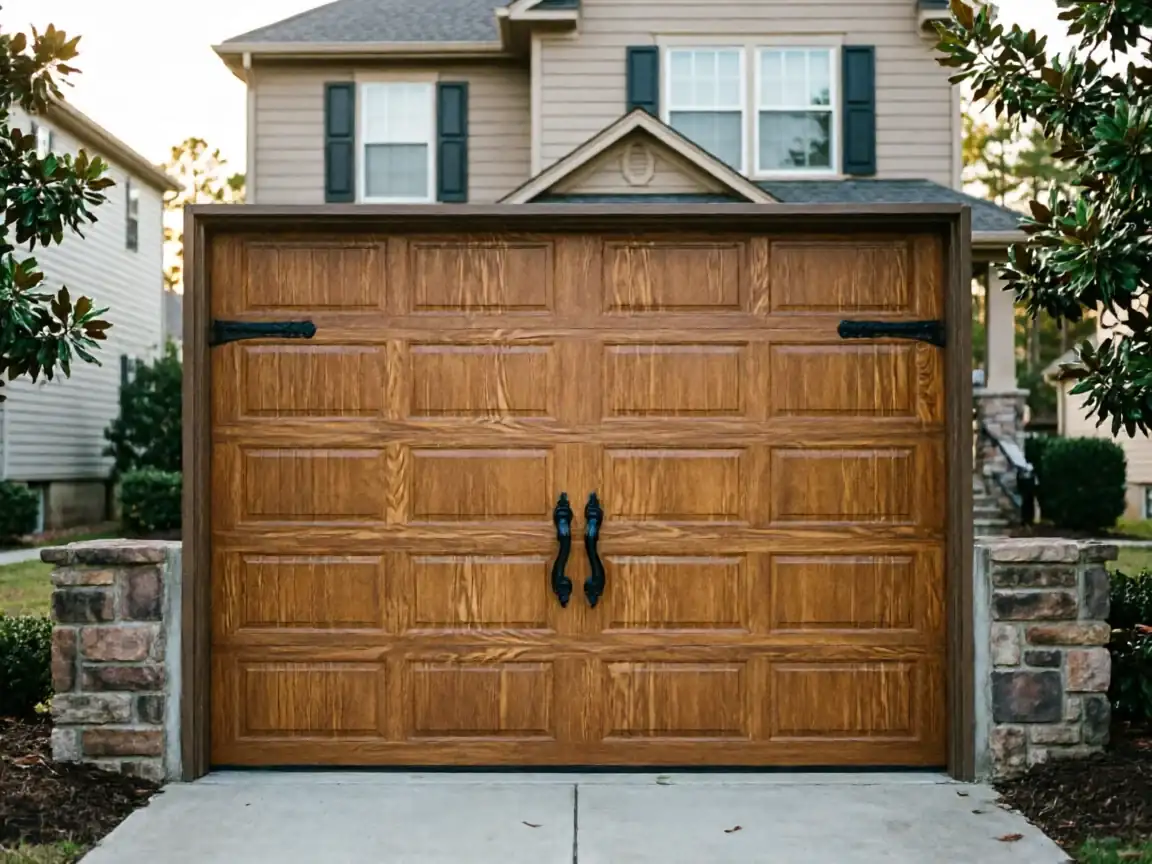
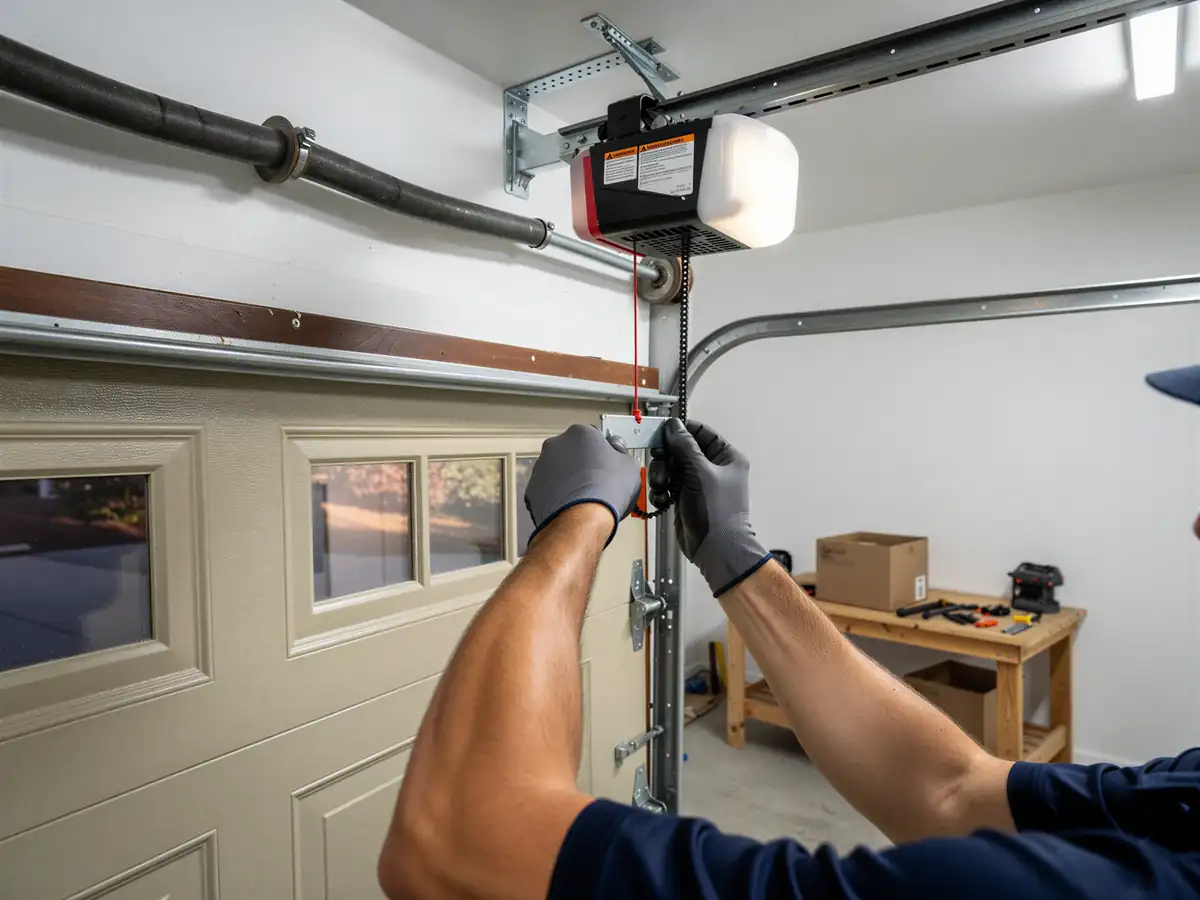
Houses built around 1998 in this area typically run 16-foot double doors on torsion hardware, so the truck carries torsion springs sized for that door width and weight, plus standard 1-3/4 inch track sections to match. We also stock photo-eye sensor pairs and the plug-in logic boards common to openers from that era, since those circuit boards tend to die outright rather than degrade slowly. Rollers, both nylon and steel, cables rated for double-door torsion setups, and the usual hinges and end bearings round out what's on hand for a same-visit repair. One limit worth being upfront about: if your opener is an older belt-drive unit with a proprietary board no longer manufactured, we may need to order the part rather than swap it on the spot, and that can add a day or two.
What Can Go Wrong
The biggest risk with original hardware from a 1998 build is a spring failing while someone's underneath the door or a cable snapping under tension - both are why we don't recommend DIY spring work. A second, quieter risk: logic boards in openers from this period can fail in a way that looks like a dead motor, leading homeowners to replace the whole unit when only the board needed swapping. We've also seen bottom brackets on original doors rust or loosen after two and a half decades of seasonal temperature swings typical of this part of North Carolina's cold-moderate climate band, which can let a cable jump its drum. None of this is catastrophic if caught early, but a door that's groaning, sagging on one side, or slow to respond should get looked at before it fails outright rather than after.
What the Repair Takes
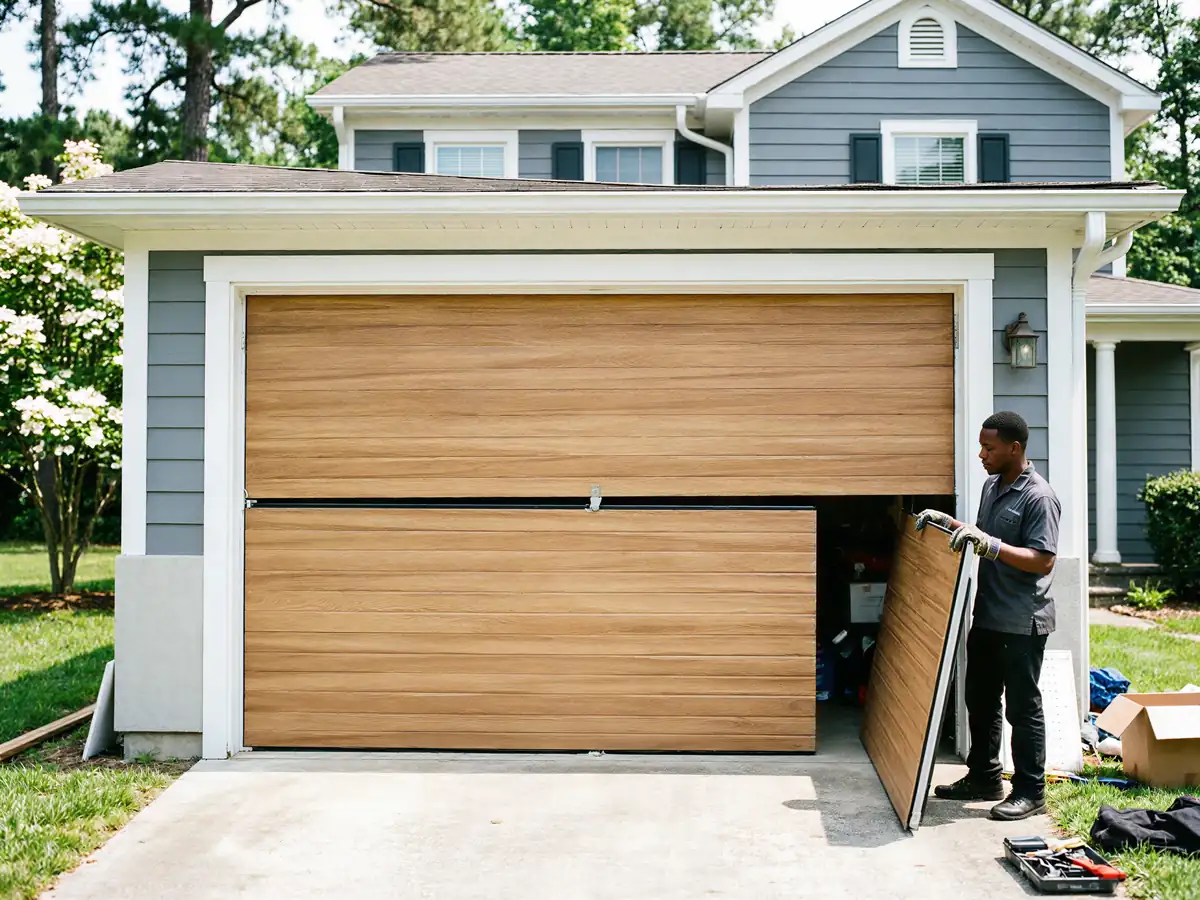
Most spring and cable jobs on a double door from this era take under two hours once we're on site with the right size spring on the truck, which we usually have given how common that door width is in homes built in the late 1990s. Opener board or sensor swaps are faster, often done in under an hour. Track alignment or a full roller replacement runs longer depending on how much the track has to be reset. We travel out from Burlington, about 3 miles to Elon, so there's no local branch - just the truck coming to you. If a part isn't something we stock, like an obsolete belt-drive logic board, we're upfront about the wait rather than forcing a mismatched fix.