What You Are Seeing
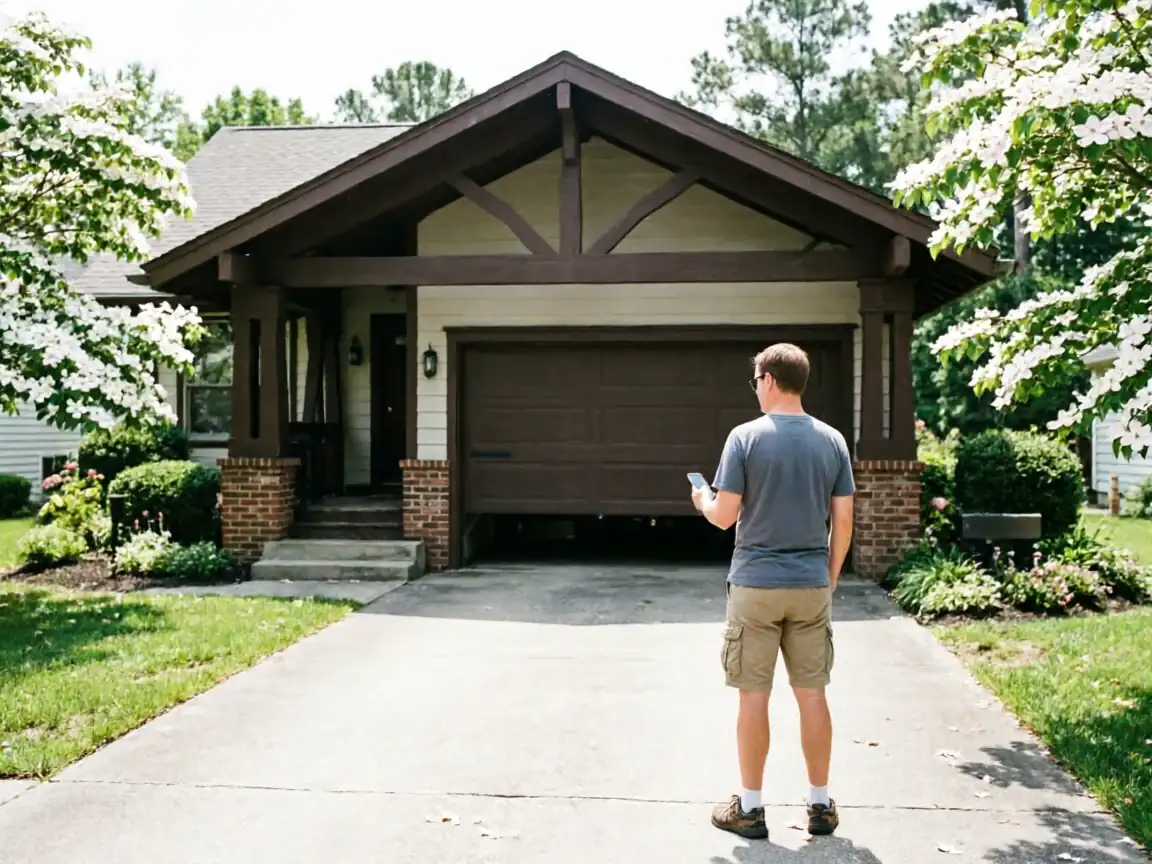
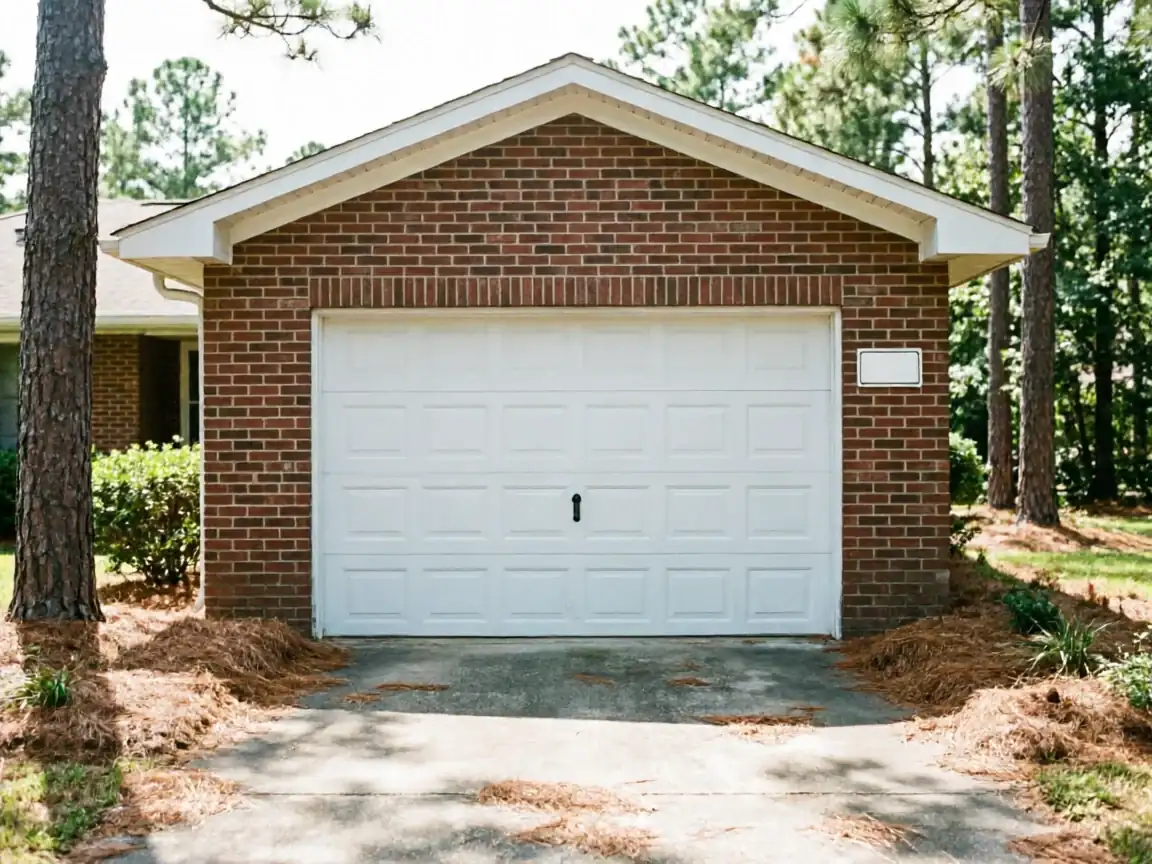
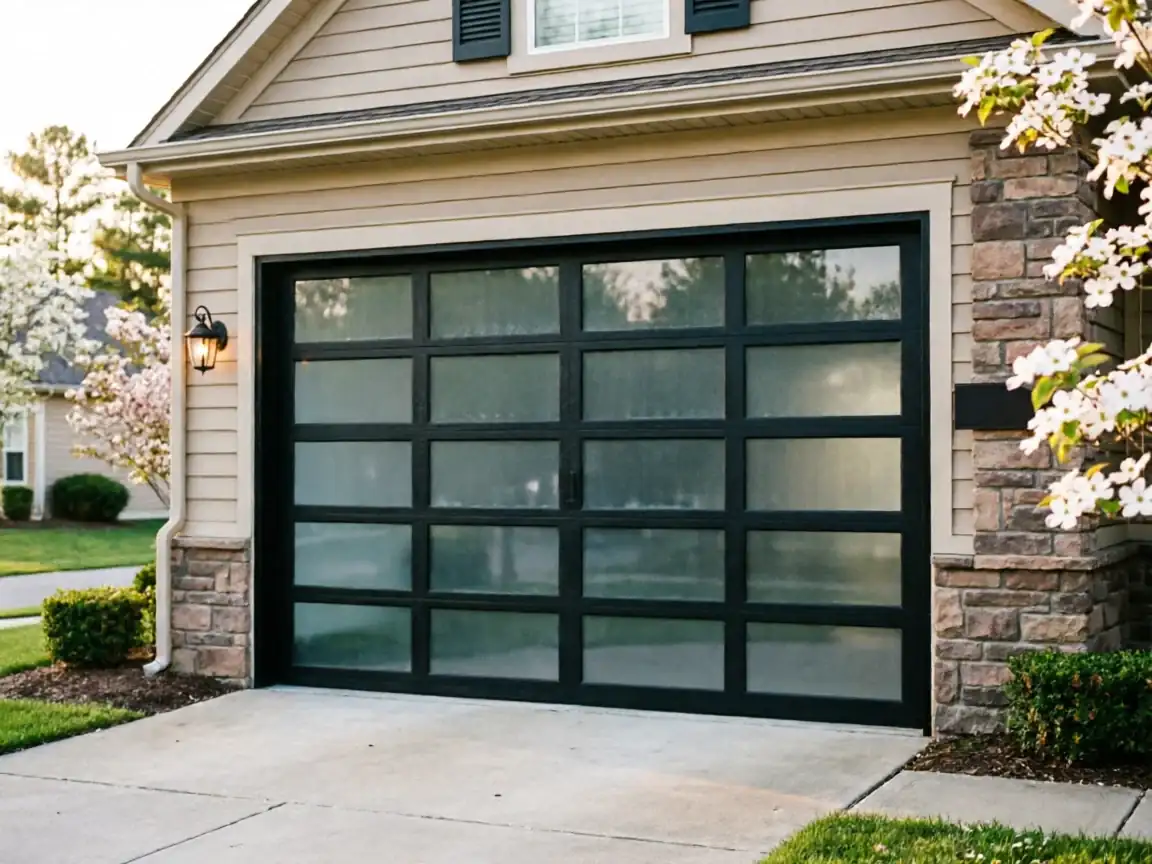
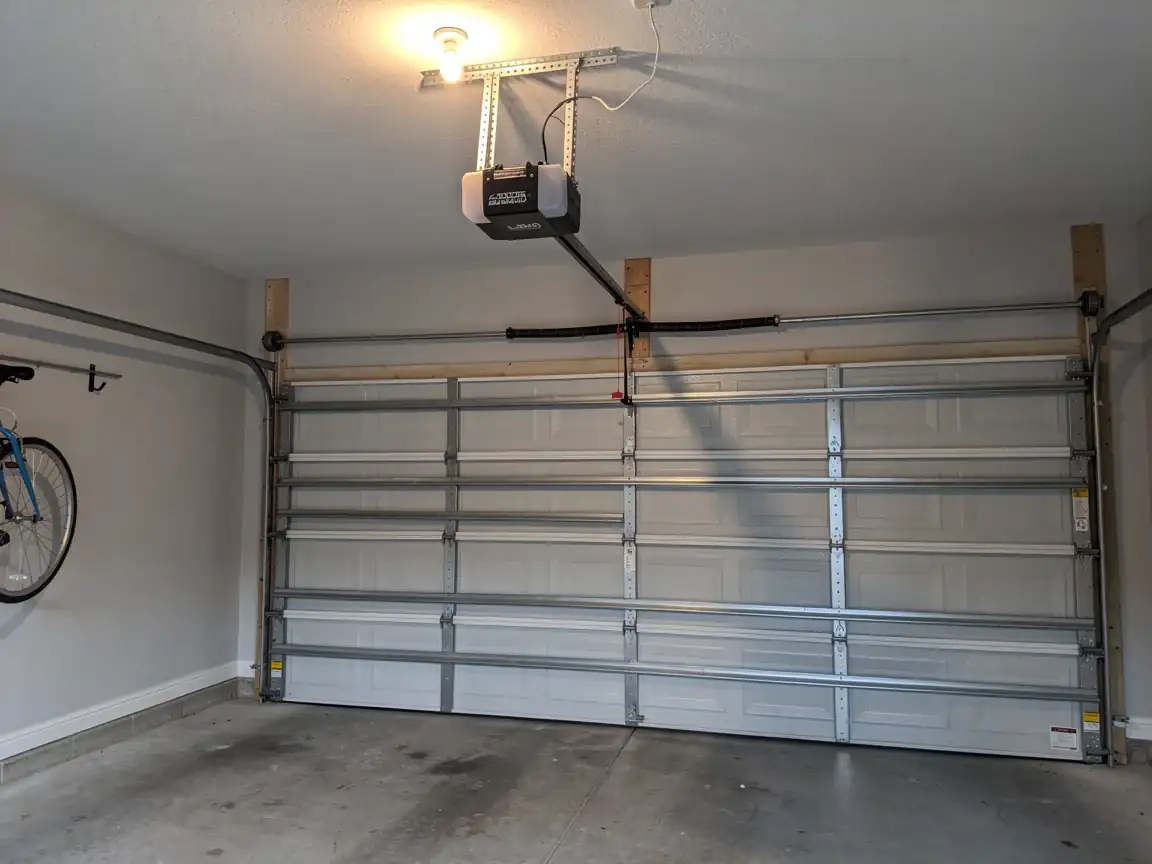
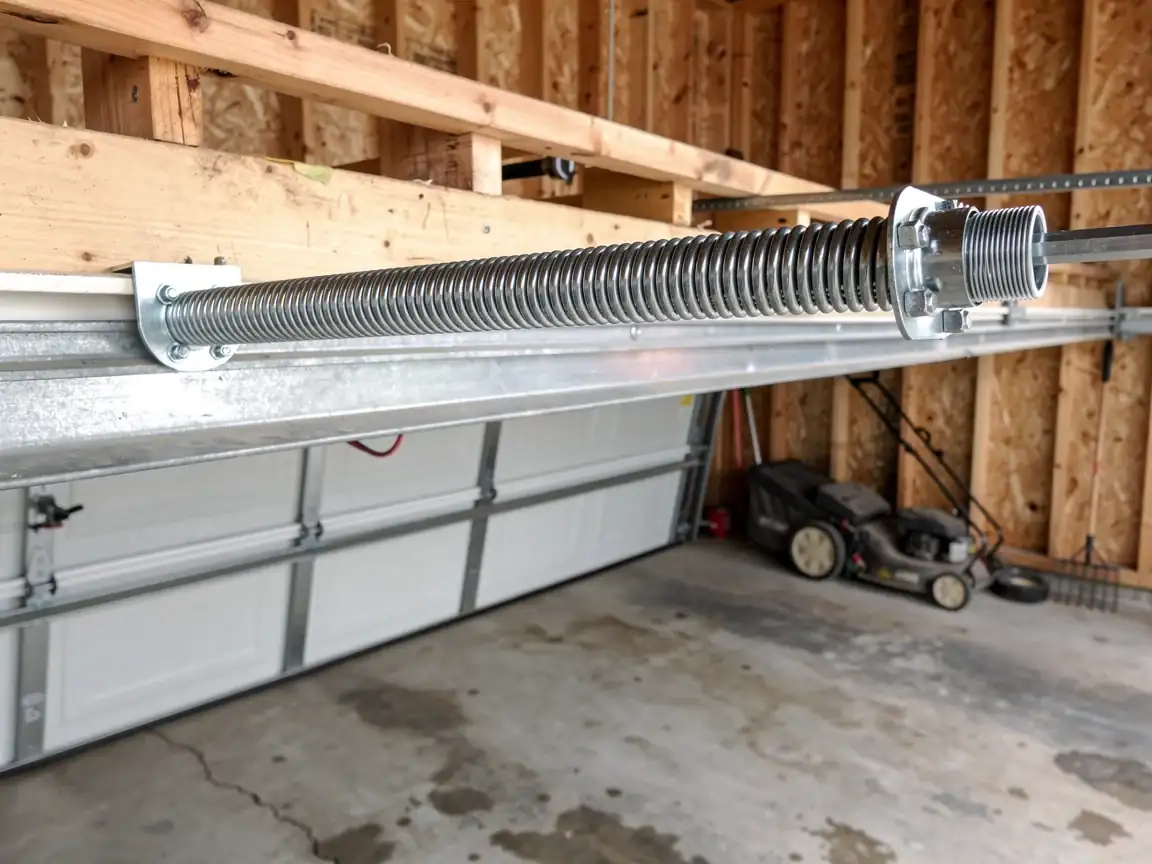
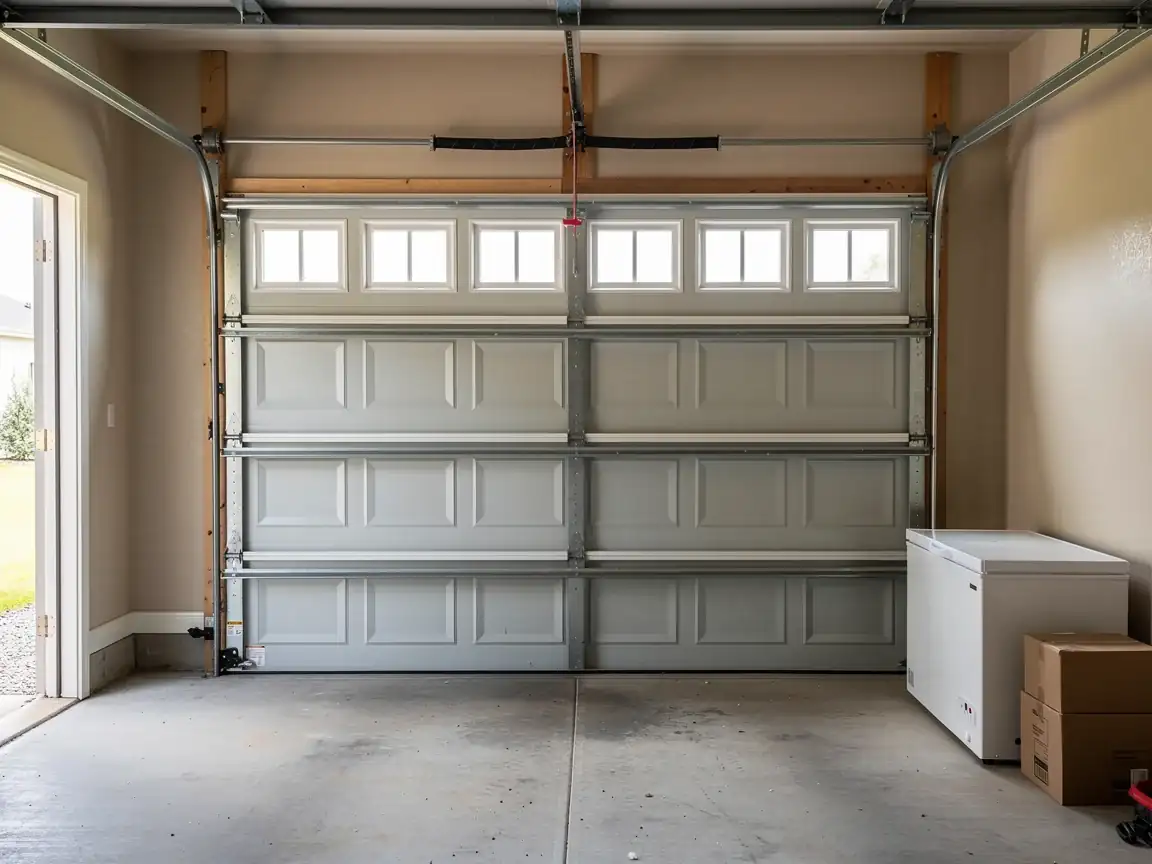
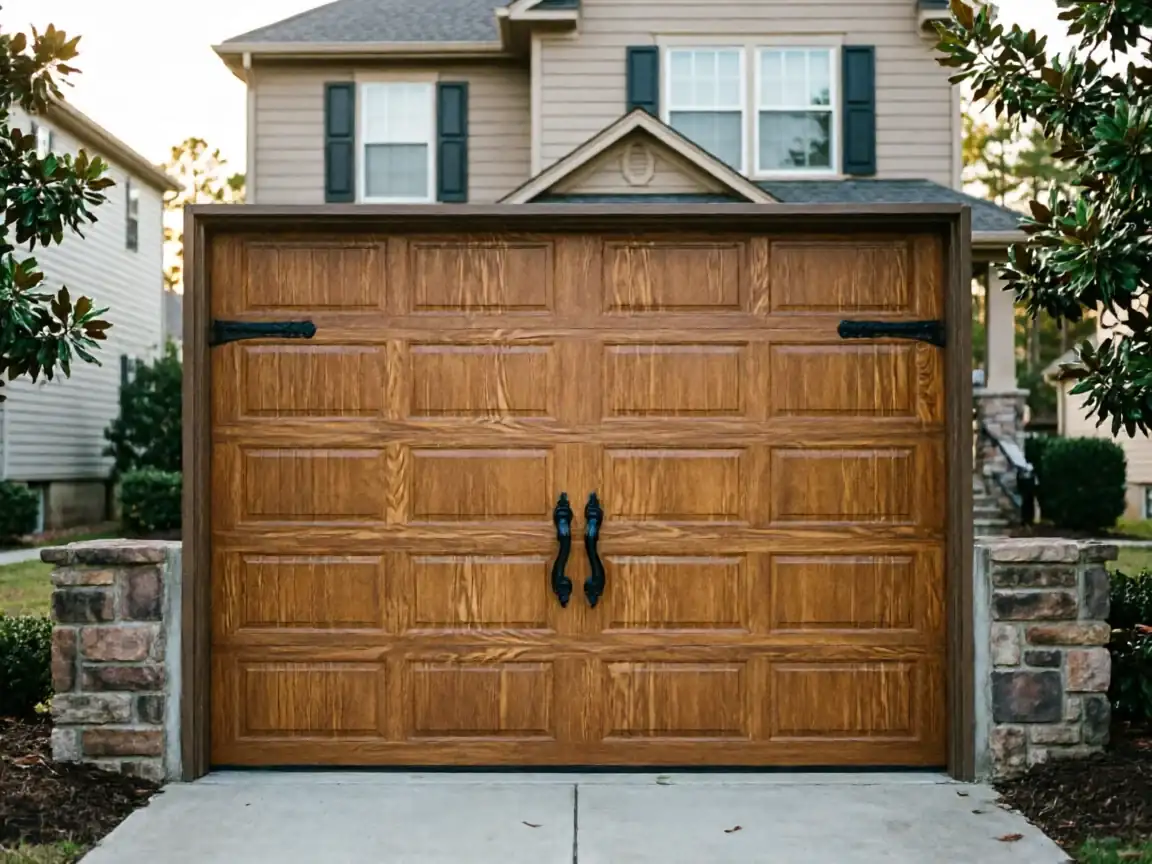
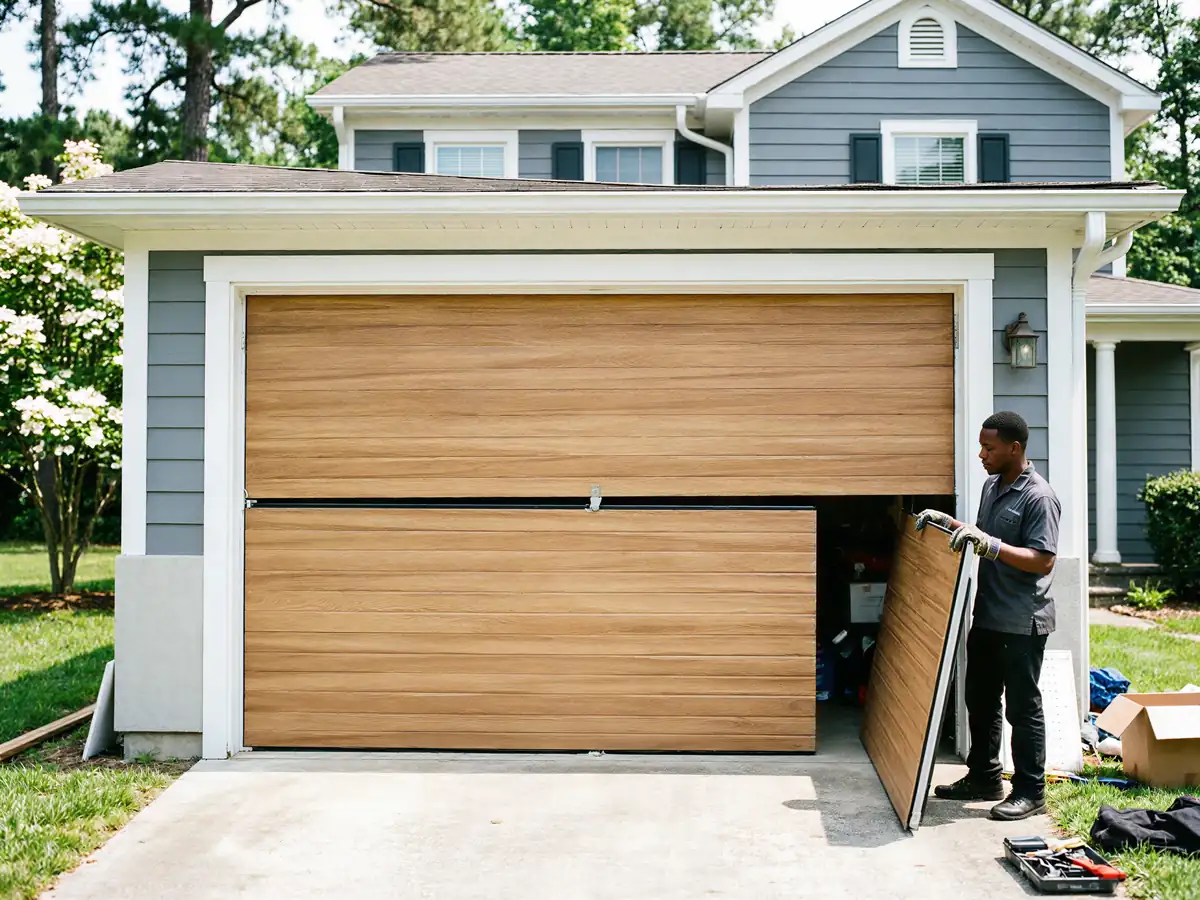
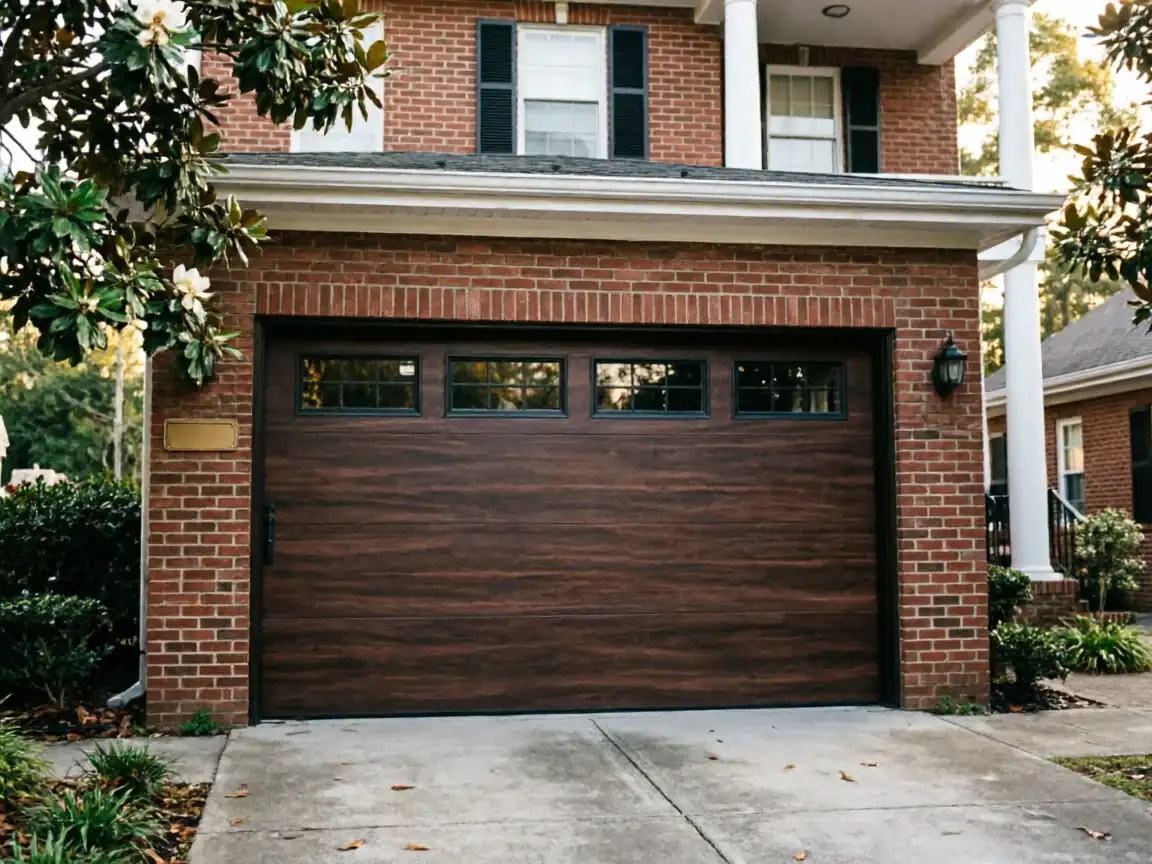
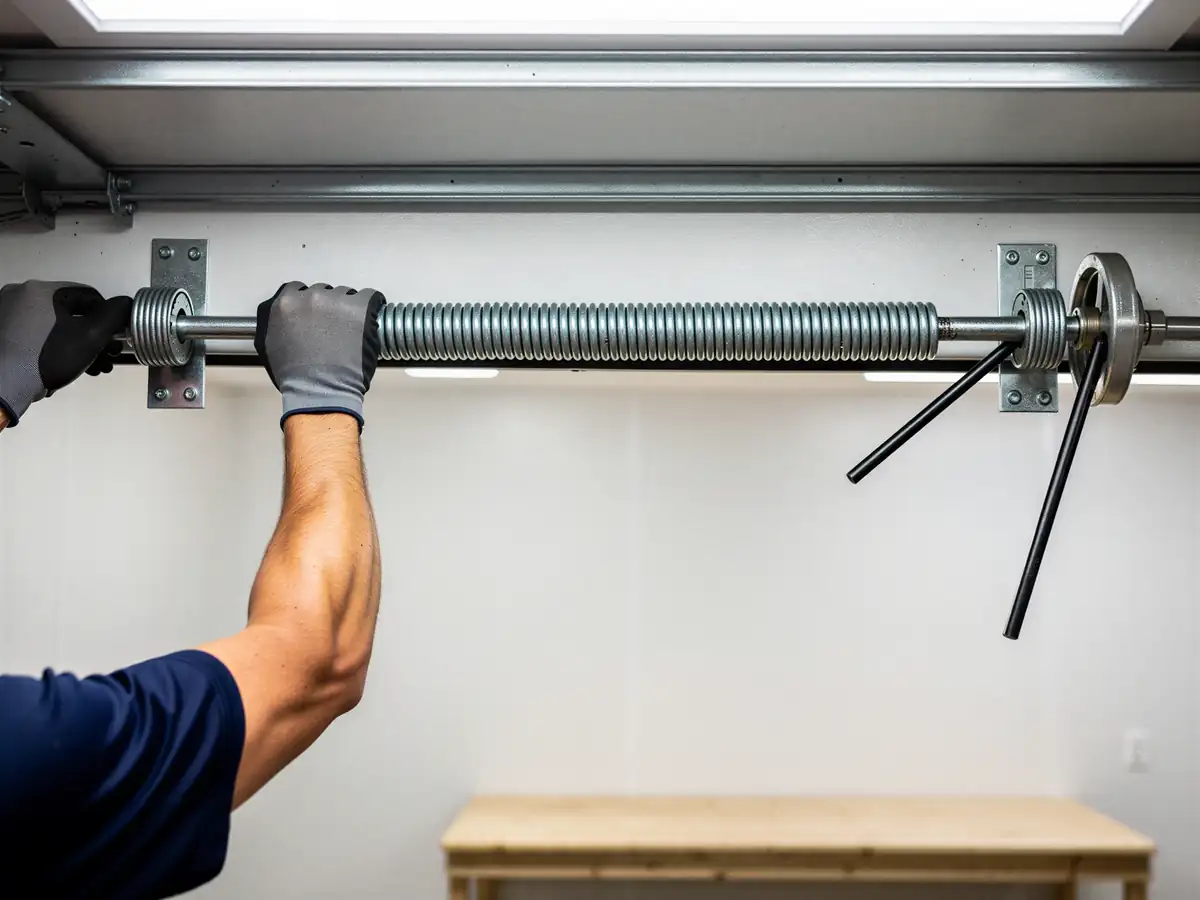
Most houses in Gibsonville went up around 2002, which puts this area a good two decades newer than a lot of what we see closer into Burlington. That matters because by 2002, torsion springs mounted on a shaft above the door had become the standard setup, replacing the older extension-spring-on-the-side arrangement you still find in pre-1980s neighborhoods. If your door is sagging on one side, slamming down the last foot of travel, or the opener strains and reverses before the door closes, you're likely looking at a torsion spring that's lost its wind or snapped outright. You'll usually hear it before you see it - a loud bang from the garage, often mistaken for something falling off a shelf. On a 2002-era door, the spring is rated for a specific cycle count, and most of what we're replacing at this point is simply original equipment that's reached the end of its life, not damage from a bad install. Two springs on a double-car door almost always fail close together even if only one has actually broken, because they've carried the same load for the same number of years.
What the Repair Takes
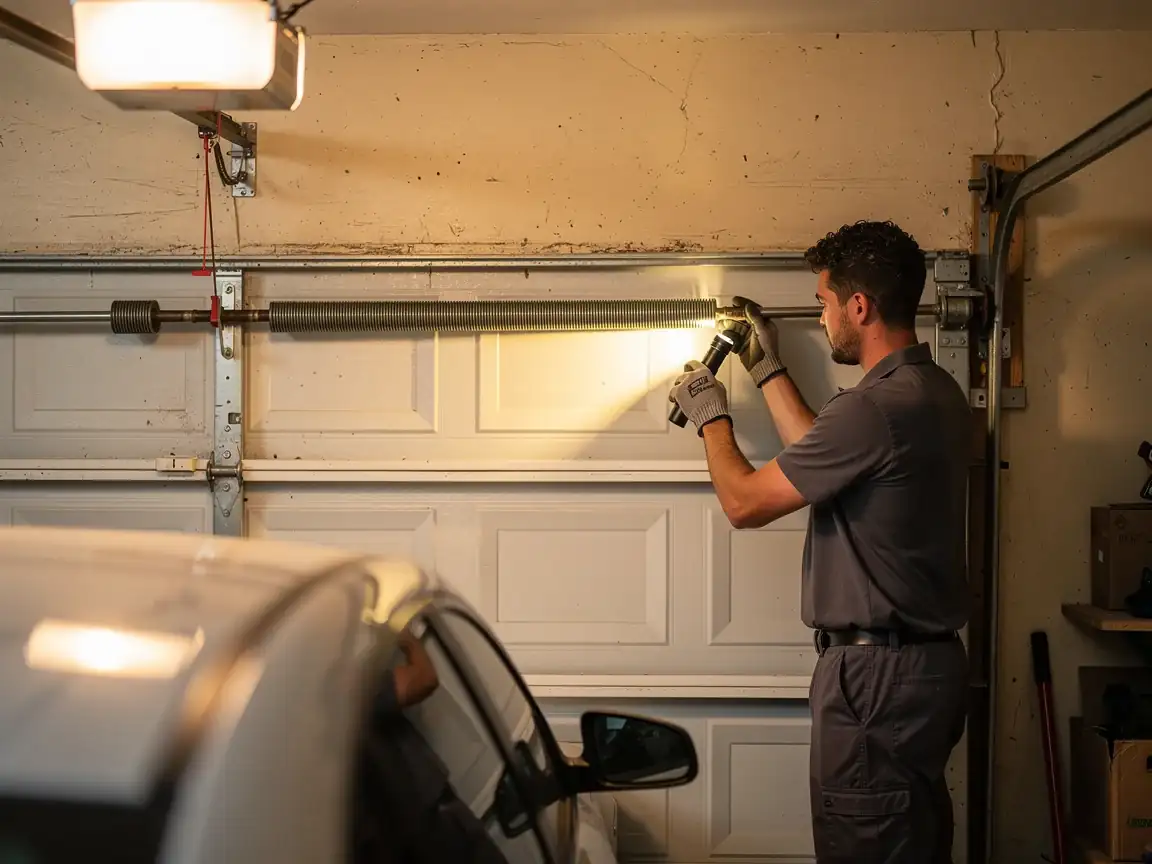
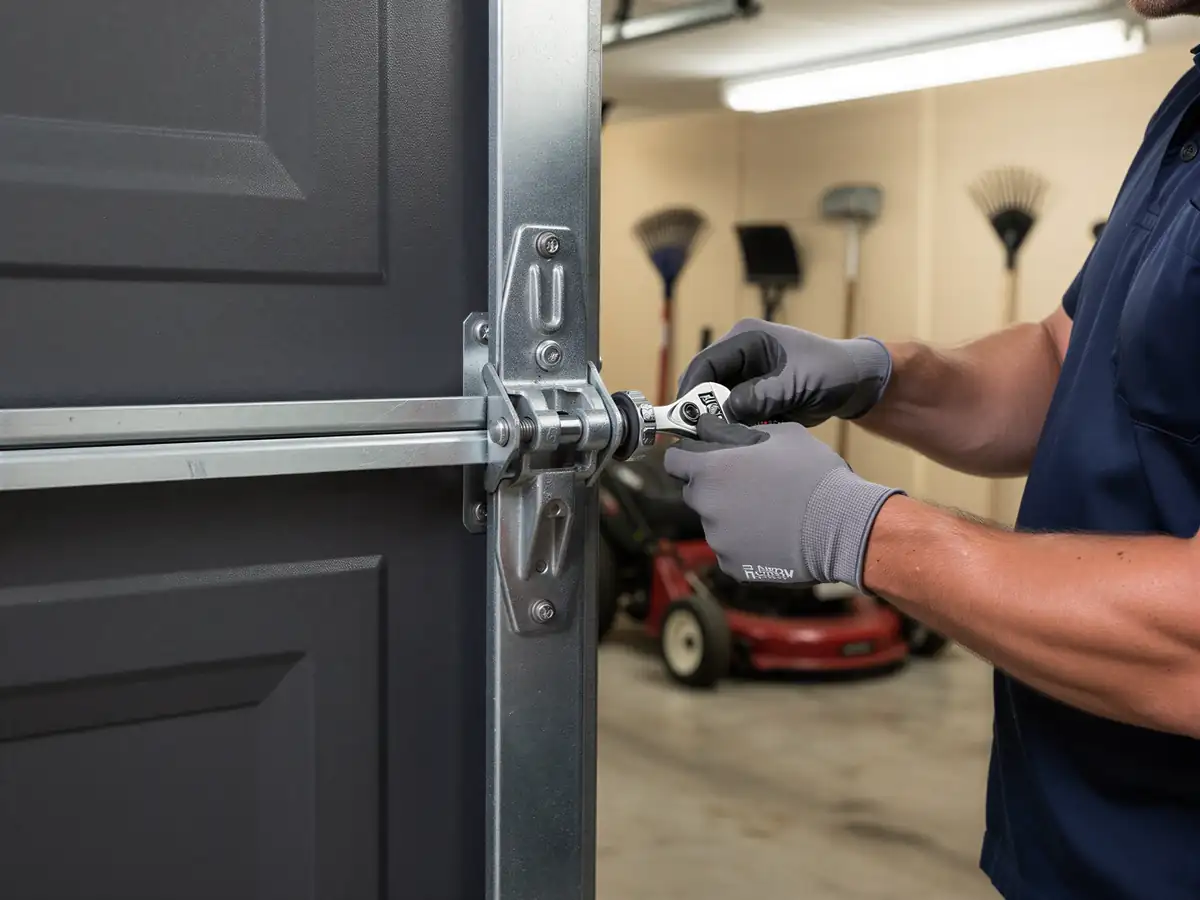
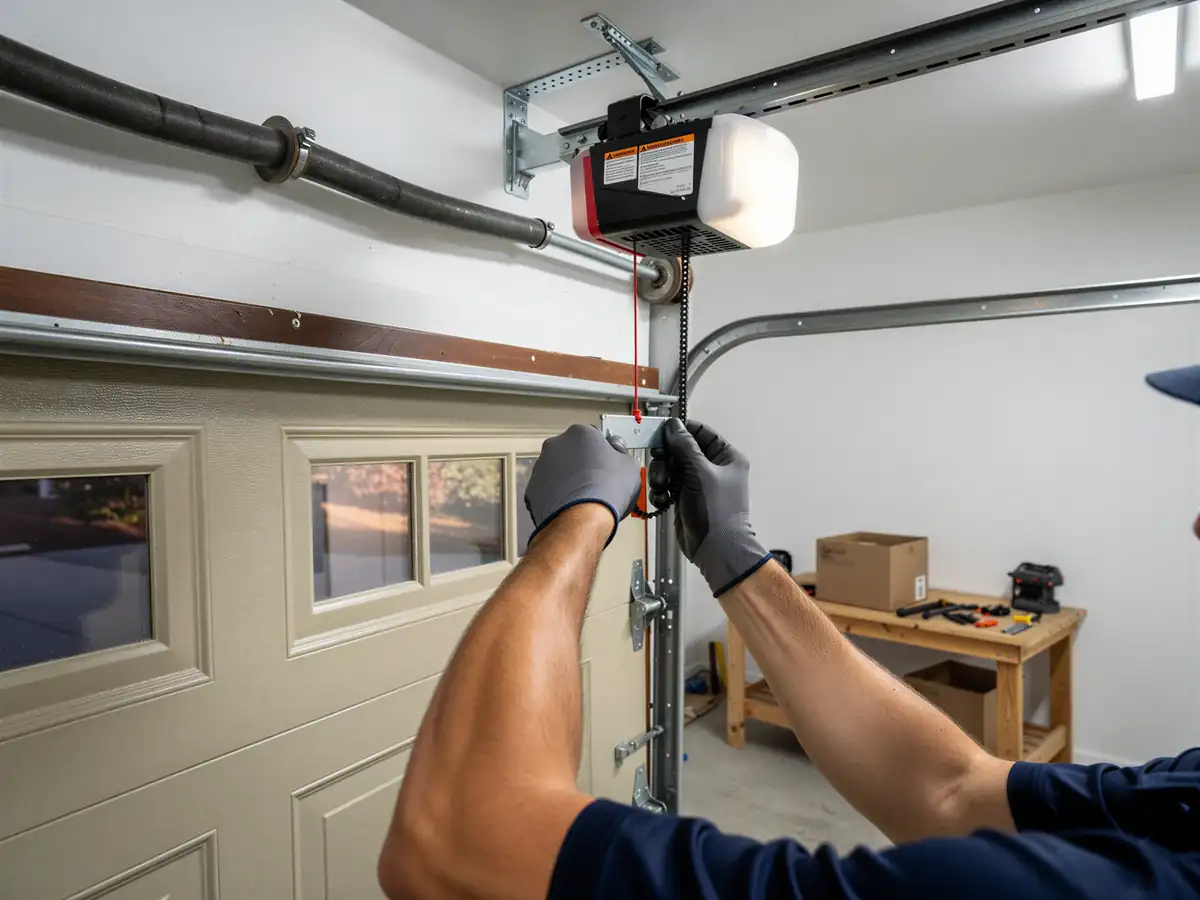
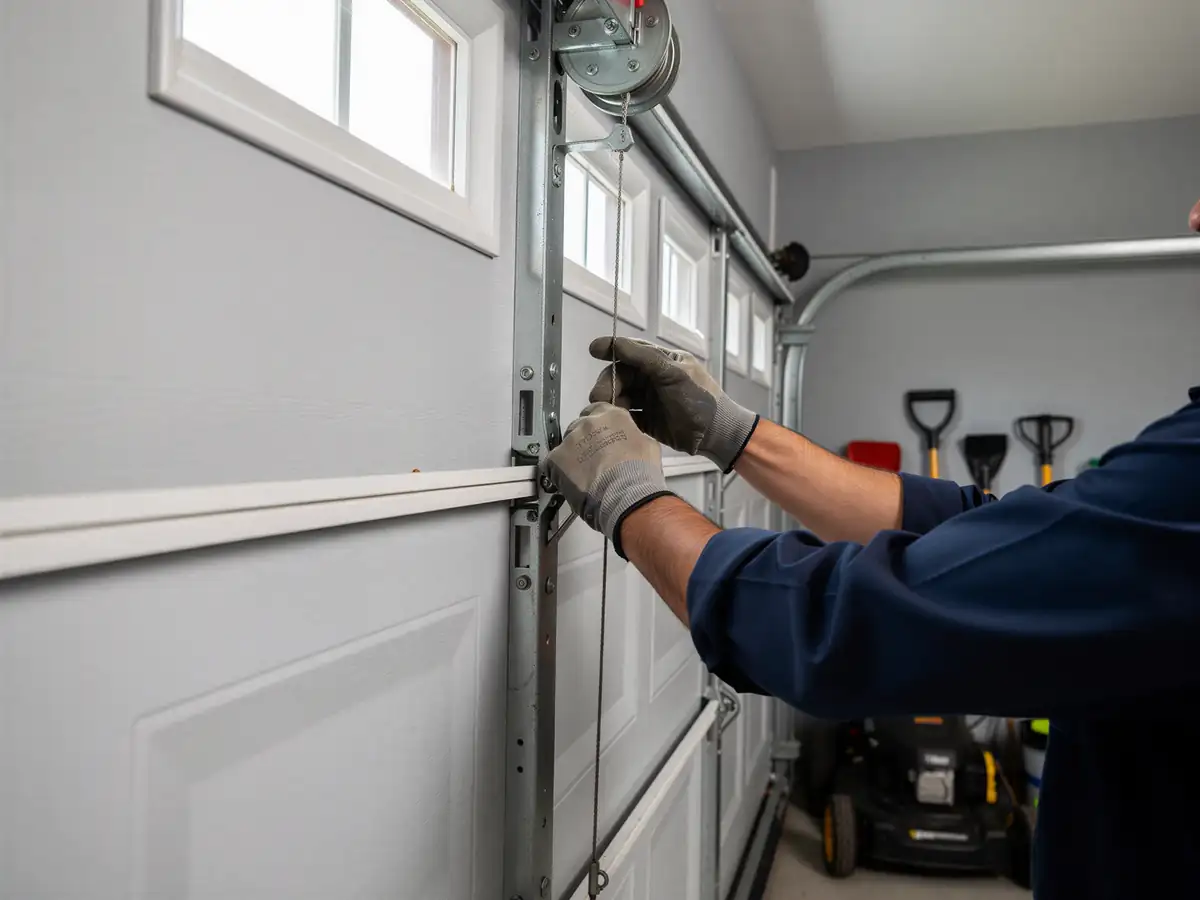
A torsion spring swap on a standard door is a controlled job - unwind the old spring under tension, measure the wire gauge and wind direction, set the new spring to match the door's weight, and re-tension it so the door balances a few inches off the floor on its own. On the newer hardware common in Gibsonville, galvanized torsion springs are sized to the door panel weight and track width specified when the house was built, so we're matching replacement parts to what's already on the shaft rather than retrofitting older hardware. We also check the cables and the center bearing plate while we're in there, since a spring failure sometimes bends the plate or frays a cable under the sudden load shift. One honest limit: if the spring broke because the door was out of balance for months beforehand, the opener's gears or drive may have already taken wear we can't reverse with a spring alone - that's a second conversation, not part of the spring job.
What It Costs
We don't publish a flat number here because spring cost depends on whether you need one spring or the matched pair, the wire gauge for your door's weight, and whether cables or bearings need replacing alongside it. What we can tell you is that Gibsonville's median household income runs well above the wider Burlington-area figure, and newer, heavier insulated doors common in 2002-and-later construction typically call for a higher-rated spring than the lighter single-panel doors on older housing stock nearby - that's a real cost driver, not a sales pitch. Ask for the number when you call and we'll quote it against your actual door, not a guess.
Parts We Carry
We stock galvanized torsion springs in the wire gauges that match standard residential doors from the early 2000s build era, along with the cables, end bearings, and center bearing plates that tend to go along with a spring failure. Given our service area's winters fall in a cold-moderate climate band, we also carry springs rated for that temperature swing - cold air stiffens the coil and changes how much torque it takes to lift the door, which is part of what we're accounting for when we size a replacement rather than just swapping in whatever's closest on the shelf.