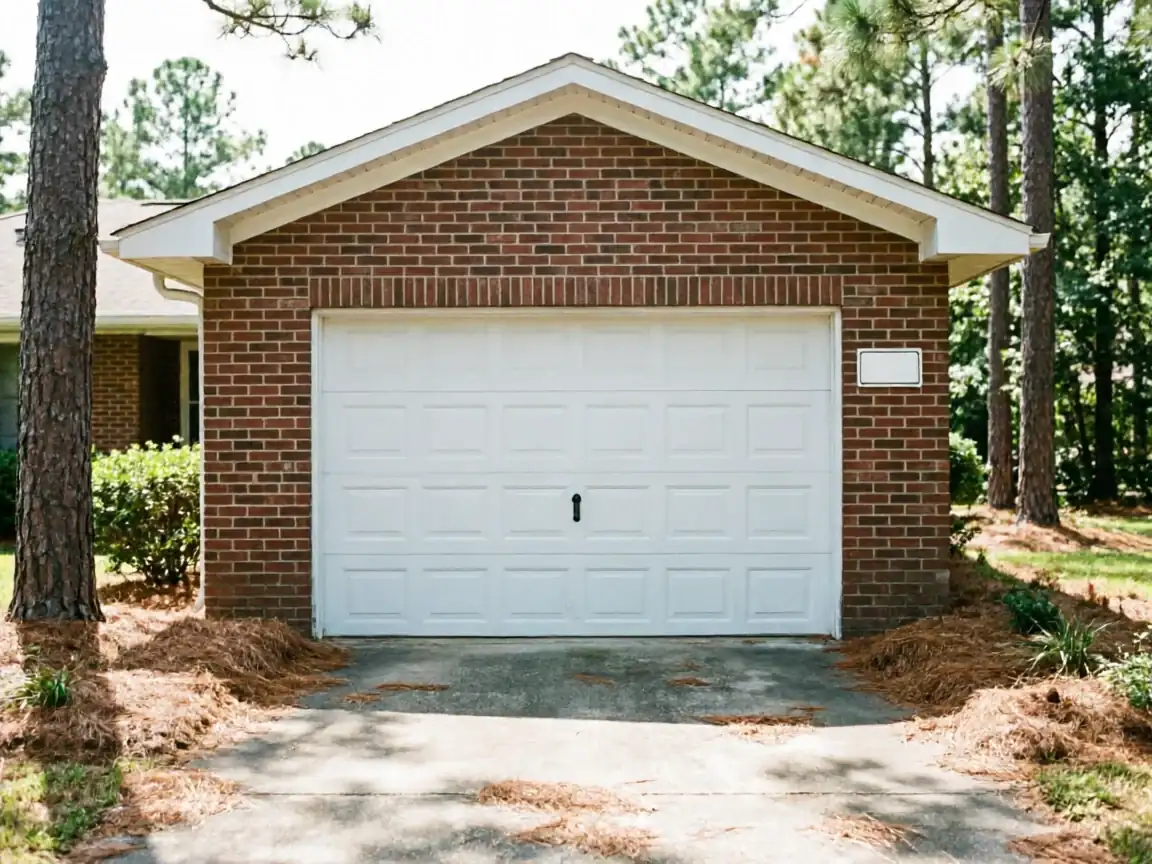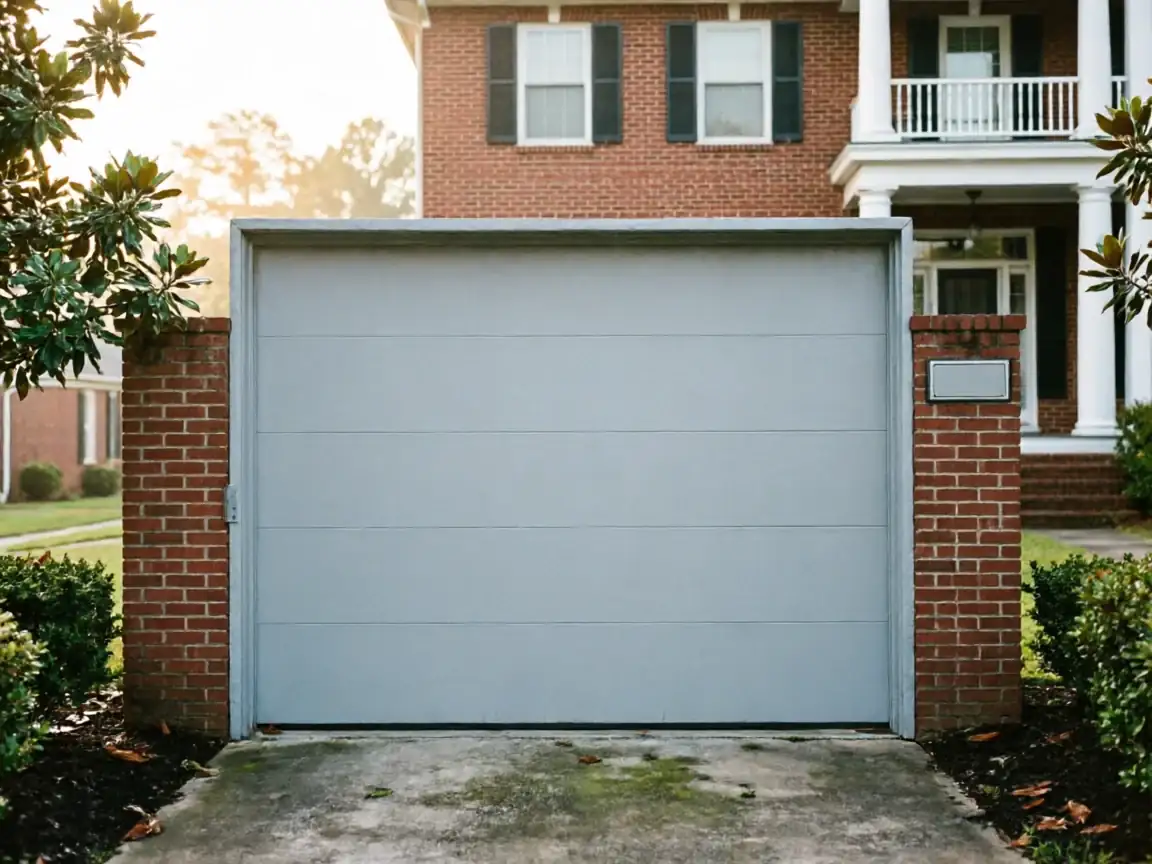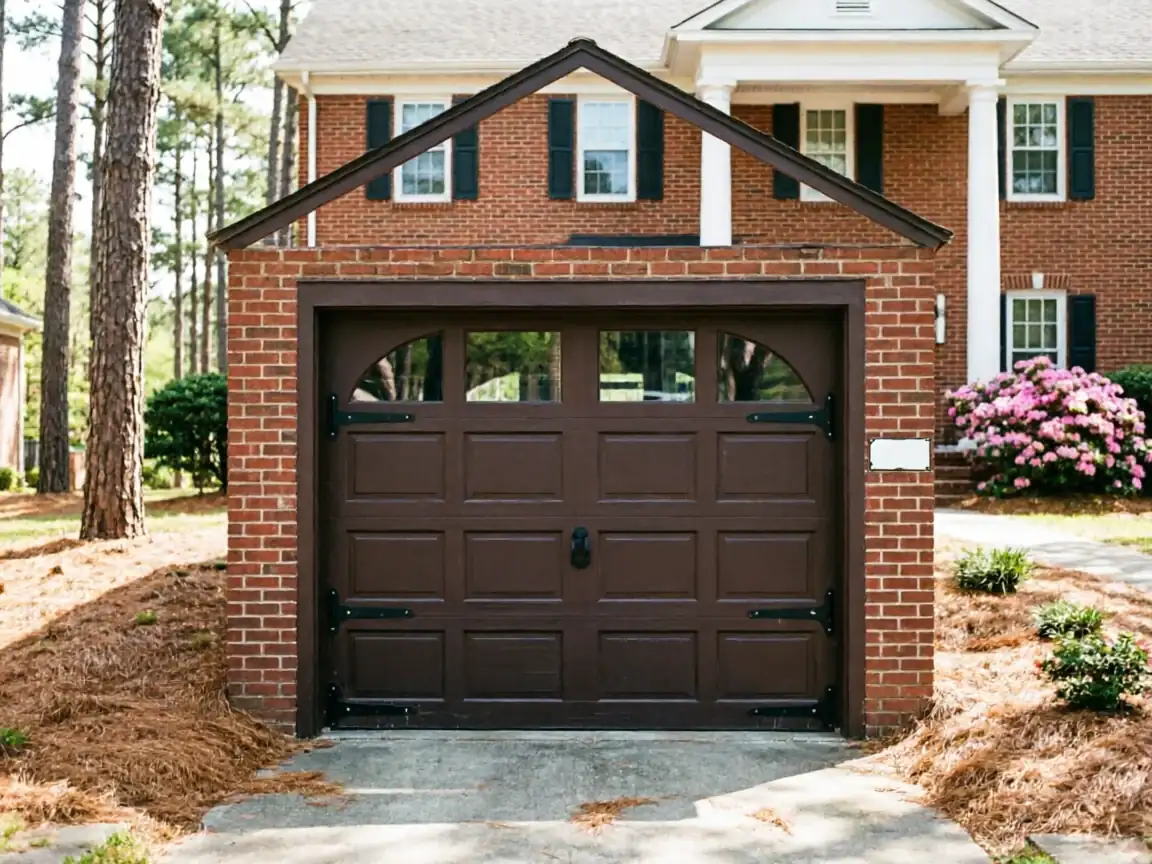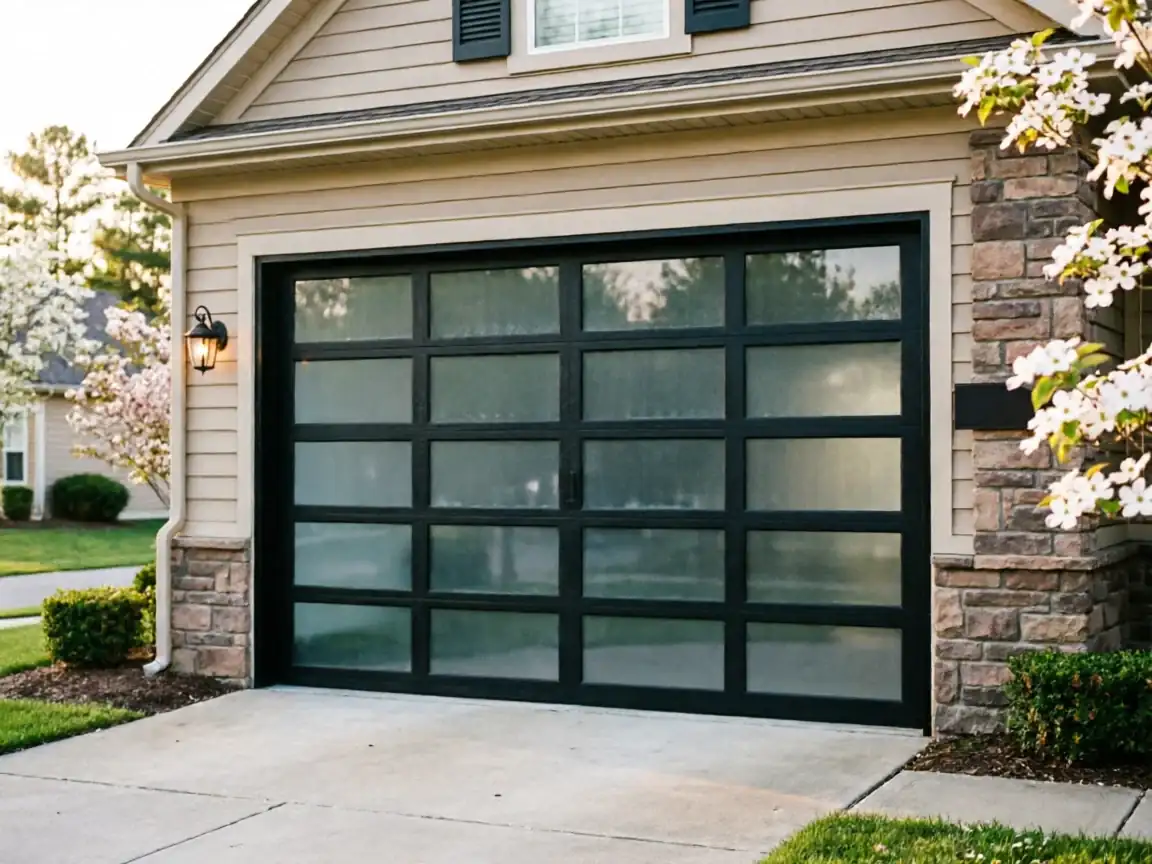
What You Are Seeing
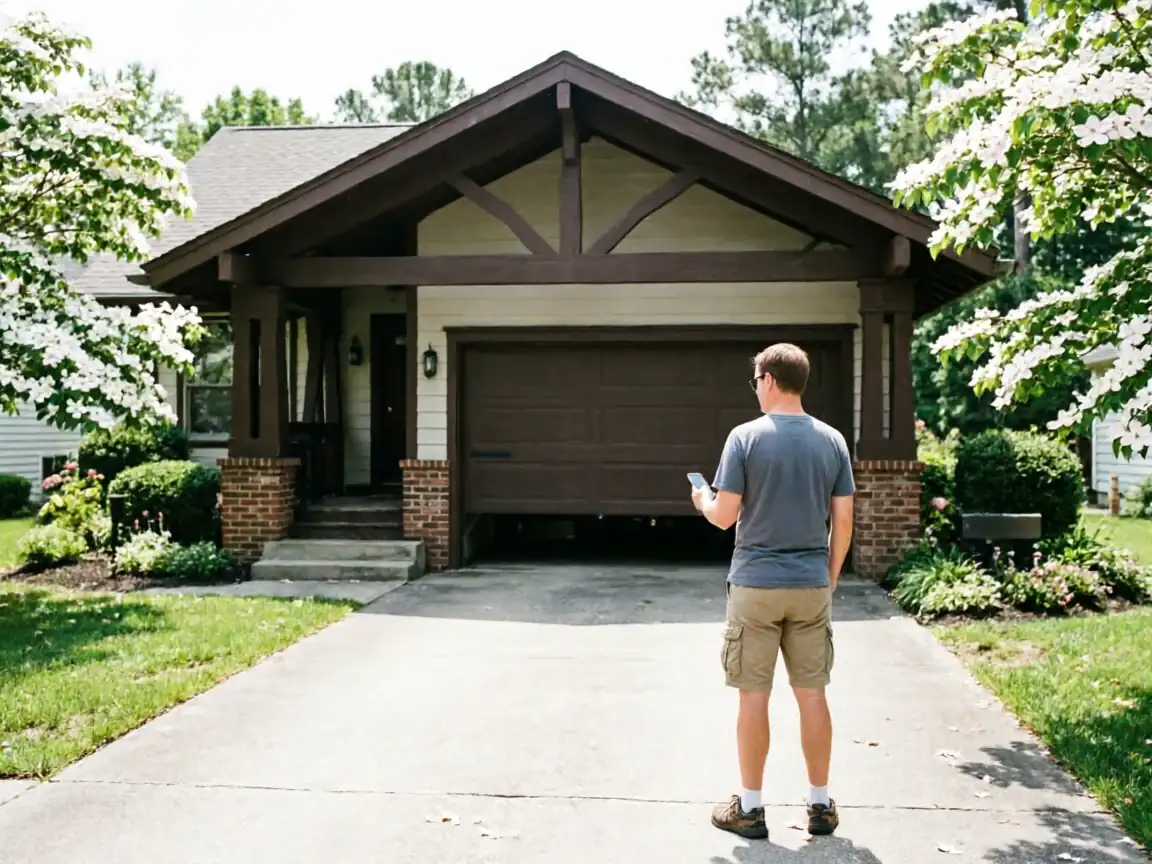
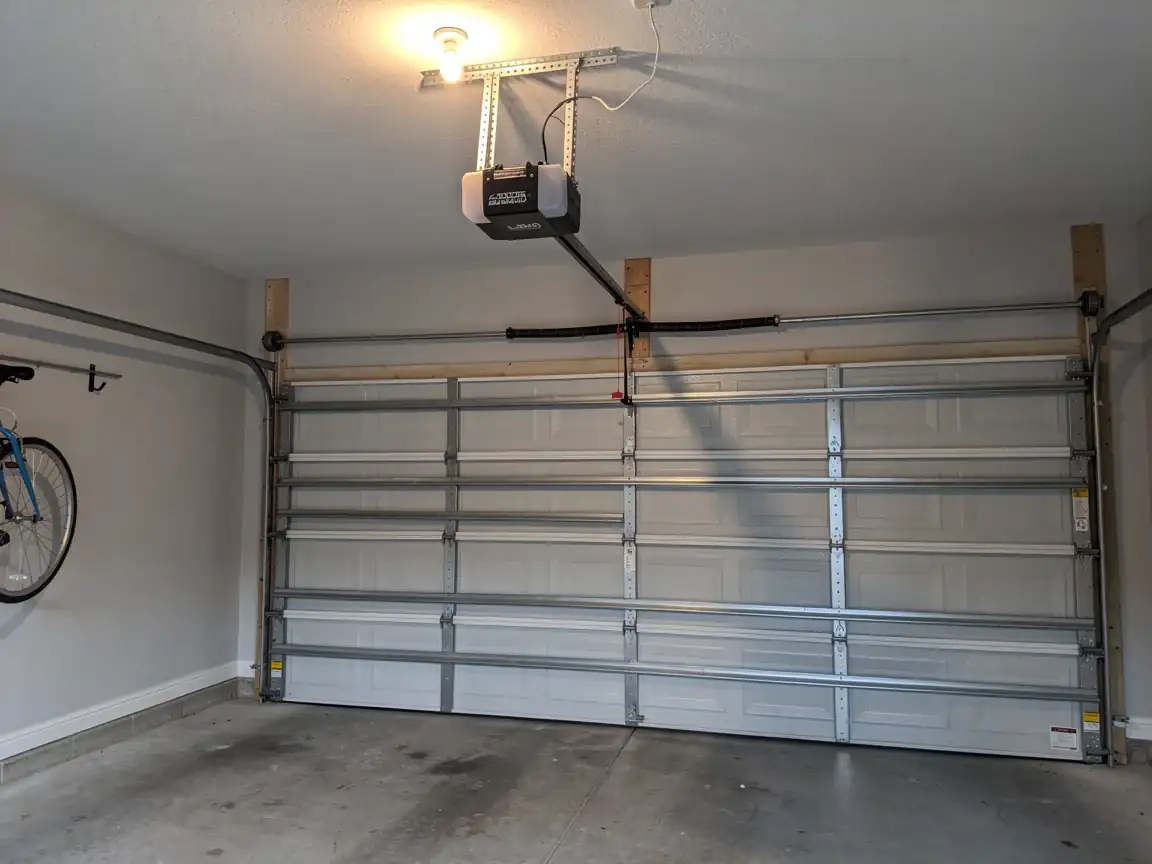
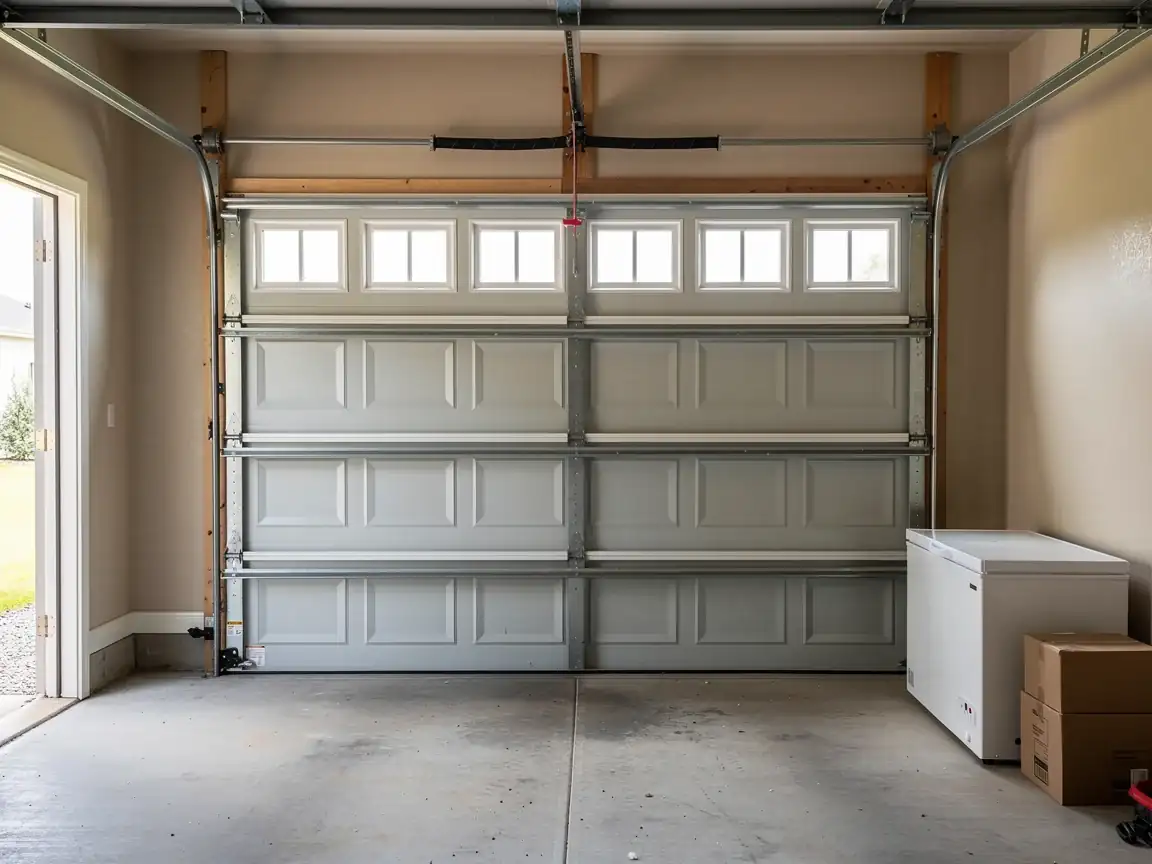
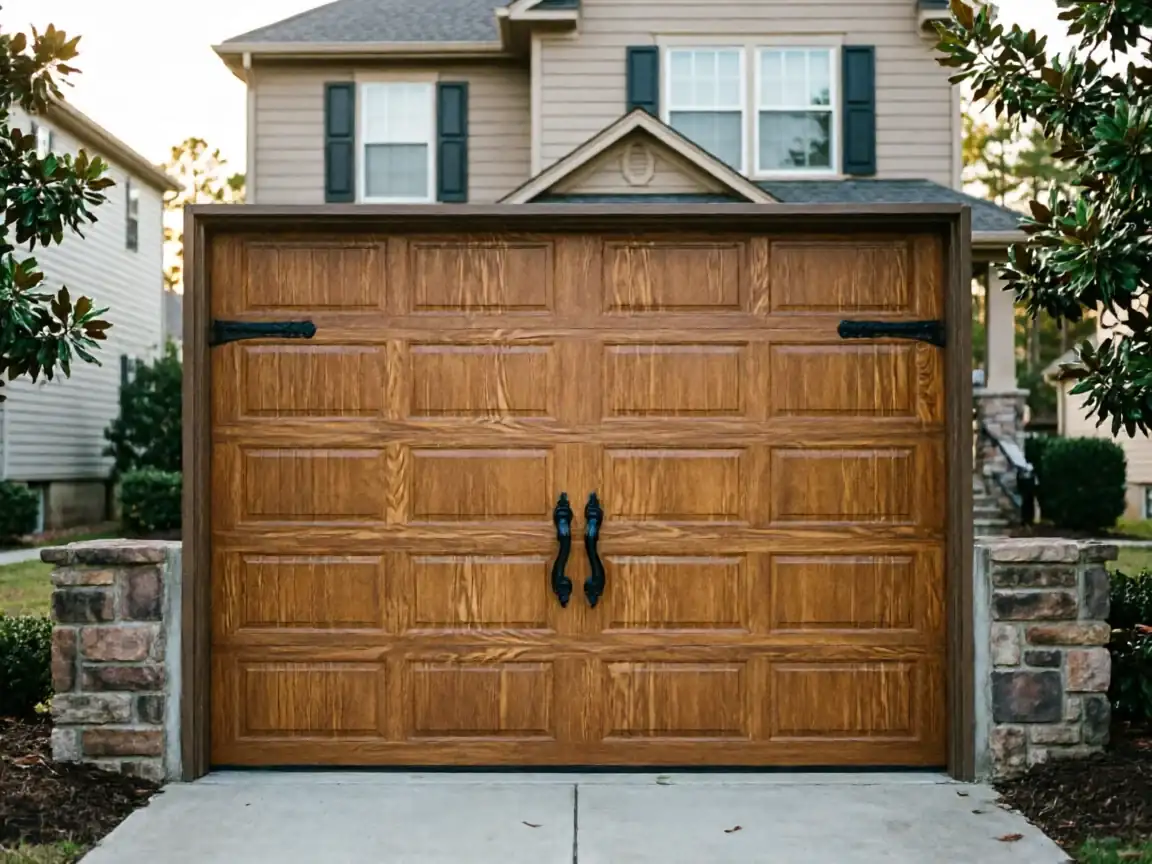
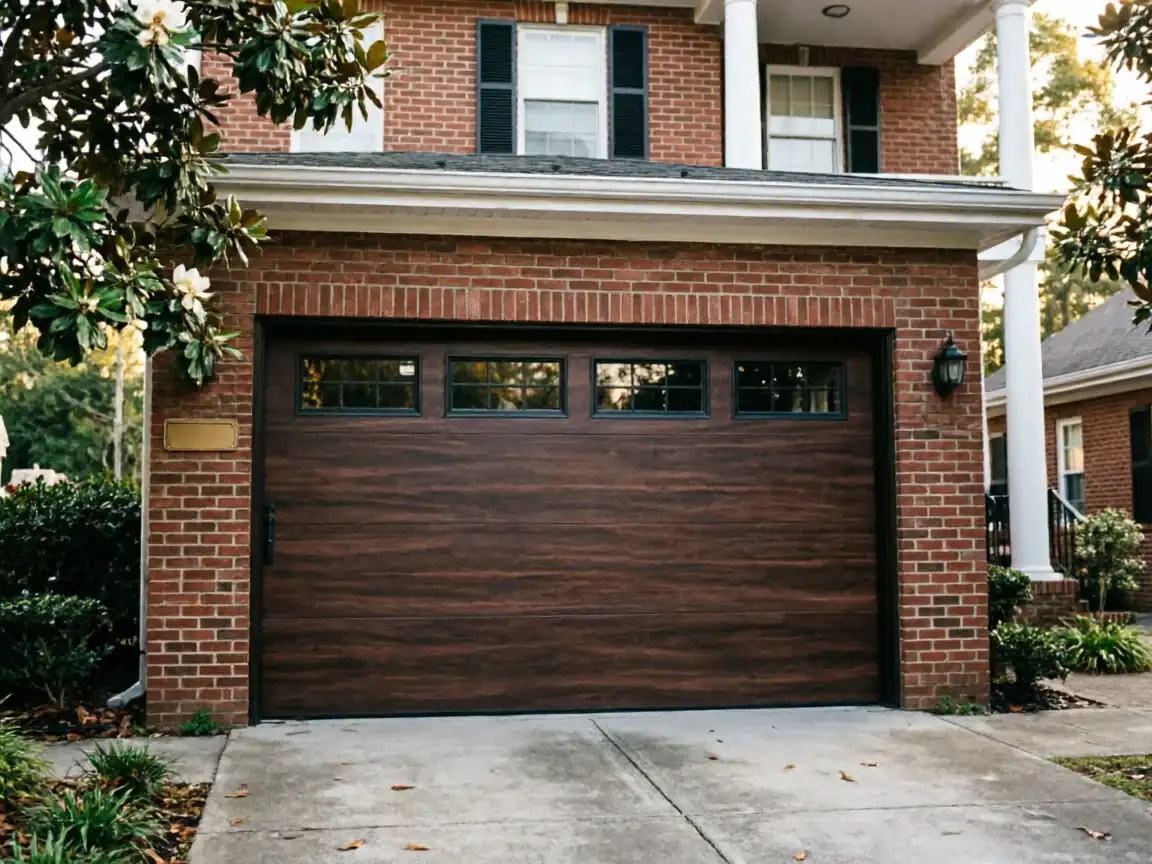
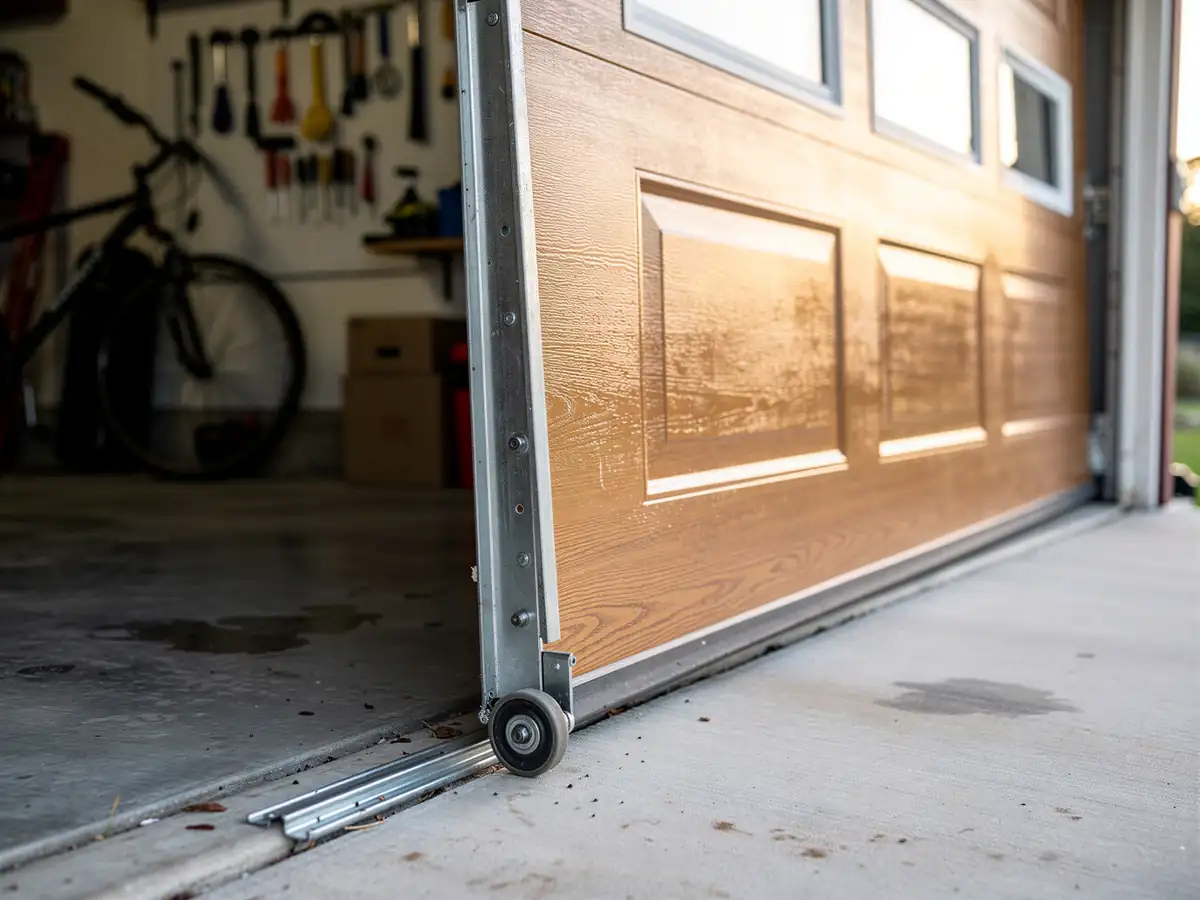
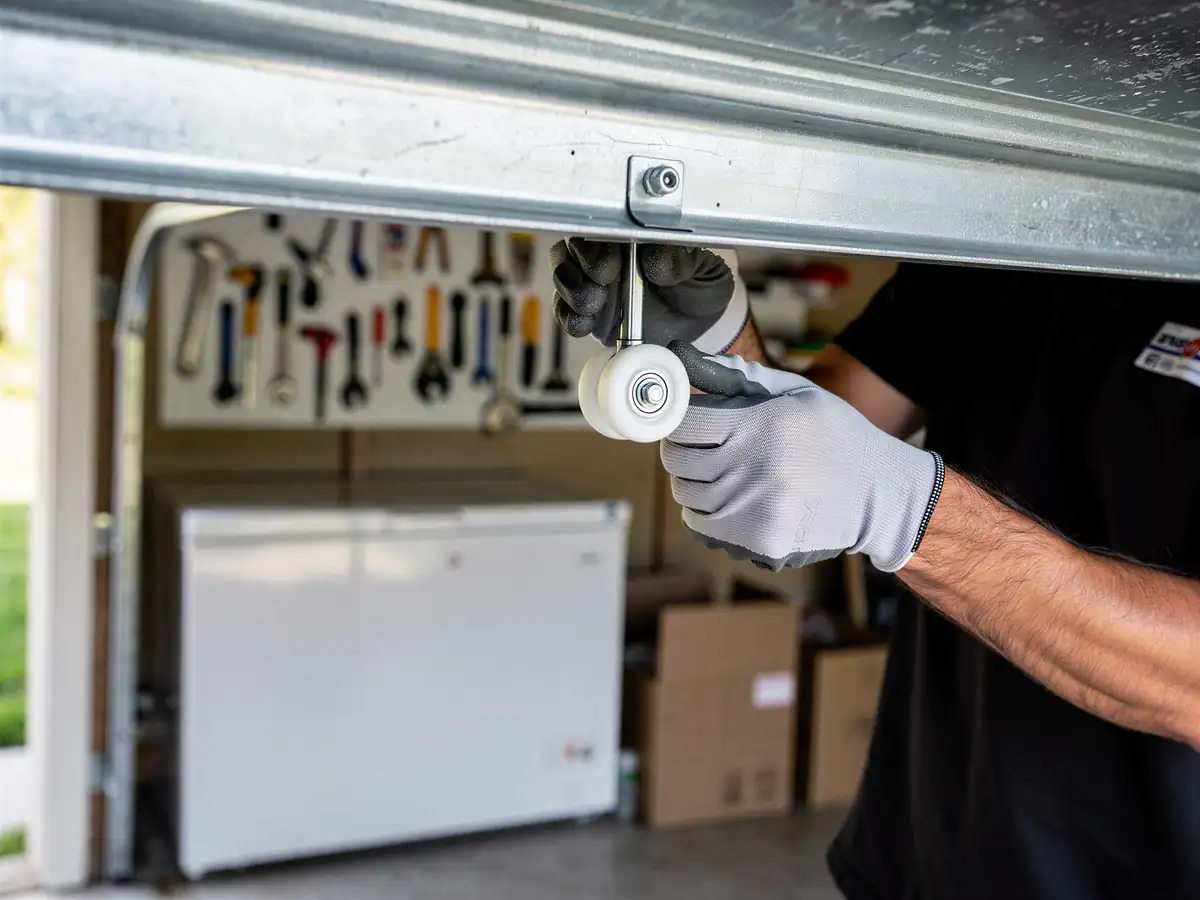
Most garage doors in Gibsonville went up around 2002, which puts this town a good fifteen years newer than the area's own median build year of 1985. That matters more than it sounds. A door from this era is almost always a steel sectional, 16 feet wide for a two-car opening, hung on galvanized track with factory-standard 7-ball nylon rollers riding on quarter-inch stems. Builders in this period weren't putting in sealed-bearing rollers as standard equipment - that was an upgrade, and most homeowners never asked for it. So twenty-plus years on, what you're seeing is the stock roller doing what stock rollers do at the end of their life: flat spots on one side of the wheel, a stem worn oval instead of round, grinding or a hitch in the door's travel right where the roller used to run smooth. On a door this age, it is rarely one roller. If one has worn out, the rest on that track are close behind, because they all did the same miles.
What the Repair Takes
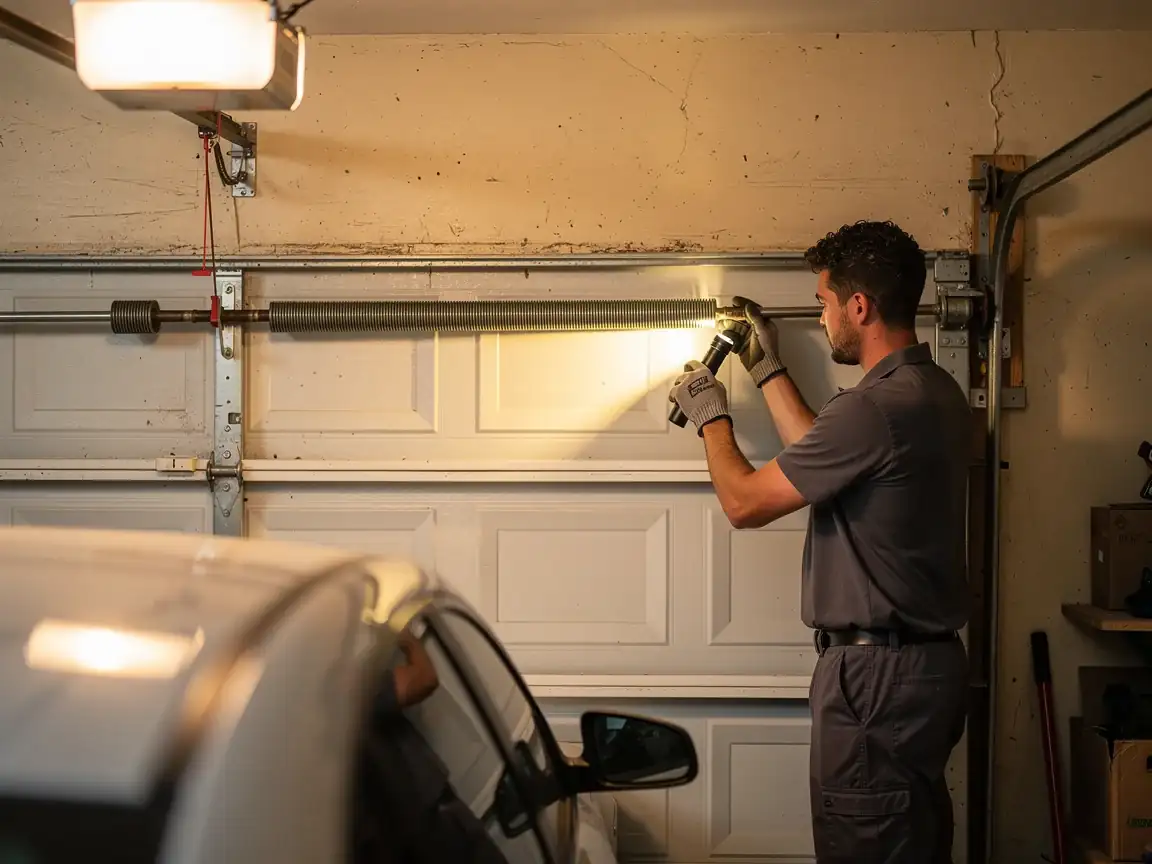
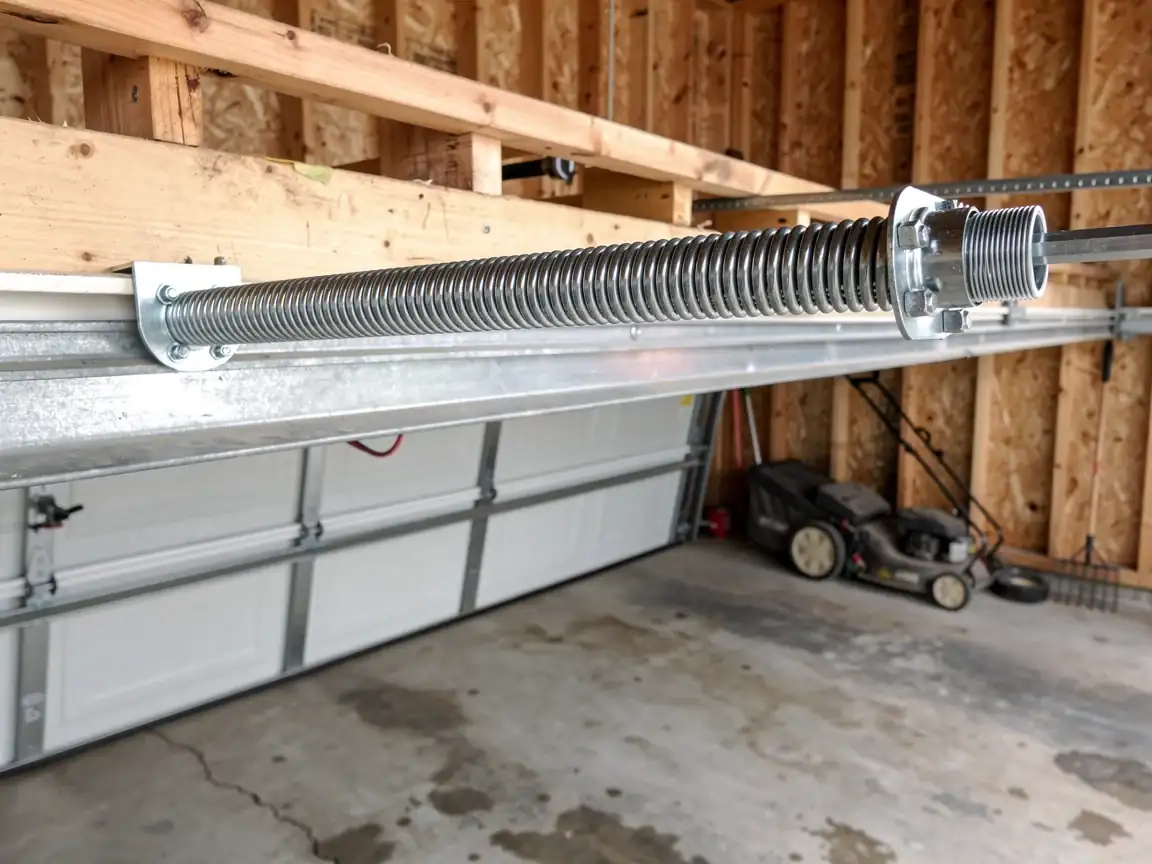
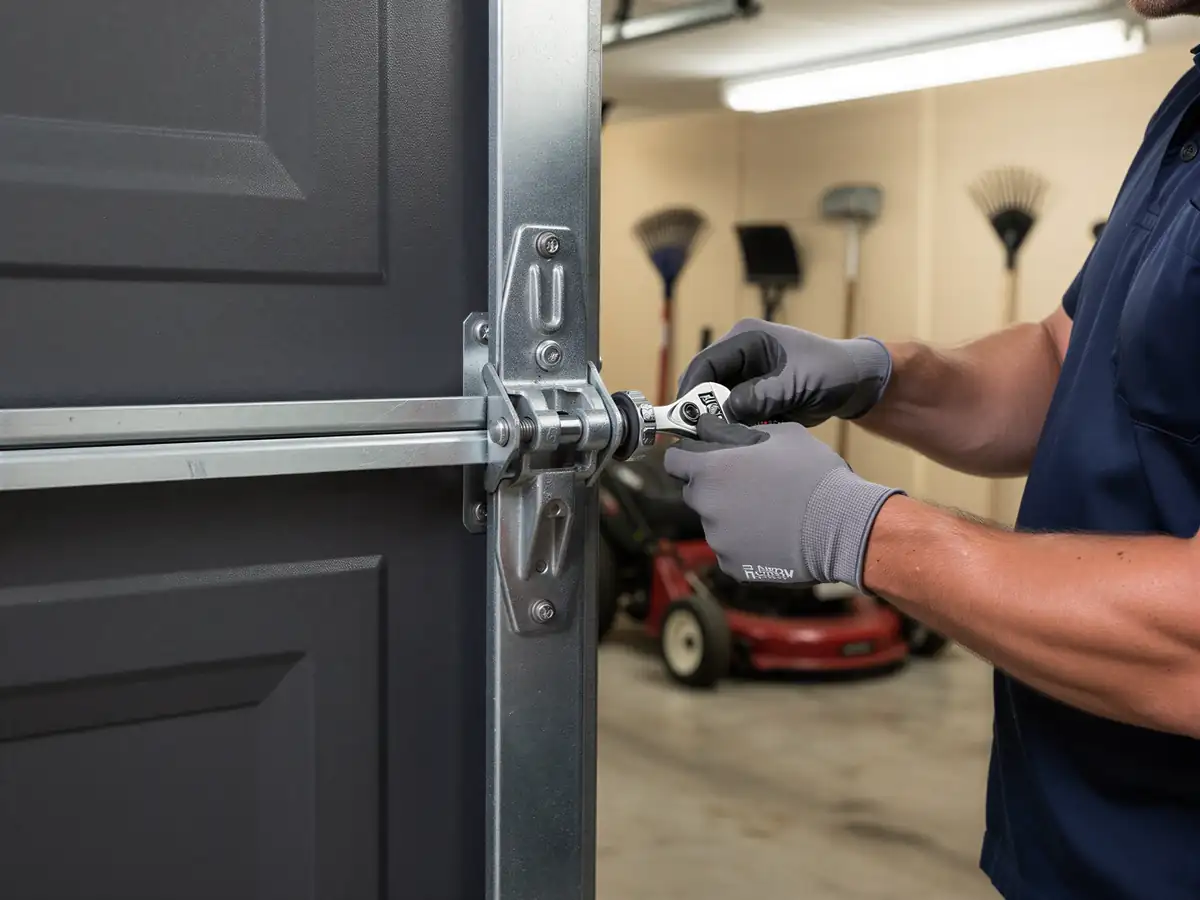
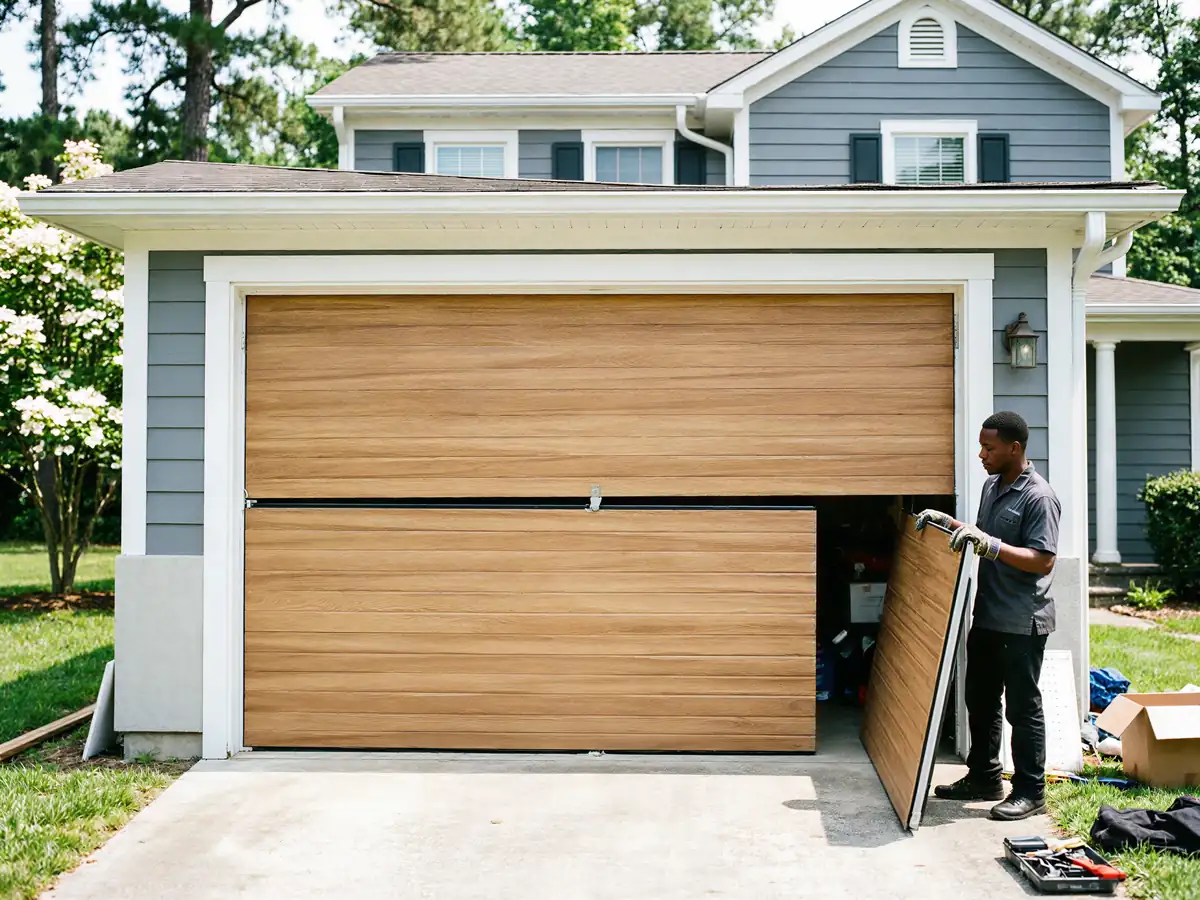
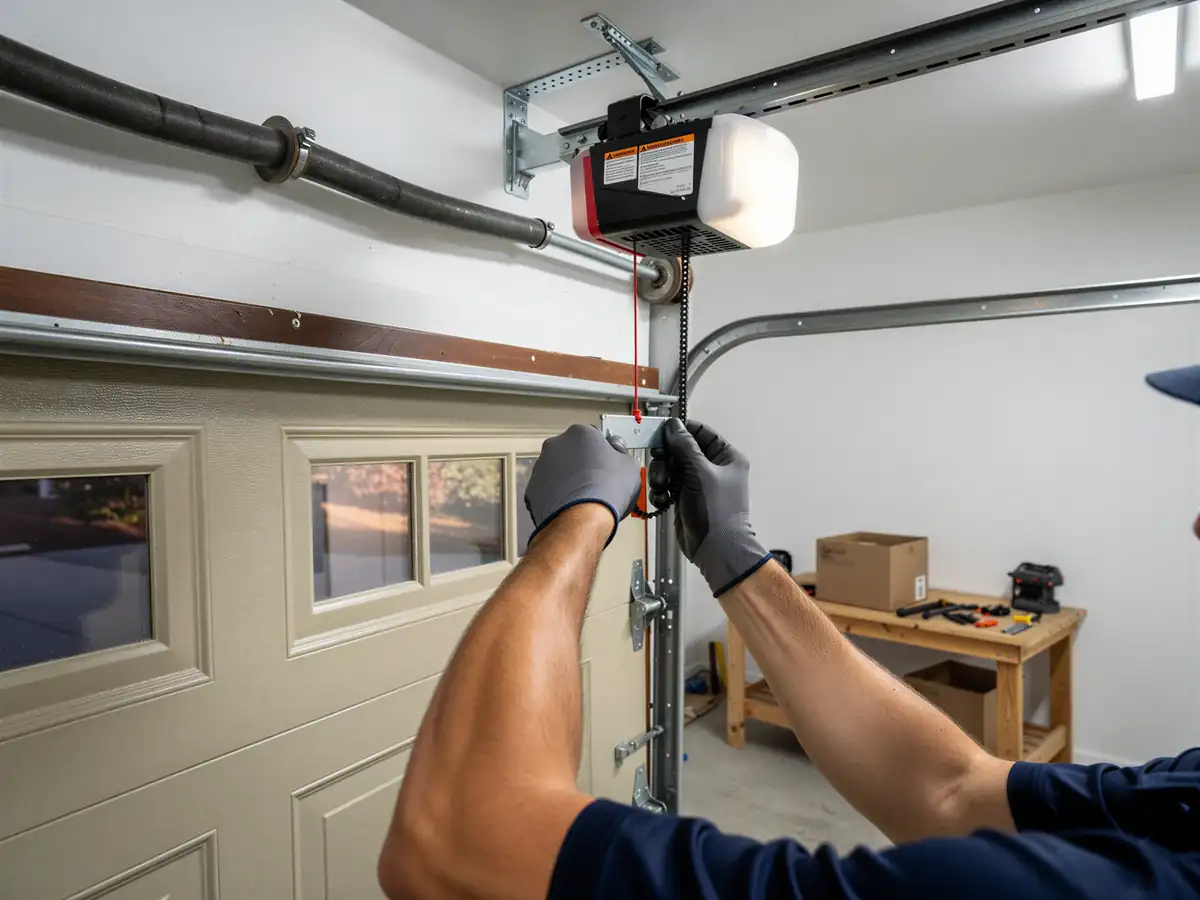
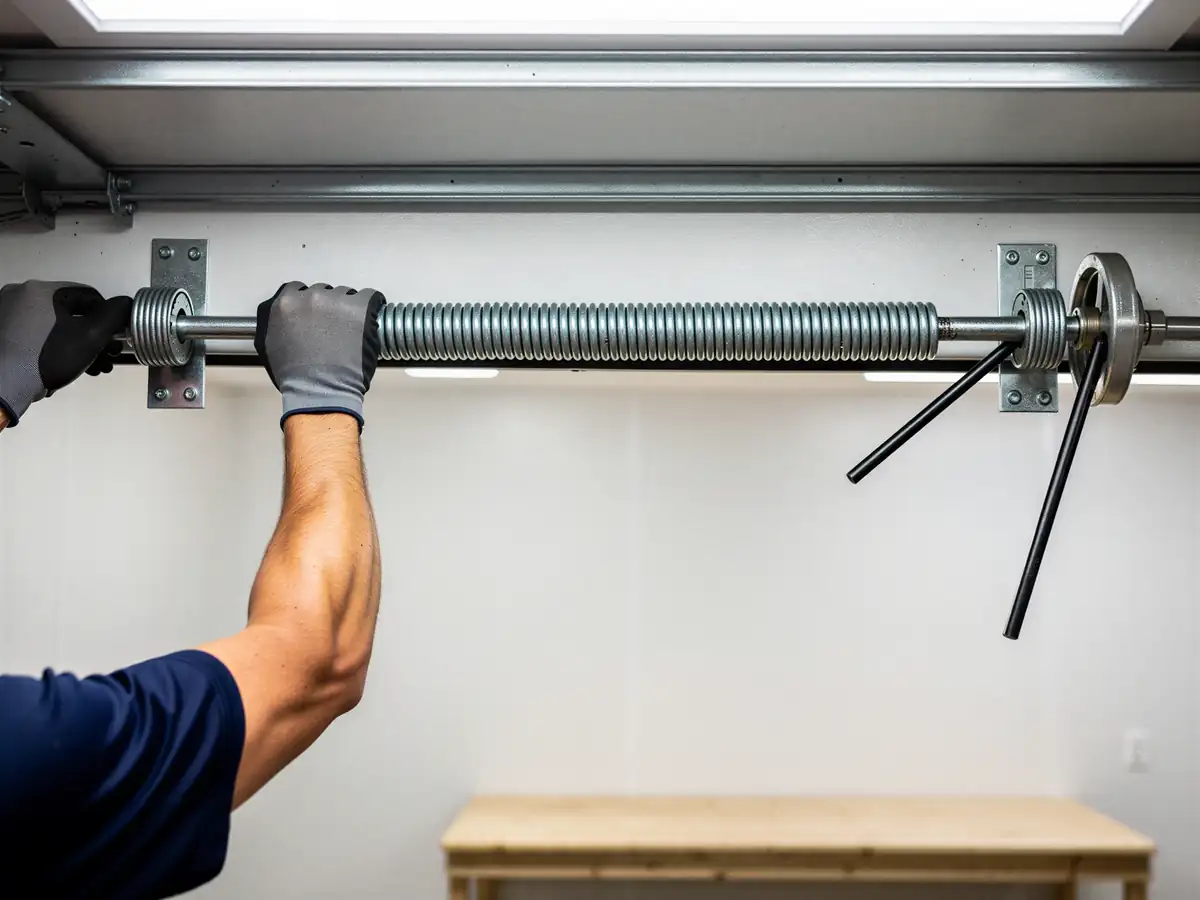
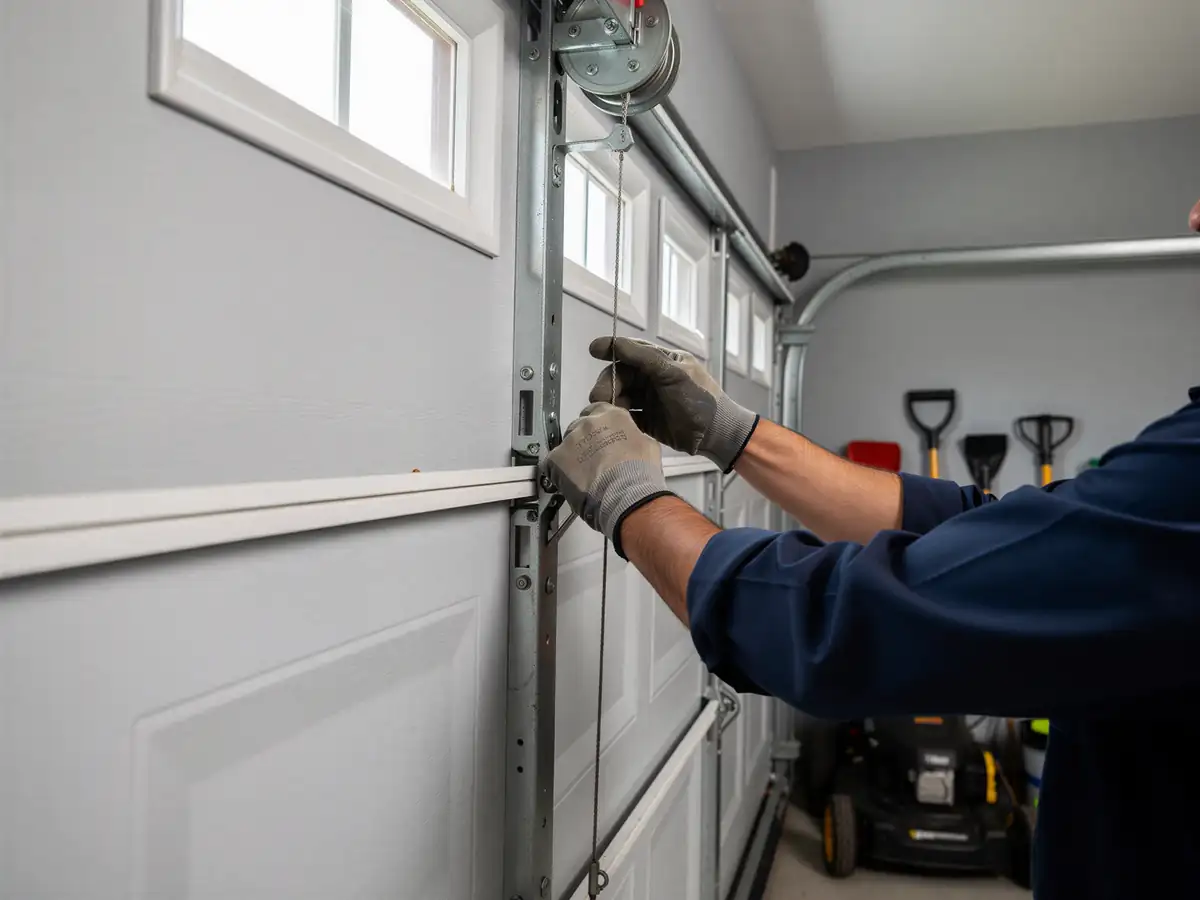
Pulling and replacing rollers on a door from 2002 is a straightforward job on a straightforward door - no odd hardware generations to work around, no obsolete track profile. We disconnect the opener, release spring tension, and walk each roller out of the track one at a time so the door stays supported and square the whole time. The area sits in a cold-moderate climate band, and that's worth mentioning here specifically: nylon rollers get brittle faster through repeated cold snaps than they do in a mild climate, so a roller that looks fine in July can be the one that cracks in January. If the rollers have been grinding for a while, we check the track alignment too, since a worn roller running hot can bow the track slightly where it rides. That's a five-minute check, not an upsell, and most of the time the track is fine.
What It Costs
We're not going to put a number here that doesn't hold up once a truck is actually on your driveway - rollers vary by how many need replacing and whether you want nylon or sealed-bearing steel, and we'd rather quote that over the phone than guess in print. What we can say: Gibsonville's median household income runs well above the wider service area's $67,366 average, and in practice that shows up in which rollers people choose, not whether they fix the door at all. Owners out here more often ask for the upgrade - sealed-bearing steel over the builder-grade nylon that came with the house - because the price difference is small against a door they plan to keep another twenty years. Either way, roller replacement is one of the less expensive repairs we do, nowhere near the cost of a spring or opener job.
Parts We Carry
The truck carries the two roller types that cover nearly everything on a 2002-era door: standard 7-ball nylon rollers for a straight like-for-like swap, and sealed-bearing steel rollers for owners who want quieter, longer-lasting hardware. Both fit the quarter-inch stem that's standard on doors from this build period, so there's no measuring delay or special order on a typical job. Where we run into a wait is on anything non-standard - a door that's had aftermarket track installed, or hardware swapped out from an earlier renovation - because that can mean a part that isn't on the truck and has to come in. On a stock door from this era, that's the exception, not the rule.